How Doctors Are Building Remote Consultancy Careers
Introduction
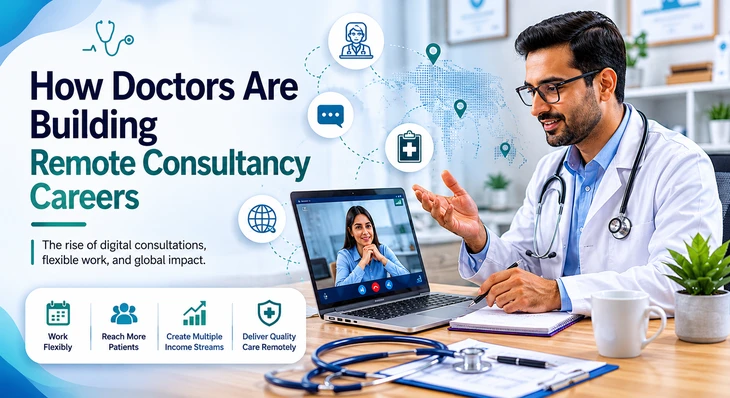
Have you ever wondered how doctors are reshaping their careers in today’s digital world? For many doctors, long hours, limited flexibility, and barriers to patient access have created a pressing need for new ways of working. That’s where remote consultancy comes in. As telemedicine platforms and virtual consultation apps gain momentum, doctors are no longer confined to clinic walls. They can now connect with patients worldwide, bringing their expertise to those who need it most—while enjoying flexible schedules and new career opportunities. If you’ve been wondering how doctors are building remote consultancy careers, this guide will walk you through it.
Real Stories from Doctors Going Digital
Picture this: A pediatrician in India consults a worried parent in the Middle East through a digital health platform. Meanwhile, a cardiologist in the U.S. checks a patient’s vital signs using wearable health tracking tools. These aren’t futuristic ideas—they’re real stories of professionals who’ve adapted to the new era of healthcare. For many doctors, adopting digital technology has meant a second chance to strike a balance between personal life and professional growth. Others see it as a way to scale their expertise globally and reach underserved populations where medical care is scarce.
Take Dr. Anita, a dermatologist who switched to digital medical support when the pandemic hit. Initially, she doubted that patients would accept remote care. But they valued the ease of booking, the privacy of online visits, and the consistency of follow-ups. Within two years, she built a thriving remote practice, treating patients from four different countries.
Dr. James, a psychiatrist in Canada, found himself in a similar situation. His patients needed therapy sessions without travel barriers. By using secure video platforms and evidence-based methods, he not only expanded his reach but also provided patients with continuity of care they might have otherwise lost.
Why Adaptability Matters in Remote Practice
Here’s a question: Why do some doctors thrive in this digital shift while others hesitate? The answer often lies in adaptability. Yes, medical expertise is essential. However, so are digital communication skills and comfort with adopting medical technology. Some doctors jump in early, embracing new ways of diagnosis and care. Others hold back, worried they’ll lose the warmth of face-to-face interaction. But if patients are open and the tools are ready, isn’t it worth trying?
Think about it. A single click now gives access to world-class specialists—no more waiting months for appointments. Patients can often book within days—or even hours. Speed and accessibility are driving telemedicine forward, with reports projecting that the industry will reach $450 billion by 2030. And according to the WHO, more than 70% of countries have adopted national telehealth strategies since 2020. Governments and healthcare systems are moving with the trend.
Simple Steps to Ease Into Remote Consultancy
Look, nobody’s saying the switch is easy. You won’t master virtual diagnosis techniques overnight. But you don’t need to be a tech wizard either. Most telehealth job opportunities come with comprehensive training, valuable resources, and ongoing support. And once you settle in, you’ll see it’s not just about convenience—it’s about shaping flexible medical careers that fit your life.
Here’s one way to start: work with a single patient on one platform. That first step helps you get comfortable. Soon, you’re handling dozens of patients online without stress. Like learning to ride a bike—you wobble first, but then it feels natural.
Balancing Empathy in Remote Care
If you’re a doctor reading this, you’ve probably felt the pressure. Long hours. Little time for family. The guilt of knowing some patients can’t reach you. You’re not alone—thousands of doctors have felt the same doubts before turning to online patient management and global patient consultations. This shift enables doctors and patients to meet in the middle, resulting in faster, more personalized, and easier-to-manage care.
Dr. Maria, a family doctor, had been battling burnout until she tried online consultations. Working part-time from home gave her evenings back with her kids while still caring for patients across time zones. That balance brought her joy and renewed her passion for medicine.
Relatable Examples
Think of it like this: Remember when schools moved online? At first it was awkward—glitches, missing the in-person bond, staring at screens. But eventually, teachers and students found ways to make it work. Medicine is the same. Adapting to cross-border medical practice may feel strange at first, but once you adjust, it unlocks doors you never thought possible. Surgeons, psychiatrists, and family doctors—all can bridge distances with digital tools.
Dr. Lee, a cardiologist, initially hesitated to treat patients abroad due to regulations. Once he learned the rules, he expanded his services and now sees patients in five countries. His story demonstrates how planning, combined with adaptability, can transform a career.
Practical Advice Without the Jargon
This isn’t about textbook definitions. It’s about real stories, lessons, and steps that show how doctors are turning challenges into opportunities through remote consultancy.
Key Skills / Tools / Insights
Building a career in remote consultancy isn’t just about medical degrees—it’s about blending traditional expertise with modern tools. At Naukri Mitra, we track the top skills global employers look for in this evolving field, and here are the most important ones:
- Digital communication skills: Communicating with patients on a screen requires clarity, empathy, and simplicity.
- Virtual Diagnosis Techniques: Assessing Symptoms Effectively Without Physical Contact.
- Online patient management: Tracking medical records, prescriptions, and follow-ups digitally.
- Healthcare entrepreneurship: Running your own successful telemedicine practice or joining innovative healthcare models.
- Medical technology adoption: Staying updated with platforms, apps, and AI in medical consulting tools that make work smoother.
Other valuable tools include cloud-based records, mobile health apps, and digital vitals monitoring devices. These support daily practice and empower doctors to deliver proactive, patient-focused care.
Career Growth / Future Scope in Remote Consultancy Careers
The scope of remote consultancy is bigger than ever. The global demand for healthcare is rising, and so is the need for doctors who can serve across borders. With remote doctor roles and telehealth job opportunities, professionals now have the chance to design careers their way. Insights from platforms like Naukri Mitra indicate that demand is climbing worldwide, particularly in areas with limited access to healthcare.
And the future? It’s even bigger. From patient-centered digital care to sustainable healthcare careers, the opportunities are wide open. As AI in medical consulting grows mainstream, doctors who lean into technology will not only stay relevant but also lead the way.
Imagine the future of digital consultancy for doctors: teams of specialists working on complex cases across continents. That means better accuracy and more knowledge-sharing globally. As it develops, the path becomes increasingly rewarding.
Step-by-Step Guide / How to Start
Not sure where to begin? Here’s a simple plan:
- Choose your niche – general practice, dermatology, psychiatry, or cardiology — each has digital potential.
- Select telemedicine platforms – Find options that fit your specialty. Look for virtual consultation apps that offer scheduling, payment options, and secure chat features.
- Build digital skills – From virtual diagnosis techniques to troubleshooting, invest in training.
- Market yourself – Share your expertise on digital health platforms, blogs, and webinars.
- Stay compliant – Learn rules for cross-border medical practice in your region.
- Start small, then scale – Begin with part-time online consultations and expand as your confidence grows.
- Collect feedback – Use patient reviews to refine your services and improve patient care.
- Explore entrepreneurship – Launch your own online medical entrepreneurship venture or join pioneering digital doctors building new models.
You can explore more global telehealth opportunities with trusted platforms such as Naukri Mitra, which connect doctors with digital healthcare employers worldwide.
Deeper Dive: Platforms & Technology
Remote consultancy wouldn’t exist without solid platforms and tech. Today, doctors have many choices:
- Telemedicine platforms like Amwell, MDLIVE, and Practo.
- Virtual consultation apps with AI-powered triage.
- Digital health platforms offering end-to-end patient management.
- Wearable health tracking devices that stream live vitals.
These tools enable doctors to deliver quality care remotely, regardless of the distance.
Deeper Dive: Success Stories & Case Studies
- Dr. Arjun, an orthopedic surgeon, reduced follow-up hospital visits by 40% by utilizing digital medical support, enabling patients to recover faster.
- Dr. Sophia, a pediatrician, grew her clinic from one city to five countries with online medical entrepreneurship.
- Dr. Omar, a physician in the Middle East, became one of the region’s pioneering digital doctors, demonstrating that innovative thinking leads to sustainable success.
Each case demonstrates how resilience, adaptability, and technology converge to foster thriving careers.
Conclusion + Call-to-Action
Medicine is changing fast, and doctors are proving that flexibility doesn’t mean compromise. With digital medical support, global patient consultations, and tools like wearable health tracking, careers are stretching beyond traditional limits. If you’re ready to step in, remember that building remote consultancy careers isn’t about replacing face-to-face care—it’s about extending it. Telemedicine isn’t coming—it’s already changing the way doctors work, with even more possibilities ahead.
Key Takeaways:
- Remote practice enhances flexibility without sacrificing quality.
- Digital tools expand reach across borders.
- Empathy and adaptability are just as important as medical skills.
- Platforms and patient trust drive long-term success.
- Governments worldwide are backing telehealth adoption.
If you’re serious about this career, start exploring opportunities today with Naukri Mitra—your first step toward shaping a sustainable, patient-focused future.