Remote Sustainability Careers for Future Professionals
Introduction: Why Green Careers Are Moving Beyond the Office
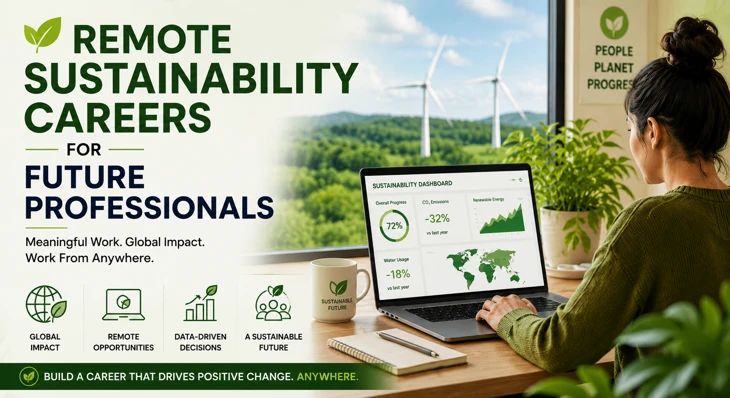
A few years ago, sustainability work was strongly tied to field visits, lab reports, and on-site inspections. That picture is changing fast. Today, a growing share of environmental and sustainability work happens through laptops, dashboards, and cloud platforms. Teams spread across countries are working together to track emissions, improve energy use, and help companies operate more responsibly.
This shift isn’t just about remote work trends. It’s also about how sustainability itself has become a core business function. Companies are no longer treating it as a side initiative. It now sits inside strategy, reporting, finance, and operations — which makes remote collaboration not only possible but necessary.
For professionals entering the field, this opens a different kind of opportunity: building a career that supports environmental progress without being tied to a specific location.
How Remote Sustainability Work Became a Real Career Path
The rise of remote sustainability careers is closely linked to how organizations are being evaluated today. Investors, regulators, and customers all want clearer proof that companies are reducing environmental impact and operating responsibly.
To meet these expectations, businesses rely heavily on ESG reporting systems, digital monitoring tools, and structured data analysis. Much of this work can be done remotely because it depends more on information processing than physical presence.
At the same time, companies have become comfortable hiring distributed teams. Sustainability professionals are now working across time zones, contributing to global projects without needing to relocate.
Roles That Are Shaping Remote Sustainability Careers
Sustainability Analyst Roles in Remote Settings
In many organizations, sustainability analysts are the people who connect raw environmental data to decision-making. They look at energy usage patterns, emissions reports, waste metrics, and operational data to identify opportunities for improvement.
What makes this role especially suitable for remote work is its reliance on digital systems. Most of the analysis, reporting, and visualization happens through software tools rather than physical site visits.
Search interest around roles like "remote sustainability analyst jobs for entry-level candidates" reflects how new professionals are actively trying to break into this space.
ESG Reporting and Compliance Work
ESG reporting has quietly become one of the most important business functions in modern organizations. It involves documenting environmental impact, social responsibility efforts, and governance practices in a structured way.
Remote ESG professionals often work with multiple internal teams to gather data, validate information, and prepare reports for stakeholders. Accuracy and consistency matter more than physical presence in this role, making it well suited to remote environments.
Many job seekers explore terms like "remote ESG reporting jobs in global companies" or "work from home sustainability compliance roles" when looking for opportunities.
Climate Strategy and Advisory Roles
Not all sustainability work is about reporting. Some professionals focus on guiding long-term environmental strategy. Climate consultants, for example, help organizations understand risks and design pathways toward lower emissions.
In remote setups, this work often involves analyzing datasets, reviewing models, and presenting recommendations through virtual meetings. The impact of these roles is significant, as they often influence long-term corporate decisions.
Sustainability Writing and Communication
As sustainability becomes more visible to the public, communication has become just as important as technical analysis. Companies need professionals who can explain environmental initiatives in a way that feels clear and relatable.
Remote sustainability writers and communicators create reports, blog content, internal updates, and public-facing materials. Their work helps translate technical data into language that stakeholders can understand.
This area continues to grow as more organizations invest in transparent storytelling around sustainability.
Renewable Energy Analysis in Remote Work Environments
The renewable energy sector also offers remote-friendly roles, especially in analysis and research. Professionals in this area evaluate performance data from solar, wind, and other clean energy systems.
While some technical work may still require field involvement, a large portion of analysis and forecasting can be done digitally. This enables professionals to contribute to clean energy development from remote locations.
Skills That Actually Matter in This Field
Sustainability careers are not defined by a single qualification. Instead, they rely on a combination of analytical thinking, technical awareness, and communication ability.
Working with data is often central to these roles. Professionals need to understand how to interpret environmental metrics and translate them into meaningful insights.
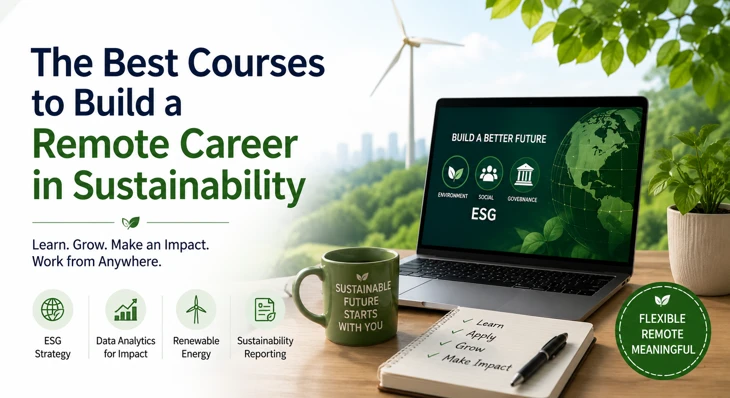
Familiarity with frameworks such as GRI and SASB, as well as global climate goals, helps provide structure for this work. However, equally important is the ability to work independently in a remote setup, manage deadlines, and communicate clearly across digital platforms.
Why Professionals Are Choosing Remote Sustainability Careers
There are practical and personal reasons behind the growing interest in this field.
On the practical side, the demand for sustainability expertise is increasing across industries. This provides greater job stability than many emerging fields.
On a personal level, many professionals are drawn to the idea of work that has a visible impact. Contributing to environmental progress adds meaning to daily tasks that might otherwise feel purely technical or administrative.
Flexibility is another major factor. Remote sustainability roles allow professionals to work from different locations while still participating in global projects.
How the Industry Is Changing Right Now
The sustainability field is still evolving, and technology is playing a major role in that change. Artificial intelligence, automation, and advanced analytics are making it easier to process large environmental datasets.
At the same time, companies are becoming more serious about carbon reduction targets. This is increasing demand for professionals who can not only measure impact but also guide improvement strategies.
Hybrid roles are also becoming more common, with professionals splitting their time between remote analysis and occasional field engagement.
What the Future Looks Like for Remote Sustainability Work
The next few years are likely to bring even more integration between technology and sustainability. Digital platforms for ESG tracking will become more advanced, and expectations around reporting will become stricter.
This means professionals in this space will need to stay adaptable. Roles may evolve, but the need for people who understand both environmental systems and data-driven decision-making will continue to grow.
Rather than a niche career path, sustainability is becoming a core part of how modern organizations operate.
Conclusion: A Career That Connects Purpose With Flexibility
Remote sustainability careers sit at the intersection of meaningful work and modern flexibility. They allow professionals to contribute to environmental progress while building careers that are not limited by geography.
The field is broad enough to include analysts, writers, consultants, and energy specialists, yet connected by a shared goal: improving how organizations interact with the environment.
For anyone considering a long-term career path that combines impact with opportunity, this space continues to offer room for growth, learning, and real-world contribution.