📚 Table of Contents
- How a Traditional Industry Slowly Went Digital
- Remote Careers That Are Quietly Growing in This Field
- Sustainability and Reporting Roles
- Environmental Compliance Work
- Coordination and Project-Based Roles
- Data-Focused Recycling Roles
- Customer and Support Roles
- Skills That Actually Matter in These Roles
- Why Companies Are Hiring Remotely in This Sector
- Where These Remote Jobs Are Coming From
- Environmental Consulting Firms
- Recycling Technology Companies
- Government and Public Sector Projects
- Energy-from-Waste Operations
- Search Trends Showing Growing Interest
- Getting Started Without Overcomplicating It
- What the Future Looks Like
- Final Thoughts
Remote Career Opportunities in Waste Management and Recycling
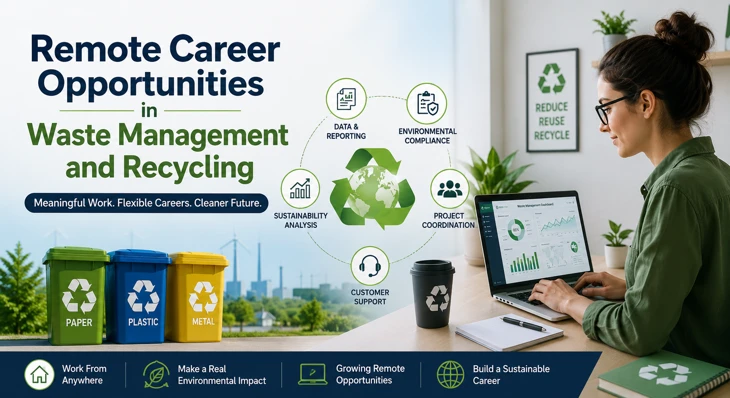
Waste management and recycling are often thought of as ground-level, hands-on industries. Trucks collecting garbage, sorting facilities, recycling plants—this is the usual picture most people have in mind. But behind all of that, a quieter shift has been happening. A growing number of roles in this sector are now handled remotely, through screens, data systems, and digital coordination tools. It’s not an overnight transformation, but a steady one. As sustainability becomes a global priority and companies move toward smarter environmental systems, the need for professionals who can manage, analyze, and coordinate work from anywhere is increasing. What used to be a purely physical industry is now blending with technology, creating space for flexible careers that still contribute directly to environmental impact.How a Traditional Industry Slowly Went Digital
The rise of remote work in waste management didn’t happen overnight. It happened because the problems became more complex. Cities are producing more waste than ever. Recycling targets are stricter. Regulations are tighter. And companies are expected to track everything—what is collected, what is recycled, what is wasted, and what impact it all has on the environment. That level of tracking cannot be managed manually anymore. So organizations started using digital dashboards, cloud-based reporting systems, and automated tracking tools. Once those systems became standard, it naturally opened the door for remote professionals. Now, instead of being physically present at a landfill or recycling facility, many professionals work from home offices, managing systems that control entire environmental operations.Remote Careers That Are Quietly Growing in This Field
There isn’t just one type of remote job in this space. In fact, the range is surprisingly broad. Some roles are technical, some are analytical, and others are purely coordination-based.Sustainability and Reporting Roles
One of the strongest growth areas is sustainability reporting. Companies need clear documentation of their environmental performance, especially when dealing with government regulations or international standards. Professionals in this role collect data, interpret trends, and prepare reports that show how well a company is handling waste and recycling goals. Common search intent: remote sustainability reporting jobs in the environmental sectorEnvironmental Compliance Work
Compliance is another major area. Every waste management company must follow strict environmental laws. Missing even small details can lead to penalties or operational issues. Remote compliance specialists manage documentation, check regulatory updates, and ensure that internal processes are aligned with legal requirements. This role is highly detail-oriented and depends heavily on digital recordkeeping.Coordination and Project-Based Roles
Waste management isn’t just about collecting garbage—it involves planning routes, scheduling pickups, managing recycling programs, and coordinating between multiple teams. Remote coordinators act as the central point of communication. They track progress, handle updates, and make sure everything stays on schedule. Because so much of this work is communication-driven, it fits naturally into a remote setup.Data-Focused Recycling Roles
Data has become one of the most important parts of modern recycling systems. Companies want to know how efficient their operations are, where waste is increasing, and how to improve recycling rates. That’s where data analysts come in. They work with large datasets and help organizations understand what is actually happening in their systems. Supporting keyword: remote recycling data analyst work from home jobsCustomer and Support Roles
Not every remote job in this industry is technical. Many companies also hire remote support staff to handle customer queries. These professionals help individuals and businesses with pickup schedules, service changes, billing questions, and general support. It’s a simple but essential part of keeping recycling services running smoothly.Skills That Actually Matter in These Roles
Unlike traditional industrial jobs, remote roles in waste management rely more on digital skills than physical presence. But that doesn’t mean they are easy—it just means the skill set is different. Some of the most important abilities include:- Understanding basic environmental and sustainability principles
- Comfort with spreadsheets and reporting tools
- Ability to read and interpret data
- Clear written communication
- Basic project coordination skills
- Familiarity with digital collaboration tools
Why Companies Are Hiring Remotely in This Sector
From a business perspective, remote hiring makes sense. Waste management companies operate in multiple regions, sometimes across entire countries. Coordinating everything from a single physical office is no longer practical. Remote professionals help reduce costs, improve flexibility, and allow companies to hire specialized talent without location limits. There’s also a growing focus on efficiency. Digital systems are already tracking most operations, so having remote staff manage and interpret that data is a natural extension of how the industry works today.Where These Remote Jobs Are Coming From
Different types of organizations are driving this shift:Environmental Consulting Firms
They support businesses with sustainability strategies, audits, and reporting. Many of their roles are now remote due to the research-heavy nature of the work.Recycling Technology Companies
These companies build smart systems for waste tracking and recycling automation. Remote data teams and technical support staff are common here.Government and Public Sector Projects
Many cities and municipalities are digitizing waste systems, creating remote roles for monitoring, documentation, and reporting.Energy-from-Waste Operations
These organizations convert waste into energy and require continuous performance tracking, often managed by remote analysts.Search Trends Showing Growing Interest
People looking for work in this field often use very specific search phrases, such as:- remote jobs in the recycling and waste management industry
- work from home environmental coordinator roles
- online sustainability analyst jobs for beginners
- digital waste management careers remote positions
- flexible recycling industry remote jobs
- virtual environmental compliance work opportunities
Getting Started Without Overcomplicating It
Starting a career in this field doesn’t require a perfect background. Many professionals enter through simple steps and gradually build expertise. It usually begins with basic awareness of environmental systems and then moves into digital skills like data handling or reporting tools. Certifications in sustainability or environmental management can help, but real progress often comes from experience—working on small projects, internships, or entry-level roles. The key is consistency rather than complexity.What the Future Looks Like
Waste management is moving toward automation and smart systems. Cities are investing in intelligent waste tracking, AI-based sorting, and real-time environmental monitoring. As these systems become standard, the demand for remote professionals will continue to grow. Some of the emerging directions include:- AI-supported recycling analytics
- Remote monitoring of waste facilities
- Smart city sustainability dashboards
- Digital waste tracking systems using blockchain