📚 Table of Contents
- Introduction: A Shift That’s Already Happening in Nursing
- Telehealth Is No Longer an “Extra Service”
- What’s pushing telehealth forward
- What Remote Nursing Work Actually Looks Like
- Typical remote nursing roles include
- Telehealth Nursing Jobs: Growing Faster Than Expected
- A closer look at daily responsibilities
- Skills That Actually Make a Difference in Remote Nursing
- Skills that matter most
- Why Nurses Are Moving Toward Remote Work
- The Real Challenges Nobody Should Ignore
- Where Nursing Careers Are Quietly Heading
- Emerging directions in nursing careers
- How Nurses Are Getting Into Telehealth Careers
- Conclusion: Nursing Is Expanding, Not Shrinking
The Future of Nursing Careers: Telehealth and Remote Roles
Introduction: A Shift That’s Already Happening in Nursing
A few years ago, most people would have pictured nursing as something that happens almost entirely inside hospitals—busy wards, long shifts, and constant patient contact. That picture still exists, of course, but it no longer tells the full story. Nursing today is quietly expanding into something far more flexible. A growing number of nurses are now working from home, supporting patients through video calls, apps, and remote monitoring systems. It doesn’t feel like science fiction anymore—it feels like the next normal. What’s interesting is how natural this shift has become. Patients are getting used to speaking to healthcare professionals without physically visiting a clinic. Nurses, on the other hand, are finding that many aspects of care can be delivered effectively through digital tools when used properly. This is where telehealth nursing jobs and remote nursing careers are starting to reshape the profession in a very real way.Telehealth Is No Longer an “Extra Service”
There was a time when telehealth was treated like a backup option—something used only when in-person visits weren’t possible. That mindset has changed quite a bit. Now, telehealth is becoming part of everyday healthcare delivery. Whether it’s a follow-up consultation, managing a long-term condition, or giving quick medical guidance, virtual care is being used more often than people expect. Behind this shift are a few simple realities. Healthcare systems are under pressure. Patients want quicker access. And technology has finally reached a point where remote communication actually works smoothly most of the time.What’s pushing telehealth forward
- People in smaller towns and rural areas need easier access to care
- Video consultations are now simple and widely accepted
- Patients prefer avoiding unnecessary hospital visits
- Clinics are trying to manage growing patient loads
- Digital tools are reducing overall healthcare costs
What Remote Nursing Work Actually Looks Like
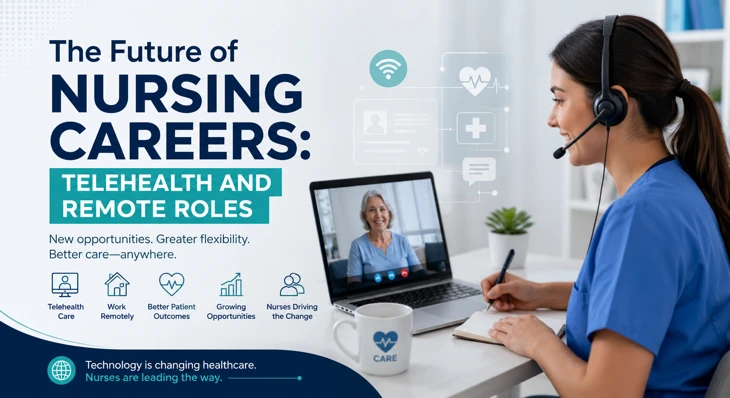
Remote nursing careers aren’t about stepping away from patient care—they’re about delivering it differently. Instead of being physically present beside a patient, nurses interact through screens, phone calls, and digital dashboards. The focus shifts from hands-on procedures to communication, observation, and data-driven decision-making. And surprisingly, a lot of care fits into this model better than expected.Typical remote nursing roles include
- Talking to patients through video consultations
- Helping patients decide whether they need urgent care
- Managing long-term health conditions remotely
- Supporting patients with medication guidance
- Coordinating care plans with doctors and specialists
- Checking in on recovery progress after treatment
Telehealth Nursing Jobs: Growing Faster Than Expected
If you look at current healthcare hiring trends, telehealth nursing jobs are appearing more often than before. Hospitals, insurance providers, and digital health companies are all building teams that work remotely. In many cases, nurses are the first point of contact for patients who are unsure about their symptoms. That means quick thinking and clear communication matter more than ever. It’s less about rushing from one patient room to another and more about listening carefully, asking the right questions, and guiding people in the right direction.A closer look at daily responsibilities
- Understanding patient symptoms over calls or video chats
- Deciding whether a patient needs in-person care
- Tracking health updates for chronic conditions
- Explaining treatment steps in simple language
- Coordinating follow-ups with medical teams
Skills That Actually Make a Difference in Remote Nursing
One thing becomes clear quickly: being a good nurse in a hospital is not exactly the same as being effective in a remote setup. Clinical knowledge still matters, of course. But now there’s a heavier focus on communication, tech comfort, and independent decision-making.Skills that matter most
- Clear, calm communication even in stressful conversations
- Strong clinical judgment without physical examination
- Comfort with telehealth platforms and digital records
- Ability to stay organized without direct supervision
- Attention to detail when documenting patient information
- Confidence in guiding patients remotely
Why Nurses Are Moving Toward Remote Work
There’s a practical side to this shift that’s hard to ignore. Many nurses are simply looking for a more balanced way to work. Hospital environments can be demanding—physically and emotionally. Remote roles offer a different rhythm. But it’s not just about comfort. It’s also about opportunity. Remote nursing provides access to roles beyond a single city or even a single country. It also introduces nurses to modern healthcare systems that rely heavily on technology. For some, it feels like a natural career evolution rather than a complete change.The Real Challenges Nobody Should Ignore
Of course, remote nursing isn’t perfect. One of the biggest challenges is the lack of physical presence. Nurses can’t rely on visual examination or hands-on assessment, so they have to trust what patients describe and what digital data show. Then there’s the technology side. Not every system runs all the time smoothly. Internet issues, software glitches, or unfamiliar tools can slow things down. And sometimes, reading a patient’s condition without face-to-face interaction takes extra effort and experience. Still, most nurses who move into this field say the learning curve is manageable with time.Where Nursing Careers Are Quietly Heading
Healthcare is becoming more digital, whether we notice it or not. Hospitals are testing hybrid models. Clinics are adding virtual care departments. Even home-based monitoring is becoming common. Technology is playing a major role here—AI tools, wearable devices, and remote-tracking systems are already part of everyday healthcare in many places.Emerging directions in nursing careers
- Blending hospital work with remote shifts
- Using AI tools to monitor patient conditions
- Expanding virtual care centers
- Managing long-term illnesses remotely
- Integrating wearable health technology into care plans