📚 Table of Contents
- How Remote Work in India Took Off—and Where AI Fits In
- AI’s Role in Expanding the Remote Job Market in India
- Everyday People, Real Stories
- How India’s Tech Industry is Powering Remote Careers with AI
- Top Skills Indians Need to Thrive in the AI Job Market
- How AI Balances Flexibility and Stability in Remote Careers
- Hybrid Work in India: How AI Makes It Work
- Looking Ahead: The Next Chapter
- Final Thoughts
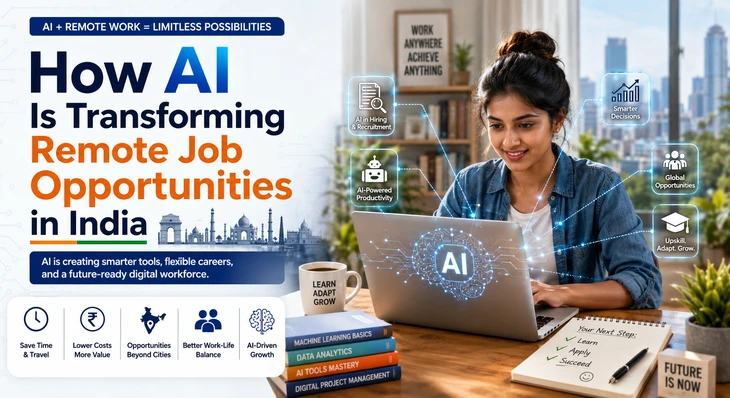
How AI Is Transforming Remote Job Opportunities in India
Artificial Intelligence has outgrown the buzzword stage—it’s now shaping how we live, earn, and even imagine the future of work. In India, where millions of people are exploring flexible careers, the impact is massive. Remote jobs were already growing, but AI has taken the game to a whole new level. Let’s dive into how AI is transforming work-from-home opportunities, the digital workforce, and the future of careers in India.How Remote Work in India Took Off—and Where AI Fits In
A decade ago, working from home in India sounded unrealistic. Most companies wanted people in offices. Then the pandemic hit, and everything flipped. Remote work trends in India skyrocketed, and suddenly, people realized they could save hours of travel time, spend more time with their families, and still accomplish their tasks. Now add AI into the mix. From Zoom meetings with auto-transcription to AI-enabled productivity tools that organize projects, the way we work remotely has become smoother. It’s like having a digital teammate who never sleeps.AI’s Role in Expanding the Remote Job Market in India
People often worry AI will wipe out jobs—but in reality, it’s quietly creating entire categories of work we didn’t even imagine five years ago. The growth of the AI job market is a testament to this. Companies are hiring people who understand machine learning, data, and digital tools. Even traditional roles are evolving as AI automates repetitive tasks, allowing people to spend their time on work that requires imagination, strategy, and people-centered thinking. For instance, an HR manager in Bangalore told me she used to spend hours scanning resumes. Now, with AI in hiring and recruitment, the system filters candidates in seconds. That doesn’t mean HR jobs are gone—it means professionals spend more time connecting with people, not shuffling papers. And big companies are catching on, too. Infosys, for example, has developed AI-driven platforms to facilitate team collaboration on hybrid projects. Wipro uses AI to optimize scheduling and client support. Byju’s leans on AI to personalize student lessons while enabling flexible setups for staff. According to NASSCOM, India’s AI talent demand grew by over 50% in 2024—a clear sign that businesses are racing to integrate AI into their workflows.Everyday People, Real Stories
Meet Ritu, a young mom in Pune who wanted to restart her career after a break. Through online freelance platforms, she found remote career opportunities in content writing. But what really helped her stand out? AI tools. They polished her writing, tracked her payments, and even managed her deadlines. “AI gave me the confidence to say yes to more projects without feeling overwhelmed,” she told me. Then there’s Arjun, an engineering student in Hyderabad. At first, he worried about automation and employment in India, thinking robots might take over everything. However, after completing a short online course to upskill for AI jobs, he landed a remote data analyst role at a U.S. company. “The fear of losing my job turned into excitement for a career I didn’t even know existed,” he said.How India’s Tech Industry is Powering Remote Careers with AI
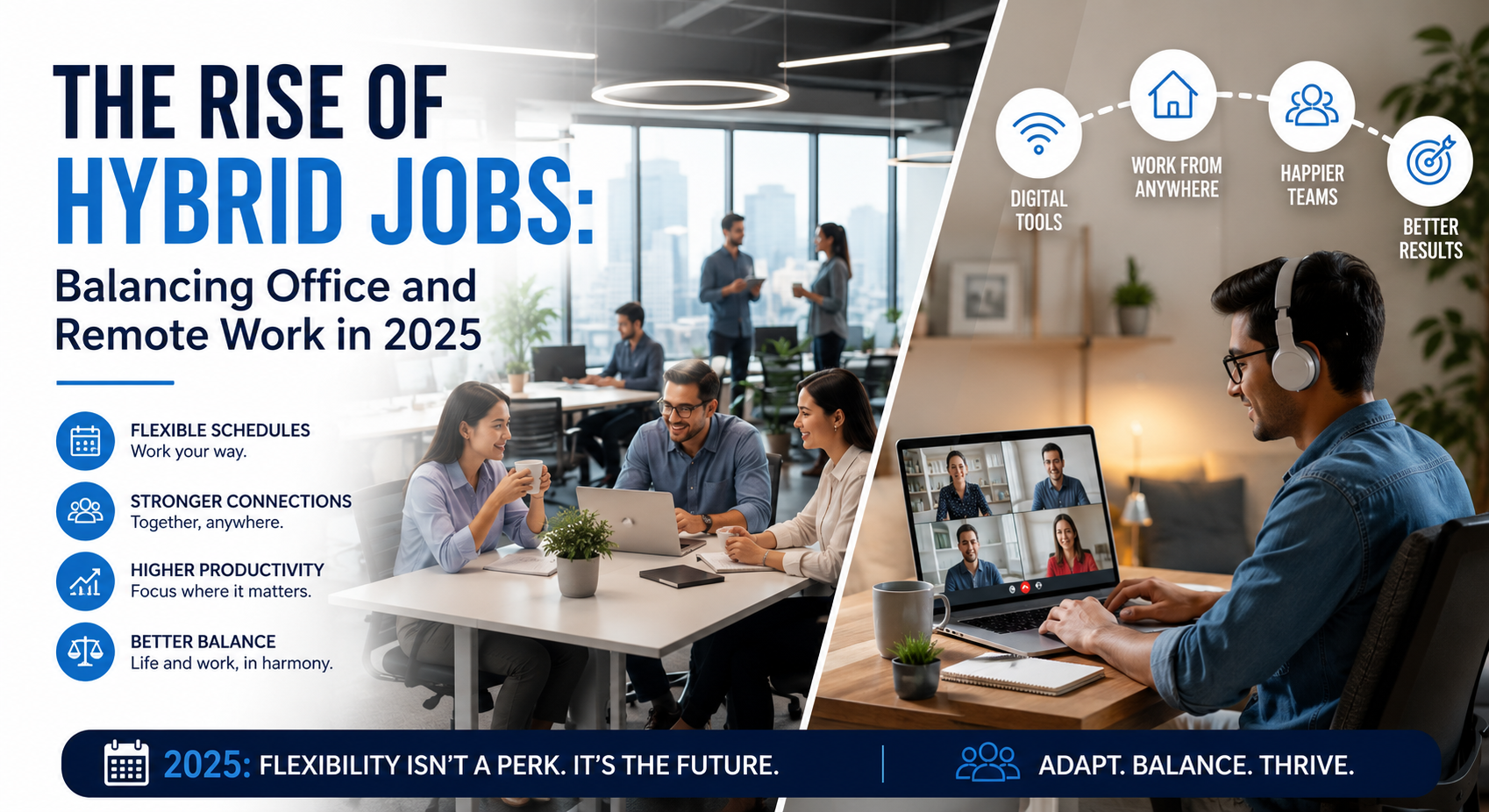
Currently, the Indian tech job scene is booming louder than ever. Startups and IT giants in India are embracing hybrid work models. One week you’re in the office, the next you’re home—it’s flexible, and AI makes it possible. Tools like automated project trackers and intelligent dashboards keep teams in sync, regardless of their location. And it’s not just tech. Teachers now rely on AI-enabled productivity tools to review assignments more efficiently. Marketers use AI to analyze customer behavior in minutes, rather than weeks. Even edtech giants like Byju’s use AI to personalize lessons for students, while their staff benefit from hybrid setups.Top Skills Indians Need to Thrive in the AI Job Market
Let’s be real: many people are nervous about the future of work in India. And yes, AI is replacing repetitive tasks. However, the demand for AI skills is rising so rapidly that opportunities are abundant for those willing to learn. Think of it like sports practice before a big match—upskilling is your preparation. And you don’t need a pricey MBA to start. Free YouTube tutorials, short online courses, and weekend workshops are enough to get started. Here are some of the most in-demand skills:- Data handling and analytics
- Prompt engineering for AI systems
- Using AI-enabled productivity tools
- Basic coding and machine learning concepts
- Digital project management with AI platforms
How AI Balances Flexibility and Stability in Remote Careers
One of the most significant shifts AI has brought is a flexible work culture. Earlier, working from home felt like a privilege. Now it’s becoming a norm. You no longer need to live in Mumbai or Bangalore to land a great job. Remote career opportunities are also opening up for small-town professionals. Picture a graduate in Indore serving global clients through online freelance platforms. With AI tools helping with communication, deadlines, and quality checks, they compete head-to-head with peers from metro cities. Some clear benefits include:- Substantial time savings without long commutes
- Reduced costs for both employees and companies
- Equal opportunities for small-town professionals
- Better work-life balance with more innovative task management