📚 Table of Contents
- Understanding the Gig Economy
- Why Smaller Cities Are Becoming Gig Economy Hotspots
- Better Internet Connectivity
- Lower Cost of Living
- Growing Demand for Flexible Work
- The Rise of Digital Platforms in Smaller Cities
- Food Delivery and Hyperlocal Services
- Freelance Marketplaces
- E-Commerce and Reselling Opportunities
- How Remote Work Changed Smaller Cities
- Why Businesses Are Hiring Talent From Smaller Cities
- Access to Skilled Professionals
- Reduced Hiring Costs
- Stronger Employee Retention
- Real-Life Examples of Gig Economy Growth in Smaller Cities
- Online Tutors in Tier-2 Cities
- Freelancers Building Global Careers
- Women Joining the Workforce
- Challenges Facing the Gig Economy in Smaller Cities
- Limited Awareness About Freelancing
- Skill Gaps
- Income Stability Concerns
- Lack of Social Security Benefits
- Government and Private Sector Support
- The Future of the Gig Economy in Smaller Cities
- AI and Digital Tools Will Create New Roles
- Hybrid Work Models Will Continue
- Local Entrepreneurship Will Grow
- More Women and Students Will Participate
- How Smaller Cities Are Reshaping the Future of Work
- FAQs
- What is driving gig economy growth in smaller cities?
- Which gig economy jobs are popular in tier-2 and tier-3 cities?
- Why are businesses hiring freelancers from smaller cities?
- Is freelancing a stable career option in smaller cities?
- How has remote work helped smaller cities?
- What challenges do gig workers face in smaller cities?
- Conclusion
How Smaller Cities Are Driving the Gig Economy Boom
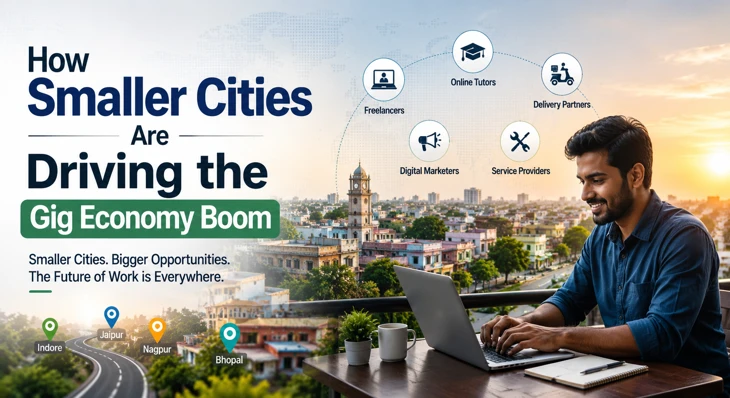
The gig economy is no longer limited to major metropolitan hubs like Mumbai, Bengaluru, Delhi, or New York. Over the last few years, smaller cities and emerging urban centers have quietly become powerful contributors to the growing freelance and gig-based workforce. From food delivery drivers and online tutors to digital marketers and app-based service providers, people in tier-2 and tier-3 cities are embracing flexible work opportunities faster than ever before. This shift is changing the future of work. Affordable internet access, remote work culture, digital payment systems, and growing smartphone usage are giving smaller cities a strong place in the modern gig economy. For businesses, this means access to a wider talent pool. For workers, it creates opportunities to earn independently without moving to overcrowded metropolitan areas. The result is a rapidly expanding ecosystem where smaller cities are becoming the new growth engine for freelance and flexible employment.Understanding the Gig Economy
The gig economy refers to a work model in which individuals earn income through short-term, project-based, or flexible jobs rather than traditional full-time employment. These jobs are often powered by digital platforms that connect workers directly with customers or businesses. Popular gig economy roles include:- Freelance writers and designers
- Food delivery executives
- Ride-sharing drivers
- Online tutors
- Social media managers
- App developers
- Virtual assistants
- Home service professionals
- Content creators
- E-commerce sellers
Why Smaller Cities Are Becoming Gig Economy Hotspots
Several economic and technological changes have accelerated the growth of the gig economy in smaller cities.Better Internet Connectivity
One of the biggest reasons behind the rise of freelance work in small cities is improved internet infrastructure. Affordable data plans and widespread smartphone access have made digital platforms easily accessible. Today, a freelance graphic designer in Indore or a virtual assistant in Bhopal can work with clients from anywhere in the world. Reliable internet access has opened doors for:- Remote work opportunities
- Online skill development
- Digital entrepreneurship
- Freelance marketplaces
- Work-from-home jobs
Lower Cost of Living
Living expenses in smaller cities are significantly lower compared to major metropolitan areas. Rent, transportation, food, and daily expenses are more affordable, allowing gig workers to maintain a better work-life balance while earning competitive incomes. For example, a freelance content writer earning ₹50,000 per month in a smaller city may enjoy a much higher standard of living than someone earning the same amount in Mumbai or Bengaluru. This financial advantage encourages more people to explore independent work opportunities.Growing Demand for Flexible Work
Younger professionals are increasingly seeking flexibility rather than traditional 9-to-5 jobs. The pandemic played a major role in changing work preferences. Many people realized they could work remotely, build freelance careers, or manage multiple income streams without relocating. Smaller cities are now seeing rising participation in:- Part-time freelancing
- Remote customer support jobs
- Digital marketing services
- Online teaching
- App-based delivery services
- Influencer marketing
The Rise of Digital Platforms in Smaller Cities
Digital platforms have become the backbone of the gig economy. Companies offering app-based services are aggressively expanding into tier-2 and tier-3 cities as demand grows rapidly.Food Delivery and Hyperlocal Services
Food delivery apps, grocery delivery services, and home maintenance platforms are creating thousands of gig jobs in smaller cities. Delivery partners, electricians, beauticians, plumbers, and drivers now have access to income opportunities that were once concentrated in metros. As consumer behavior changes, local demand for convenience services continues to increase.Freelance Marketplaces
Online freelance platforms have made it easier for skilled professionals from smaller cities to find clients globally. A web developer in Nagpur or a social media manager in Jaipur can now work with international businesses without leaving their hometown. Popular freelance industries include:- Content writing
- SEO services
- Video editing
- Graphic design
- Website development
- Digital advertising
- Voice-over services
E-Commerce and Reselling Opportunities
The growth of e-commerce has also boosted the gig economy in emerging cities. Many individuals are using online marketplaces and social media platforms to start small businesses from home. Some sell handmade products, while others run reselling businesses through Instagram, WhatsApp, or e-commerce platforms. This trend has encouraged entrepreneurship among people who may not have had access to traditional business opportunities.How Remote Work Changed Smaller Cities
Remote work culture dramatically accelerated the expansion of the gig economy. When companies shifted to work-from-home models, many employees moved back to their hometowns or smaller cities. This created a new wave of professionals who realized they could continue working remotely while enjoying lower living costs. As a result:- Co-working spaces started appearing in smaller cities
- Internet infrastructure improved further
- Local cafes became remote work hubs
- Freelance communities began growing
- More people explored independent careers
Why Businesses Are Hiring Talent From Smaller Cities
Businesses are increasingly turning to smaller cities for freelance and remote talent.Access to Skilled Professionals
Educational institutions in smaller cities are producing highly skilled graduates in fields like technology, design, marketing, finance, and communication. Many professionals no longer feel the need to migrate to larger cities because remote opportunities are widely available. Businesses benefit from:- Competitive pricing
- Dedicated talent
- Lower operational costs
- Diverse workforce options
- Increased productivity
Reduced Hiring Costs
Hiring freelance professionals from smaller cities can be more cost-effective for businesses. Since living expenses are lower, freelancers in these regions may offer competitive pricing while maintaining high-quality work. This creates a win-win situation for both employers and workers.Stronger Employee Retention
Remote workers in smaller cities often experience less burnout than those facing long commutes and expensive urban lifestyles. A better work-life balance can contribute to improved job satisfaction and stronger long-term collaboration.Real-Life Examples of Gig Economy Growth in Smaller Cities
The gig economy boom is evident in many smaller cities in India and around the world.Online Tutors in Tier-2 Cities
Thousands of teachers from smaller cities now offer online classes through digital learning platforms. Many educators who once relied only on local coaching centers are now teaching students nationwide through video platforms. This has expanded earning opportunities while improving educational access.Freelancers Building Global Careers
Graphic designers, writers, developers, and digital marketers from smaller cities are securing international clients through freelancing websites. Some professionals earn incomes comparable to corporate salaries while working entirely from home.Women Joining the Workforce
The gig economy has also created more flexible career opportunities for women in smaller cities. Many women are working as:- Freelance consultants
- Home bakers
- Online sellers
- Virtual assistants
- Content creators
- Online tutors
Challenges Facing the Gig Economy in Smaller Cities
Despite rapid growth, certain challenges still exist.Limited Awareness About Freelancing
Many people in smaller cities are still unfamiliar with freelancing platforms, digital contracts, or online payment systems. Lack of awareness can slow adoption.Skill Gaps
While opportunities are increasing, some workers need additional training in digital tools, communication skills, and professional networking. Upskilling remains important for long-term success.Income Stability Concerns
Gig work does not always guarantee fixed monthly income. Freelancers and gig workers may experience fluctuations in workload depending on market demand. Financial planning becomes essential in such cases.Lack of Social Security Benefits
Unlike traditional jobs, many gig workers do not receive benefits like:- Health insurance
- Paid leave
- Retirement plans
- Job security
Government and Private Sector Support
Governments and private companies are increasingly recognizing the economic potential of gig work. Several initiatives are supporting digital employment through:- Skill development programs
- Startup funding
- Digital literacy campaigns
- Entrepreneurship training
- Affordable internet expansion
The Future of the Gig Economy in Smaller Cities
The future looks promising for gig workers in smaller cities. Several trends are expected to accelerate growth further:AI and Digital Tools Will Create New Roles
Artificial intelligence, automation, and digital business tools are creating demand for new types of freelance services. Workers who learn modern digital skills will have access to more remote opportunities.Hybrid Work Models Will Continue
Many businesses now prefer hybrid and remote work structures. This means professionals can continue to live in smaller cities while working for companies elsewhere.Local Entrepreneurship Will Grow
More individuals are likely to start:- Home-based businesses
- Digital agencies
- Content creation brands
- Online consulting services
- E-commerce stores
More Women and Students Will Participate
Flexible work opportunities make the gig economy attractive for students, homemakers, and people seeking secondary income. Participation rates are expected to increase significantly over the next few years.How Smaller Cities Are Reshaping the Future of Work
The rise of the gig economy in smaller cities is changing traditional employment patterns. People no longer need to move to crowded metropolitan areas to build successful careers. Technology has made location less important, giving individuals more freedom to choose where and how they work. Smaller cities now offer:- Better affordability
- Improved quality of life
- Flexible work opportunities
- Growing digital ecosystems
- Expanding entrepreneurial possibilities