📚 Table of Contents
- What Is the Gig Economy?
- Why the Gig Economy Became So Popular
- Flexible Work Schedules
- Easy Entry Into the Workforce
- Remote Work Opportunities
- Business Cost Savings
- The Hidden Risks of the Gig Economy
- Income Instability and Financial Stress
- Real-Life Example
- Lack of Employee Benefits
- Worker Exploitation and Unfair Pay
- No Job Security
- Mental Health and Burnout
- Safety Risks for Gig Workers
- The Impact on Traditional Employment
- Why Governments Are Paying Attention
- Solutions to Gig Economy Problems
- Stronger Labor Protections
- Portable Benefits Systems
- Greater Transparency From Platforms
- Fair Compensation Models
- Financial Education for Gig Workers
- Practical Tip
- Mental Health Support
- Worker Unions and Advocacy Groups
- The Future of the Gig Economy
- How Workers Can Protect Themselves
- Diversify Income Sources
- Build Long-Term Skills
- Track Income and Expenses Carefully
- Understand Contracts and Platform Policies
- FAQs About the Gig Economy
- What is the biggest problem in the gig economy?
- Why are gig workers not considered employees?
- Is the gig economy good or bad?
- How can gig workers protect themselves financially?
- What industries rely heavily on gig workers?
- Conclusion
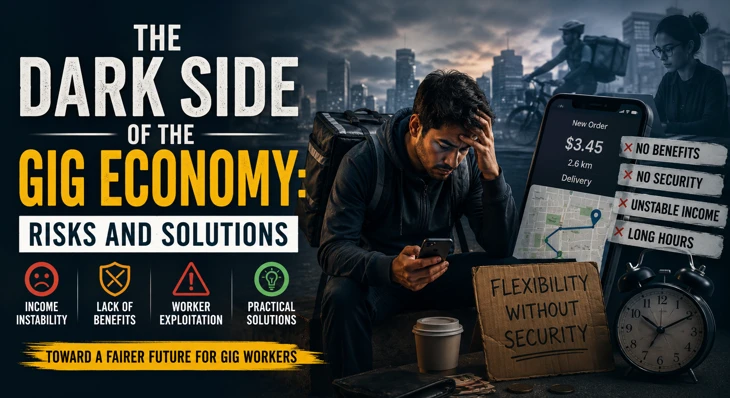
The Dark Side of the Gig Economy: Risks and Solutions
Over the last decade, the gig economy has completely reshaped modern employment. Instead of relying solely on full-time office jobs, millions of people now earn income through freelance assignments, app-based services, short-term contracts, and digital platforms. Ride-share drivers, delivery partners, writers, designers, coders, and virtual assistants have all become part of this growing workforce. For many workers, gig jobs provide a level of flexibility that traditional employment rarely offers. For some people, that flexibility is life-changing. A college student can deliver food in the evenings instead of working fixed retail shifts. A parent may choose freelance work to spend more time at home. Someone burned out from corporate life might start taking on independent projects simply to regain control over their schedule. But the reality is not always as positive as the advertisements make it seem. Behind the promise of flexibility, many workers face unstable income, zero benefits, long working hours, and very little protection when things go wrong. What looks like freedom on the surface can sometimes feel deeply uncertain in everyday life. While gig work continues to expand globally, conversations around workers’ rights and fair treatment are becoming impossible to ignore. This article explores the darker side of the gig economy, the risks workers face, and practical solutions that can create a healthier and more sustainable future for flexible work.What Is the Gig Economy?
The gig economy refers to a labor market built around temporary, flexible, or freelance work instead of permanent employment. Workers are usually paid per task, project, or “gig.” Common examples of gig economy jobs include:- Ride-sharing drivers
- Food delivery workers
- Freelance writers and designers
- Online tutors
- Software developers
- Virtual assistants
- Photographers and videographers
- Delivery couriers
- Handyman services
- Freelancing marketplaces
- Food delivery apps
- Ride-sharing services
- Task-based labor apps
- Remote work platforms
Why the Gig Economy Became So Popular
Understanding the popularity of gig work helps explain why so many people continue to participate despite its challenges.Flexible Work Schedules
One of the biggest advantages of gig work is flexibility. Workers can often choose when and how much they work. For someone balancing education, caregiving responsibilities, or another job, this freedom can be extremely valuable.Easy Entry Into the Workforce
Many gig economy jobs have fewer barriers to entry than traditional employment. People can often start earning quickly without long hiring processes. This accessibility attracts:- Students
- Career changers
- Part-time workers
- Immigrants
- Individuals facing unemployment
Remote Work Opportunities
The rise of digital freelancing has made remote income possible for millions. A graphic designer in India can now work with clients in the United States, Europe, or Australia. Writers, developers, marketers, and consultants increasingly build global careers through freelance platforms.Business Cost Savings
Companies also benefit from gig workers. Hiring freelancers or contractors reduces overhead costs associated with full-time employees. Businesses can scale projects quickly without committing to permanent staffing. However, this business advantage often shifts financial risk onto workers.The Hidden Risks of the Gig Economy
Although gig work offers freedom, it also creates significant vulnerabilities that many workers experience daily.Income Instability and Financial Stress
Financial uncertainty remains one of the biggest disadvantages of gig work. A traditional employee usually knows how much money will arrive at the end of the month. Gig workers rarely have that certainty. Earnings can rise and fall quickly depending on customer demand, seasonal changes, platform rules, competition, or algorithm updates. A food delivery driver may earn well during weekends but struggle during slower weekdays. A freelancer may secure several projects in one month and then spend weeks searching for new clients. This unpredictable income makes everyday financial planning difficult. Many workers struggle with:- Paying recurring bills on time
- Building long-term savings
- Managing emergency expenses
- Applying for loans or credit cards
- Planning future investments
Real-Life Example
Imagine a freelance designer who works with three regular clients every month. Things may feel stable for a while, but if two clients suddenly cut their marketing budgets, the designer’s income could disappear almost overnight. There is usually no paid notice period, no unemployment support, and no guaranteed backup plan. Situations like this are common in freelance and app-based work.Lack of Employee Benefits
Most gig workers are classified as independent contractors instead of employees. This classification often excludes them from important benefits such as:- Health insurance
- Paid leave
- Retirement plans
- Sick pay
- Maternity or paternity leave
- Workers’ compensation
- Unemployment benefits
Worker Exploitation and Unfair Pay
Concerns about worker exploitation in the gig economy continue to grow. Many platforms advertise flexibility and independence, but workers often discover that earnings are much lower than expected after commissions, fuel costs, maintenance expenses, or platform fees are deducted. Competition also affects income. Since thousands of workers may compete for the same opportunities, companies can continue lowering rates while still finding people willing to work. Another major issue is the lack of transparency. Workers are frequently left guessing about:- How payments are calculated
- Why are certain jobs assigned
- How ratings influence visibility
- Why accounts get restricted or suspended
No Job Security
Job security is another major issue in the gig economy. Many workers depend heavily on apps or freelance platforms for their livelihood, yet they often have very little control over their long-term stability. A platform can change payment structures, update rules, or suspend accounts with minimal warning. For example, a ride-share driver could lose access to work after a few negative customer reviews, even if those complaints are misleading or unfair. That kind of uncertainty creates pressure that many traditional employees never have to think about. Workers may constantly worry about whether their source of income could disappear next week or next month.Mental Health and Burnout
The pressure to stay constantly available has created serious mental health concerns within the gig economy. Because income is uncertain, many workers feel forced to accept every opportunity they can find. Long hours, irregular schedules, and the fear of losing income can slowly lead to exhaustion. Common challenges include:- Chronic stress
- Anxiety about future earnings
- Sleep disruption
- Emotional fatigue
- Isolation from social interaction
Safety Risks for Gig Workers
Safety is another topic that often gets overlooked. Many gig workers spend hours traveling, meeting strangers, or working in unfamiliar environments. Delivery drivers face road accidents and traffic risks every day. Ride-share drivers sometimes deal with aggressive or intoxicated passengers. Freelancers can encounter online scams or clients who refuse to pay after work is completed. Unlike traditional employees, gig workers may not always receive strong workplace protections or emergency support. In some countries, platforms have started adding safety tools and insurance options, but protections still vary widely.The Impact on Traditional Employment
The growth of the gig economy also affects the broader labor market. Some companies increasingly rely on contract workers instead of hiring full-time employees. This shift can weaken traditional employment standards over time. Businesses may reduce costs by avoiding:- Benefits
- Insurance
- Payroll taxes
- Long-term commitments
Why Governments Are Paying Attention
Governments worldwide are beginning to examine gig economy regulations more closely. Legal debates often center around a key question: Should gig workers be treated as independent contractors or employees? The answer affects:- Minimum wage protections
- Tax responsibilities
- Healthcare access
- Worker benefits
- Legal rights
Solutions to Gig Economy Problems
Although the gig economy presents real challenges, there are practical ways to improve working conditions without removing the flexibility people value. The goal is not to eliminate freelance or app-based work. Instead, the focus should be on building a fairer system where workers can earn income safely and sustainably.Stronger Labor Protections
Governments can create updated labor laws designed specifically for modern gig work. These protections may include:- Minimum earning guarantees
- Transparent payment systems
- Protection against unfair deactivation
- Access to healthcare benefits
- Paid leave options
Portable Benefits Systems
One idea gaining attention is the concept of portable benefits. Instead of linking benefits to a single full-time employer, workers could carry their healthcare, retirement savings, or paid leave support across different gigs and platforms. This approach makes sense because many freelancers and contractors work with multiple companies simultaneously. Portable benefits could help provide:- Health coverage
- Retirement support
- Injury protection
- Paid leave funds
- Emergency assistance
Greater Transparency From Platforms
Gig economy companies should improve transparency regarding algorithms, payment calculations, and account decisions. Workers deserve to understand:- How rates are determined
- Why are jobs assigned
- How ratings affect visibility
- Why do account suspensions occur
Fair Compensation Models
Platforms can adopt more ethical compensation practices. This may involve:- Higher base pay
- Fuel or expense reimbursements
- Peak-hour bonuses
- Guaranteed minimum earnings
Financial Education for Gig Workers
Because freelance income can fluctuate, financial planning becomes essential. Gig workers benefit from learning:- Budgeting techniques
- Tax management
- Emergency savings strategies
- Retirement planning
- Insurance options
Practical Tip
Many successful freelancers build emergency funds covering at least three to six months of expenses. This creates a financial cushion during slow periods.Mental Health Support
Mental health resources are increasingly important in the gig economy. Platforms and communities can support workers through:- Counseling services
- Online support groups
- Burnout prevention resources
- Flexible scheduling tools
Worker Unions and Advocacy Groups
Gig workers are increasingly organizing to demand better treatment. Worker advocacy groups help negotiate:- Better wages
- Safer conditions
- Transparent policies
- Legal protections
The Future of the Gig Economy
The gig economy is not slowing down anytime soon. Digital platforms, remote work technology, and changing work preferences continue pushing flexible employment into the mainstream. Businesses appreciate the ability to scale quickly, while workers value independence and schedule flexibility. Still, long-term success will depend on whether the industry becomes more balanced. If companies continue to prioritize growth without improving workers' conditions, public pressure and legal action will likely increase. On the other hand, platforms that focus on fair compensation, transparency, and worker support may build stronger trust and long-term sustainability. The future of gig work will likely include:- More flexible employment models
- Improved labor protections
- Better access to healthcare and benefits
- Increased use of technology and automation
- Greater focus on worker well-being
How Workers Can Protect Themselves
Large-scale reform takes time, but workers can still take practical steps to reduce risk and improve stability. People who succeed long-term in the gig economy usually treat their work like a business rather than a temporary side income.Diversify Income Sources
Relying on a single platform can be risky. Many workers increase stability by working across multiple platforms or developing additional skills. For example, a delivery driver may also freelance online or offer local services.Build Long-Term Skills
Workers who continue learning often have more control over their careers. Developing in-demand skills such as writing, coding, digital marketing, design, or data analysis can open doors to higher-paying opportunities and more reliable clients. The more specialized your skills become, the less dependent you are on low-paying gig platforms.Track Income and Expenses Carefully
Freelancers and contractors should maintain accurate financial records. Tracking:- Earnings
- Taxes
- Business expenses
- Mileage
- Equipment costs