📚 Table of Contents
- Understanding the Connection Between AI and the Gig Economy
- Why AI Is Expanding Freelance Opportunities
- Faster Project Completion
- Lower Barriers to Entry
- Access to Global Clients
- Industries Where AI Is Creating New Gig Jobs
- Content Writing and Copywriting
- Graphic Design and Digital Art
- Video Editing and Content Production
- Virtual Assistance and Administrative Support
- Software Development and Tech Services
- How AI Is Helping Small Businesses Hire Freelancers
- The Rise of AI-Assisted Side Hustles
- Skills That Matter Most in an AI-Driven Gig Economy
- Communication Skills
- Creativity and Original Thinking
- Adaptability
- Strategic Problem-Solving
- Challenges AI Brings to the Gig Economy
- Increased Competition
- Pricing Pressure
- Skill Gaps
- Ethical Concerns
- Practical Ways Freelancers Can Benefit From AI
- Use AI for Research and Organization
- Automate Repetitive Tasks
- Improve Marketing Efforts
- Enhance Client Communication
- Real-Life Examples of AI in the Gig Economy
- The Future of AI and Gig Work
- FAQs
- How is AI changing the gig economy?
- Will AI replace freelancers?
- What are the best AI-powered freelance jobs?
- Can beginners use AI tools for freelance work?
- What skills are important in the future gig economy?
- Conclusion
How AI Is Creating New Opportunities in the Gig Economy
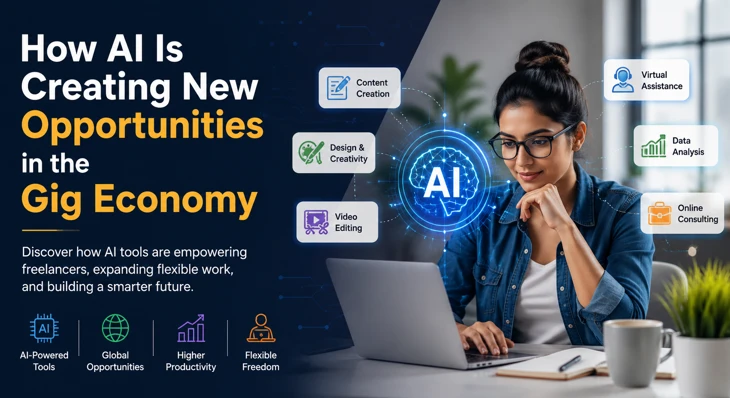
The gig economy has changed the way people work. Freelancers, independent contractors, and remote workers are no longer limited to traditional side hustles like driving for ride-sharing apps or delivering food. Today, artificial intelligence is opening the door to entirely new types of flexible work. From content creation and graphic design to virtual assistance and online consulting, AI-powered tools are helping gig workers complete tasks faster, improve their skills, and access opportunities that were once out of reach. Businesses are also using AI to connect with skilled freelancers, automate repetitive tasks, and build more efficient remote teams. As technology continues to evolve, the relationship between AI and the gig economy is becoming stronger. Many professionals are now using AI not as a replacement for human work but as a tool to increase productivity and create new income streams. In this article, we will explore how AI is shaping the future of gig work, which industries are benefiting most, the challenges freelancers may face, and practical ways workers can stay competitive in an AI-driven market.Understanding the Connection Between AI and the Gig Economy
The gig economy refers to a labor market built around short-term contracts, freelance work, and flexible employment opportunities. Instead of working full-time for one employer, many people now earn income through multiple projects or clients. Artificial intelligence is accelerating this shift by making work more accessible and scalable. AI tools can automate repetitive tasks, analyze large amounts of data, and support creative processes. This allows freelancers and businesses to work more efficiently. For example, a freelance writer can use AI-powered research tools to organize ideas quickly, while a designer can generate visual concepts in minutes. A virtual assistant can automate scheduling and customer communication, freeing up time for higher-value tasks. This combination of flexibility and technology is changing how people approach independent work.Why AI Is Expanding Freelance Opportunities
One of the biggest reasons AI is transforming the gig economy is accessibility. Many tasks that once required advanced technical skills can now be completed with the help of AI-powered platforms. This does not mean expertise is no longer important. Instead, AI helps people work smarter by reducing the time spent on repetitive or technical tasks.Faster Project Completion
Freelancers are often paid based on project delivery and productivity. AI tools allow workers to complete projects more efficiently. A freelance video editor, for example, can use AI to automatically remove background noise, generate captions, or organize clips. This saves hours of manual work. Writers can use AI-assisted grammar tools, marketers can automate campaign reporting, and developers can speed up coding tasks with AI-powered suggestions. The result is simple: freelancers can take on more projects without sacrificing quality.Lower Barriers to Entry
AI tools are making it easier for beginners to enter the freelance industry. Someone with limited design experience can create professional-looking visuals using AI-assisted design platforms. New content creators can edit videos or generate scripts with minimal technical knowledge. This has opened the door for students, stay-at-home parents, career changers, and remote workers looking for additional income.Access to Global Clients
AI-powered marketplaces and freelance platforms use smart algorithms to match clients with workers based on skills, experience, and project needs. This improves visibility for freelancers and helps businesses find specialized talent quickly. Language translation tools also make cross-border collaboration easier. A freelancer in India can work with a startup in Canada or a business owner in Germany without major communication barriers.Industries Where AI Is Creating New Gig Jobs
AI is influencing nearly every industry, but some sectors are experiencing particularly strong growth in freelance opportunities.Content Writing and Copywriting
Content creation remains one of the fastest-growing areas in the gig economy. Businesses constantly need blog posts, website content, social media captions, product descriptions, newsletters, and SEO articles. AI tools can support research, generate outlines, and assist with editing, allowing writers to focus more on creativity and strategy. However, businesses still value human storytelling, emotional connection, and brand voice. Skilled writers who combine creativity with AI productivity tools are becoming highly valuable. Long-tail keywords such as “AI tools for freelance writers,” “future of AI in content creation,” and “AI-powered freelance writing opportunities” are becoming increasingly relevant in search trends.Graphic Design and Digital Art
AI image generation and editing tools are changing how freelance designers work. Designers can now create mockups, logos, social media graphics, and illustrations much faster than before. AI can help generate concepts, remove backgrounds, upscale images, or create design variations. Rather than replacing designers, AI often acts as a creative assistant. Freelancers who understand branding, visual storytelling, and customer psychology still provide value that automated tools alone cannot match.Video Editing and Content Production
Short-form video content has exploded across platforms like YouTube, Instagram, and TikTok. AI-powered editing software can automatically generate subtitles, recommend transitions, improve audio quality, and even create highlight clips. This has increased demand for freelance video editors who can produce professional content quickly. Content creators and businesses often prefer freelancers who can combine AI efficiency with human creativity.Virtual Assistance and Administrative Support
Administrative freelancers are using AI to automate scheduling, email management, data entry, and customer service tasks. AI chatbots can handle basic customer inquiries, while virtual assistants focus on relationship management and complex support tasks. This creates opportunities for remote workers who can manage AI systems while delivering personalized human interaction.Software Development and Tech Services
AI coding assistants are helping freelance developers speed up programming tasks. Developers can use AI to debug code, generate snippets, automate testing, and improve workflows. This has increased productivity while also creating demand for professionals who understand machine learning, automation, and AI integration. Freelance tech specialists who can help businesses adopt AI solutions are especially in demand.How AI Is Helping Small Businesses Hire Freelancers
The growth of AI in the gig economy is not only benefiting workers. Businesses are also gaining advantages. Small businesses often operate with limited budgets and smaller teams. Hiring freelancers allows them to access specialized talent without committing to full-time salaries. AI-powered hiring systems help companies:- Match freelancers with project requirements
- Screen applications faster
- Analyze portfolios and experience
- Automate onboarding processes
- Track project progress more efficiently
The Rise of AI-Assisted Side Hustles
Many people are using AI tools to build side income streams. These AI-assisted side hustles include:- Selling digital products
- Creating online courses
- Managing social media accounts
- Running print-on-demand businesses
- Offering AI-powered consulting services
- Building niche websites with SEO content
- Editing podcasts and videos
Skills That Matter Most in an AI-Driven Gig Economy
While AI can automate many technical tasks, human skills remain essential. Freelancers who want long-term success should focus on abilities that technology cannot easily replace.Communication Skills
Clear communication remains one of the most valuable freelance skills. Clients want professionals who understand project goals, provide updates, and solve problems effectively. Even with advanced automation, businesses still rely on human collaboration.Creativity and Original Thinking
AI can generate ideas, but human creativity gives projects personality and emotional impact. Whether it is storytelling, branding, design strategy, or content marketing, original thinking continues to separate skilled freelancers from average competitors.Adaptability
Technology changes quickly. Freelancers who learn new tools and stay up to date on industry trends are more likely to succeed. Instead of resisting AI, successful gig workers treat it as part of their workflow.Strategic Problem-Solving
Businesses hire freelancers to solve challenges. Professionals who can think critically, make decisions, and provide strategic recommendations offer more value than those who simply complete repetitive tasks.Challenges AI Brings to the Gig Economy
Although AI creates opportunities, it also introduces challenges. Understanding these issues is important for freelancers and businesses alike.Increased Competition
Because AI lowers barriers to entry, more people can join freelance marketplaces. This can increase competition in areas like content writing, graphic design, and social media management. Freelancers may need stronger portfolios, better specialization, and higher-quality service to stand out.Pricing Pressure
Some businesses expect faster, cheaper work as AI tools improve productivity. As a result, freelancers may face pressure to lower their rates. However, professionals who provide strategic thinking, industry expertise, and creative insight can still command premium pricing.Skill Gaps
Workers who avoid learning AI tools may struggle to stay competitive. Technology adoption is becoming part of modern freelance work. The good news is that many AI platforms are designed for beginners and offer a gentle learning curve.Ethical Concerns
There are ongoing discussions about copyright, originality, data privacy, and AI-generated content. Freelancers should use AI responsibly and ensure their work remains authentic, accurate, and client-focused.Practical Ways Freelancers Can Benefit From AI
Freelancers do not need advanced technical expertise to start using AI effectively. Simple workflow improvements can make a major difference.Use AI for Research and Organization
AI tools can summarize information, organize notes, and generate outlines. This helps freelancers save time during project preparation.Automate Repetitive Tasks
Tasks like scheduling, invoicing, email sorting, and file organization can often be automated. Reducing repetitive work gives freelancers more time to focus on high-value projects.Improve Marketing Efforts
AI analytics tools can help freelancers understand audience behavior, optimize SEO strategies, and improve content performance. Freelancers who market themselves effectively are more likely to attract consistent clients.Enhance Client Communication
AI-powered scheduling assistants and CRM systems help manage client interactions more efficiently. This creates a smoother professional experience.Real-Life Examples of AI in the Gig Economy
Many freelancers are already successfully combining AI with human expertise. A freelance marketer may use AI tools to analyze campaign performance and identify trends more quickly than with manual reporting methods. A graphic designer can generate multiple creative concepts within minutes before refining the final design manually. An online tutor may use AI-powered educational tools to personalize lesson plans for students. Even small businesses are hiring AI-savvy freelancers to help automate operations, create content, and manage digital growth. These examples show that AI is often working alongside freelancers rather than replacing them entirely.The Future of AI and Gig Work
The future of the gig economy will likely involve even closer collaboration between humans and AI systems. Remote work, digital platforms, and automation are continuing to reshape employment models worldwide. Experts predict that freelancers who combine technical adaptability with human-centered skills will have the strongest opportunities. New roles are also emerging, including:- AI content editors
- Prompt engineers
- Automation consultants
- AI workflow specialists
- Digital product strategists
- AI trainers and evaluators