
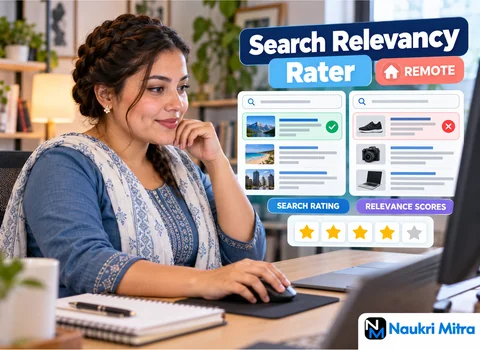
Someone types a common health question about a child's fever, and near the top sits a page with a clean layout, soft stock photos and confident headings. Look closer and nothing holds it up. There is no named author, no sign of medical review, no date you can trust, and one dosage tip that doctors stopped giving years ago. Deciding how far that page deserves to be believed, and how far down it should sit, is the daily substance of online search relevancy rater jobs. This listing is part-time and remote, any country is welcome, and the rate is $15 an hour in USD.
As a search relevancy rater job description in one line: you rate web results against what the searcher meant and against page quality, compare result sets, and apply long guidelines carefully. A degree is not required, and you can do this search relevancy rater work from home.
Before you open a single result, you work out what the person wanted. Most queries fall into a few broad families. Some people want to know something: a fact, an explanation, a definition. Some want to do something: download a form, convert a file, book a ticket. Some want one particular website and would be annoyed by anything else. Others want a place they can visit in person, such as a pharmacy or a post office near them, and the location of the searcher changes which results make sense.
Plenty of queries carry more than one meaning. Good raters ask which meaning most searchers intend and which minority meanings still deserve room. Get intent wrong and every later rating suffers.
Page quality starts with a blunt question: why does this page exist? Helping, informing or selling honestly is a legitimate purpose. Catching clicks or misleading is not.
Then you look for evidence. Who wrote it, and do they have real expertise? Is it clear who runs the site? Next you step outside the page and research reputation independently: news coverage, user reviews, complaints and what recognised experts say. What a site claims about itself is the weakest evidence you have, and a smart design proves nothing.
Rater guidelines generally ask for higher standards when a page could affect someone's health, finances, safety or major life decisions. A recipe blog with a vague author is a small worry. An anonymous page on treating chest pain is a serious one.
So you demand clearer expertise, current information and stronger reputation there. Out-of-date medical advice, invented statistics and claims against well-established expert consensus all count against a page, however well it reads.
New raters often blend these two scores, and reviewers notice. Needs met asks how well a result serves this searcher, for this query, right now. Page quality asks how good the page is on its own terms, regardless of the query.
They can point in opposite directions. A respected source can fail a searcher who meant something else, while a modest page can fully answer a query about a local shop's opening hours. Score each honestly and say in your comment which evidence drove which score.
Some tasks show you two complete pages of results for the same query and ask which set serves the searcher better, and by how much. You weigh the top positions most heavily and check whether either side buries the obvious answer, repeats near-identical pages or shows something harmful high up.
The useful habit here is to decide on intent first and only then look at the sets. If you look first, the side with the prettier results can sway you before you have asked what the searcher needed.
Search changes faster than any guideline. A query that meant nothing last month may now point to a breaking story or a phrase that began as an online joke. That is why this role asks for awareness of current affairs and internet culture. Miss a new meme and you may mark a sensible result irrelevant.
You are expected to look things up before rating. Freshness matters too: for an ongoing event, a page from two years ago may now be wrong.
Work happens in a browser-based rating tool. Each task shows a query, sometimes a location, one or more results, rating scales and comment boxes, plus an estimated time that projects compare your pace against.
Rushing to beat the timer is the common trap. A sensible rhythm:
Ratings are checked against hidden test tasks with known answers, other raters or auditors. The results roll up into your quality score, and a falling score can cost you task access or the project itself. You will not know which tasks are tests.
Feedback from reviews is worth more than any search relevancy rater course. Reread the relevant guideline section each time you get a rating wrong, and note the pattern so you catch it next time.
Most projects require an evaluator exam before paid work. The guidelines behind it are long, and the exam usually mixes theory questions with practical rating tasks. Skimming is the usual reason people fail.
A workable study plan:
No paid search relevancy rater certification replaces the project's own exam, and nobody can promise a first-time pass. Preparation clearly helps, and some people need more than one attempt where a retake is allowed. Some projects allow none.
You need strong reading skills in English or the target language, a computer (most projects will not accept a phone), stable internet and set weekly hours you can keep. The core search relevancy rater skills are careful reading, independent research and consistency. Freshers are welcome: among search relevancy rater jobs for freshers, this one asks for study rather than history, so a blank rating record is no barrier.
On a search relevancy rater resume, show research and judgement: fact-checking, moderation, editing or teaching, plus your languages and hours. TELUS Digital, RWS and Appen have all been linked with search evaluation work, as examples rather than a list of current openings.
A search rater judges organic results such as web pages and local listings. An ads quality rater judges paid adverts: does the ad match the query, and does its landing page deliver what it promised? The skills overlap; the guidelines differ.
Is it legit? Genuine search rating work has existed for years, but it is project-based, so hours vary and projects can end. Genuine projects never charge a joining fee. On search relevancy rater salary per hour, this role sets $15 per hour, but monthly earnings depend on the hours a project actually offers. Part time search relevancy rater jobs like this one work best as steady side income while a project lasts, and they pair well with other freelance search relevancy rater jobs if each project's terms allow it.