
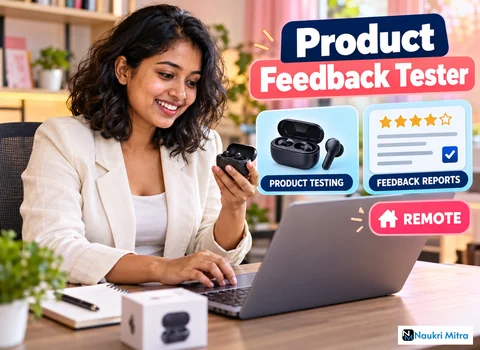
The recorder counts down from three, a small red dot appears in the corner of your screen, and the first task card says something like: "Sign up for this budgeting app. Say everything you think out loud as you go." You have never seen the app before, which is exactly why you are useful. This listing is for one of those online product feedback tester jobs: you try apps and websites as an ordinary person would, talk through your reactions and record your screen. It is part-time product feedback tester work from home, people anywhere in the world can apply, and it pays $5 per hour USD. You need no previous experience.
Most sessions follow a similar rhythm. First come screener questions: a short set of multiple-choice items asking about your age range, the devices you own, the apps you use or the shopping you do. They match the right people to each study; a banking app team might want people who switched banks recently.
If you pass the screener, you get a task list. Tasks are short and concrete: create an account, change a delivery address, find the cancellation policy. You work through them while the recorder captures your screen and voice.
After the tasks, there are follow-up questions. Some are rating scales ("How easy was it to find the checkout, from one to five?"), and some ask you to type or say a few sentences about what stood out.
The skill that separates a useful recording from a forgettable one is the running commentary. Product teams watch these videos to see where people hesitate, so silence is the enemy. A few habits make a big difference:
If you go quiet, a simple reset helps: describe what is on the screen right now.
Not everything fits into a spoken comment. Many studies ask for a written summary at the end, and some ask you to flag problems as you find them. Good written feedback is specific and calm. Instead of "the form is broken", write what you did, what you expected and what happened: "Entered a postcode with a space in it, pressed Continue, page reloaded with no error message and the postcode field empty."
For confusing steps that are not technically bugs, explain the moment of doubt. "I couldn't tell if the free trial would charge me automatically" is the kind of line a product manager forwards to the whole team. Keep each point to one issue.
Most people already own the setup:
Close private tabs, mute notifications and log out of personal accounts you do not want on camera before you press record.
New testers are often surprised by how irregular the work is. You might see several tests one week and almost none the next. What helps:
This role pays $5 per hour USD for test work. Many testing platforms pay a flat amount per completed test instead, and the amount varies with the study's length, the device and whether it is a live interview. Screeners you fail are usually unpaid, and so is time spent waiting for tests to appear.
So treat any product feedback tester salary figure you read online with caution. However the pay is worked out, the total depends on how many studies match your profile, and nobody can promise steady hours. Think of it as flexible side income that slots in beside college, other work or family duties.
Usability testing for the public is a well-established practice. UserTesting, Userlytics, Testbirds and uTest are examples of platforms where people test apps and websites and give feedback, sometimes through recorded think-aloud videos and sometimes through structured bug reports. Each has its own sign-up steps and payment rules, which change, so read the current terms before joining.
People often ask whether UserTesting is legit. It is a real company and a real platform, and testers do get paid for completed work under its terms. The honest part is what follows: tests arrive unevenly, competition for them is real, and for most people the money is pocket money rather than a living. No genuine platform charges you to sign up. If a "testing job" asks for money upfront, walk away.
A product feedback tester and a software QA tester both find problems, but they come at them from opposite ends. You, as a feedback tester, represent a normal user. Your value is your first impression, your confusion and your honest reactions, and you need no technical background.
A software QA tester works more systematically: writing test cases, checking edge cases, logging defects in tracking tools such as Jira, and confirming fixes. QA roles usually expect training and some technical knowledge.
Since no experience is needed, product feedback tester jobs for freshers, students and career changers are a realistic entry point. To become one you mostly need patience, clear speech and the willingness to say "I don't get this" on a recording.
If you want to grow, there are sensible next steps. A product feedback tester course on usability basics helps you describe problems in the language teams use. A product feedback tester certification is not usually required to start; some platforms run their own short qualification tests, and those matter more than outside certificates. On your resume, list the products you have tested and your devices rather than inflated titles.
Over time, the observation habit can lead towards QA testing or user research assistance. None of that is automatic.
Expect a profile, a few questions about your devices and habits, and possibly a sample test where you think aloud through a short task. If anyone interviews you, the questions are usually hands-on, such as how you would describe a confusing screen. Check your microphone, pick a quiet hour and give it a try.