📚 Table of Contents
- Introduction
- Understanding Higher Education Advising in a Real-World Context
- What this role actually looks like day-to-day
- Why international students rely heavily on advisors
- Why Remote Higher Education Advising Is Becoming So Popular
- Education has quietly moved online (and stayed there)
- Students are studying across borders more than ever
- Skills That Actually Matter in This Career
- Communication that feels human, not scripted
- Cultural awareness (this is non-negotiable)
- Comfort with digital tools
- Problem-solving under pressure
- How People Actually Start This Career Path
- Educational background (but not in a rigid way)
- Certifications that can help (but aren’t always required)
- Entry-level paths that actually work
- Working With International Students in a Remote Setup
- Time zones will test your flexibility
- Every education system feels different (because it is)
- Emotional support matters more than people think
- Tools That Make Remote Advising Work Smoothly
- Career Growth in This Field (Yes, It’s Real Growth)
- Challenges You’ll Actually Face (No Sugarcoating)
- Building trust without physical presence
- Work-life balance can blur
- Not every student has perfect access to technology
- A Realistic Scenario From the Field
- FAQs
- What does a remote higher education advisor actually do?
- Is this career fully remote?
- What skills matter most in this field?
- Can beginners enter student support services online?
- What are the biggest challenges?
- Is this field growing?
- Conclusion
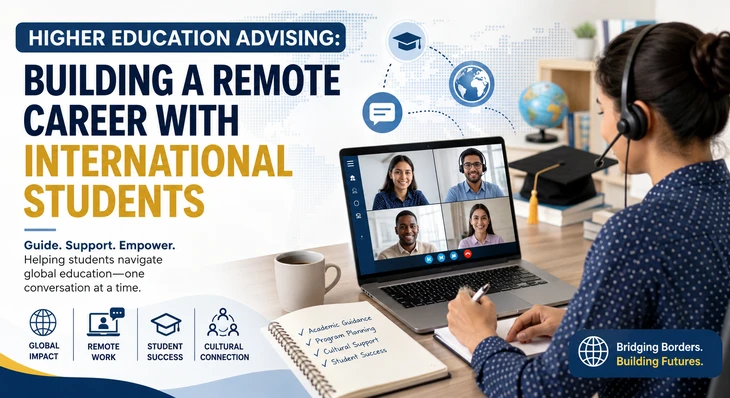
Higher Education Advising: Building a Remote Career With International Students
Introduction
Higher education has changed more in the last decade than it probably did in the previous fifty years combined. A big reason? Everything has gone digital—and fast. Students are no longer tied to campus corridors or physical counseling desks. They’re studying from different countries, different time zones, and often completely different education systems. And right in the middle of this shift sits a growing opportunity: the remote higher education advisor career. This isn’t just a “work-from-home” version of a traditional job. It’s a completely different way of guiding students as they navigate complex academic journeys across borders. From choosing programs to understanding credit systems, from handling confusion about course structures to simply feeling confident in a new environment—this role quietly holds everything together. If you’ve ever wondered what it’s like to support international students while working remotely, this guide breaks it down in a real, practical way—no fluff, no jargon.Understanding Higher Education Advising in a Real-World Context
What this role actually looks like day-to-day
At its core, higher education advising is about helping students make sense of their academic path. But when you zoom out to a global level, things get more layered. You’re not just helping someone pick subjects—you’re helping them navigate systems that may be completely new to them. A typical day in an online academic advisor career might include:- Talking a student through program options over Zoom
- Explaining credit transfers between countries
- Helping someone understand why their grading system suddenly feels “different.”
- Checking in on academic progress through digital dashboards
Why international students rely heavily on advisors
Let’s be honest—starting your education in a new country (or even a new online education system) can feel overwhelming. International students often deal with:- Confusing academic structures that don’t match what they’re used to
- Language gaps that make assignments feel harder than they are
- Pressure to adapt quickly without guidance
- Unfamiliar expectations around participation, writing, and assessments
Why Remote Higher Education Advising Is Becoming So Popular
Education has quietly moved online (and stayed there)
What started as a temporary shift to online learning has now become a long-term model. Universities and colleges are building hybrid systems in which students may never physically set foot on campus. That shift naturally created demand for remote higher-education advisor roles that can operate entirely online. Advisors now manage student support through:- Video calls
- Email threads
- Student portals
- Messaging platforms
Students are studying across borders more than ever
There was a time when studying abroad meant physically relocating. That still happens—but now there’s also a rise in cross-border online education. Students might live in India, enroll in a US-based program, and never leave their home city. That’s where study abroad guidance remote services step in. They help students understand systems they may never physically see, but still need to succeed in.Skills That Actually Matter in This Career
Communication that feels human, not scripted
If there’s one skill that stands above everything else, it’s this: clarity in communication. Students don’t want long explanations filled with academic jargon. They want someone who can break things down in a way that actually makes sense. Sometimes that means explaining the same thing in three different ways until it clicks—and that’s okay.Cultural awareness (this is non-negotiable)
Working with international students means working with completely different expectations, habits, and learning styles. What feels “normal” in one country might feel unfamiliar in another. Strong advisors don’t judge that difference—they adapt to it.Comfort with digital tools
This role lives online, so you’ll naturally spend a lot of time in tools like:- Zoom or Google Meet for advising sessions
- LMS platforms for tracking coursework
- Student databases for academic records
- Chat systems for quick support
Problem-solving under pressure
Every student brings a different situation. Some are confused about deadlines, others about course structure, and some just feel stuck. There’s rarely a “perfect” answer—just the best possible guidance in that moment.How People Actually Start This Career Path
Educational background (but not in a rigid way)
Most people enter this field from backgrounds in education, counseling, communication, or student support. A degree helps, but what really matters is understanding how students think and what they need when they’re confused.Certifications that can help (but aren’t always required)
Some professionals choose to strengthen their profile with training in:- Academic advising
- Student development
- Intercultural communication
Entry-level paths that actually work
Nobody starts at the top. Most professionals begin in roles like:- Student support assistant
- Admissions coordinator
- Academic mentoring support
Working With International Students in a Remote Setup
Time zones will test your flexibility
You might be speaking to one student in the morning and another late at night. That’s normal in this field. Good advisors don’t try to force rigid schedules—they build flexible systems that work across time zones.Every education system feels different (because it is)
A degree structure in the US is not the same as one in Europe or Asia. Even grading styles vary more than most people expect. So part of your job becomes translation—not language translation, but system translation. You’re helping students understand how everything connects.Emotional support matters more than people think
Students don’t always say it directly, but many are stressed or unsure. Sometimes what they need isn’t information—it’s reassurance that they’re on the right track. That small shift in tone can change their entire experience.Tools That Make Remote Advising Work Smoothly
Remote advising depends heavily on digital systems. Without them, things would fall apart quickly. Common tools include:- Video platforms like Zoom for face-to-face interaction
- CRM systems for tracking student journeys
- LMS platforms for academic updates
- Communication tools like Slack or Teams for coordination
Career Growth in This Field (Yes, It’s Real Growth)
This isn’t a dead-end job—it’s a career path with real progression. With experience, professionals move into roles like:- Senior academic advisor
- International student services manager
- Program coordinator
- Higher education consultant