📚 Table of Contents
- The Rise of the Global Freelance Economy
- Why Freelance Marketplaces Continue to Grow
- Businesses Need Agility
- Freelancers Want Freedom
- The Role of Artificial Intelligence in Freelance Platforms
- Smarter Talent Matching
- AI-Assisted Project Management
- Automation Will Change Skill Demand
- Niche Freelance Marketplaces Will Expand
- Remote Work Is Reshaping Global Hiring
- Borderless Hiring Will Become Normal
- Demand for Remote Collaboration Skills
- Blockchain and Secure Payments in Freelancing
- Faster Global Transactions
- Smart Contracts Could Reduce Disputes
- The Growing Importance of Personal Branding
- Freelancers Will Build Independent Brands
- Reputation Systems Will Become More Advanced
- Upskilling Will Become Essential
- High-Demand Freelance Skills of the Future
- Challenges Facing Freelance Marketplaces
- Increased Competition
- Pricing Pressure
- Platform Dependency
- Trust and Fraud Concerns
- How Businesses Can Prepare for the Future of Freelancing
- Build Flexible Talent Networks
- Focus on Results Over Location
- Use Collaboration Technology
- How Freelancers Can Stay Competitive
- Specialize Instead of Generalizing
- Invest in Communication Skills
- Continue Learning
- The Future Looks Highly Flexible and Global
- FAQs
- What are freelance marketplaces?
- Why are freelance marketplaces growing so quickly?
- Will artificial intelligence replace freelancers?
- Which freelance skills will be most valuable in the future?
- Are niche freelance marketplaces better than general platforms?
- How can freelancers stand out in competitive marketplaces?
- Conclusion
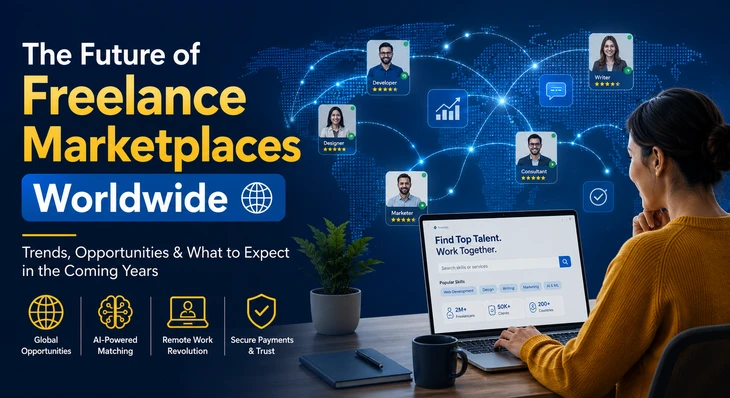
The Future of Freelance Marketplaces Worldwide
The way people work has changed dramatically over the last decade. Traditional office jobs are no longer the only path to a successful career, and businesses are no longer limited to hiring talent within their local area. Freelancing has become a global movement, powered by technology, remote collaboration tools, and a growing demand for flexible work. Today, freelance marketplaces are at the center of this transformation. Platforms that connect businesses with independent professionals have created opportunities for millions of people worldwide. From graphic designers and writers to software developers and marketing experts, freelancers are now helping companies scale faster and operate more efficiently. As the global workforce continues to evolve, the future of freelance marketplaces looks even more promising. Artificial intelligence, remote-first business models, digital payments, and borderless hiring are reshaping how freelancers and clients connect. In this article, we will explore the future of freelance marketplaces worldwide, the trends driving their growth, challenges that may emerge, and what businesses and freelancers should expect in the coming years.The Rise of the Global Freelance Economy
Freelancing was once considered a side hustle or a temporary source of income. Today, it has become a long-term career option for millions of professionals worldwide. Companies are increasingly turning to freelance talent because it offers flexibility, lower operational costs, and access to specialized expertise. Instead of hiring full-time employees for every task, businesses can now work with experts on demand. At the same time, professionals are choosing freelance work for greater independence, flexible schedules, and the ability to work from anywhere. The rise of digital platforms has made this shift possible. Modern freelance marketplaces simplify the process of finding projects, hiring talent, handling payments, and managing communication. Some major factors driving freelance marketplace growth include:- Remote work adoption worldwide
- Increased internet accessibility
- Growing startup ecosystems
- Demand for specialized digital skills
- Flexible work preferences among younger generations
- Faster online payment systems
Why Freelance Marketplaces Continue to Grow
Freelance marketplaces solve problems for both businesses and independent workers. For companies, these platforms reduce recruitment time and allow faster access to skilled professionals. Instead of going through lengthy hiring processes, businesses can quickly find freelancers for short-term or long-term projects. For freelancers, marketplaces provide exposure to international clients and consistent project opportunities.Businesses Need Agility
Modern businesses operate in highly competitive markets. Companies need the ability to scale teams quickly based on workload and project requirements. Freelance platforms make this possible by offering immediate access to a global talent pool. For example, a startup in India can hire a UX designer from Europe, a content writer from the Philippines, and a developer from South America without opening international offices. This level of flexibility will continue driving demand for freelance marketplaces in the future.Freelancers Want Freedom
Many professionals no longer want rigid work schedules or location-dependent jobs. Freelancing offers:- Better work-life balance
- Control over workload
- Multiple income streams
- Freedom to choose clients
- Opportunities for global collaboration
The Role of Artificial Intelligence in Freelance Platforms
Artificial intelligence is expected to play a major role in the future of freelance marketplaces. AI is already transforming how platforms match freelancers with clients, detect fraud, automate tasks, and improve user experience. In the coming years, AI-powered systems will become even more advanced.Smarter Talent Matching
One of the biggest challenges in freelancing is finding the right fit between clients and freelancers. AI algorithms are becoming better at analyzing:- Freelancer skills
- Portfolio quality
- Communication style
- Project history
- Client preferences
- Performance ratings
AI-Assisted Project Management
Freelance marketplaces are also expected to integrate AI-driven project management tools. These tools may help with:- Task tracking
- Time estimation
- Workflow automation
- Deadline management
- Performance analytics
Automation Will Change Skill Demand
AI tools are automating repetitive tasks across industries. As a result, demand for certain freelance services may decline while new opportunities emerge. For example:- Basic data entry jobs may decrease
- AI-assisted content editing may grow
- Prompt engineering services may expand
- Automation consulting may become highly valuable
- Specialized creative work may see higher demand
Niche Freelance Marketplaces Will Expand
General freelance platforms are popular, but niche marketplaces are becoming increasingly important. Instead of serving every industry, niche platforms focus on specific skills or professional categories. Examples include marketplaces dedicated to:- Healthcare professionals
- Legal consultants
- Software developers
- Creative designers
- Video editors
- Finance experts
- Marketing specialists
- Higher-quality talent pools
- Better client targeting
- Specialized project management tools
- Industry-specific vetting systems
Remote Work Is Reshaping Global Hiring
Remote work has permanently changed hiring practices worldwide. Businesses now realize that great talent can come from anywhere. This shift is creating enormous opportunities for freelance marketplaces as companies become more comfortable working with distributed teams.Borderless Hiring Will Become Normal
Geographical limitations are disappearing. A business in the United States can hire freelancers from India, Nigeria, Brazil, or Poland within minutes. This global access benefits both clients and freelancers:- Businesses gain cost-effective expertise
- Freelancers access higher-paying international projects
- Companies can operate around the clock across time zones
Demand for Remote Collaboration Skills
Future freelancers will need more than technical expertise. Soft skills such as communication, time management, cultural awareness, and remote collaboration will become increasingly valuable. Clients prefer freelancers who can:- Communicate clearly
- Deliver projects on time
- Adapt to remote workflows
- Solve problems independently
- Collaborate effectively across teams
Blockchain and Secure Payments in Freelancing
Payment security remains a major concern in freelance work. Late payments, transaction disputes, and international banking limitations can create challenges for both freelancers and clients. Blockchain technology may help solve many of these issues.Faster Global Transactions
Traditional international payments often involve:- High transaction fees
- Currency conversion costs
- Slow processing times
- Banking restrictions
- Faster payments
- Lower fees
- Transparent transactions
- Secure smart contracts
Smart Contracts Could Reduce Disputes
Smart contracts are self-executing agreements stored on blockchain networks. In freelance marketplaces, smart contracts could automatically release payments once project milestones are completed. This can increase trust between freelancers and clients while reducing payment disputes. Although blockchain adoption is still evolving, its potential impact on freelance marketplaces is significant.The Growing Importance of Personal Branding
Competition in freelance marketplaces is increasing every year. As more professionals join these platforms, freelancers will need stronger personal branding to stand out. Future success will depend not only on skills but also on reputation, visibility, and trust.Freelancers Will Build Independent Brands
Many successful freelancers are already treating themselves like businesses. They invest in:- Professional portfolios
- Personal websites
- LinkedIn optimization
- Social media visibility
- Client testimonials
- Thought leadership content
Reputation Systems Will Become More Advanced
Future freelance platforms may introduce more detailed reputation systems. Beyond star ratings, platforms could analyze:- Client retention rates
- Communication quality
- Reliability scores
- Delivery consistency
- Specialized expertise verification
Upskilling Will Become Essential
The freelance economy changes quickly. Skills that are highly valuable today may become outdated within a few years. Continuous learning will be critical for long-term success.High-Demand Freelance Skills of the Future
Several skill categories are expected to dominate freelance marketplaces in the coming years:Artificial Intelligence and Machine Learning
Businesses increasingly need AI specialists for automation, analytics, and AI integration.Cybersecurity
As digital threats increase, companies will continue to hire cybersecurity experts to protect their systems and data.Digital Marketing
SEO, paid advertising, email marketing, and social media management remain essential for online business growth.Video Production and Content Creation
Short-form video content continues driving engagement across digital platforms.Web and App Development
Businesses will always need developers to create digital products and online experiences. Freelancers who invest in learning modern tools and technologies will remain competitive.Challenges Facing Freelance Marketplaces
Despite strong growth, freelance marketplaces also face several challenges.Increased Competition
More freelancers entering the market means higher competition for projects. Beginners may struggle to secure high-paying clients without strong portfolios or specialized expertise.Pricing Pressure
Global marketplaces create pricing competition between regions. Some freelancers may lower rates to win projects, which can create downward pricing pressure in certain industries.Platform Dependency
Many freelancers depend heavily on one platform for income. Changes in algorithms, platform fees, or account policies can significantly affect earnings. This is why experienced freelancers often diversify income sources and build direct client relationships.Trust and Fraud Concerns
Fake profiles, payment scams, and low-quality work remain concerns for some users. Future platforms will need stronger verification systems and fraud prevention technologies.How Businesses Can Prepare for the Future of Freelancing
Businesses that embrace freelance talent strategically can gain major advantages.Build Flexible Talent Networks
Instead of relying only on full-time hiring, companies can develop long-term relationships with trusted freelancers. This creates scalable teams that can adapt quickly to changing business needs.Focus on Results Over Location
The future workforce will be increasingly remote and distributed. Businesses that prioritize skills and results over physical location will tap into broader talent pools.Use Collaboration Technology
Successful remote collaboration depends on efficient communication systems. Businesses should invest in tools for:- Project management
- Team communication
- File sharing
- Workflow tracking
- Virtual meetings
How Freelancers Can Stay Competitive
Freelancers who want long-term success should prepare for industry changes early.Specialize Instead of Generalizing
Specialists often earn more than generalists. Instead of offering broad services, freelancers can focus on niche expertise that solves specific problems. For example:- AI-powered SEO consulting
- SaaS copywriting
- E-commerce UX design
- Healthcare app development
- B2B email automation