📚 Table of Contents
- Introduction
- Understanding Social Media Management as a Remote Career
- What Does a Remote Social Media Manager Do?
- Why Companies Hire Remote Social Media Managers
- Essential Skills Required for a Remote Social Media Career
- Content Creation and Copywriting
- Visual Design Basics
- Analytics and Strategy
- Familiarity with Social Media Tools
- Step-by-Step Roadmap to Build a Remote Career in Social Media Management
- Step 1: Learn the Fundamentals
- Step 2: Practice and Build Your Portfolio
- Step 3: Start Freelancing or Interning
- Step 4: Apply for Remote Social Media Jobs
- Tools That Make Remote Social Media Management Easier
- Content Scheduling Tools
- Design Tools
- Analytics Tools
- Communication and Project Management Tools
- How to Find Remote Social Media Jobs
- Optimize Your LinkedIn Profile
- Use Job Platforms
- Network in Digital Communities
- Common Mistakes to Avoid
- Focusing Only on Posting Content
- Ignoring Analytics
- Not Building a Portfolio
- Overlooking Personal Branding
- Real-Life Example of a Remote Social Media Career
- FAQs
- 1. Can I become a social media manager with no experience?
- 2. How long does it take to build a remote career in social media management?
- 3. Do I need a degree to become a social media manager?
- 4. What is the average income of a remote social media manager?
- 5. Which platform is best for beginners?
- Conclusion
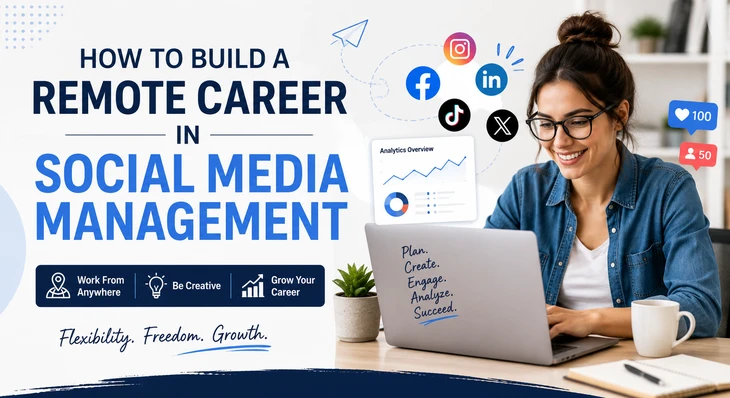
How to Build a Remote Career in Social Media Management
Introduction
Building a remote career in social media management has become one of the most accessible and rewarding paths in today’s digital-first world. Brands of all sizes—from startups to global enterprises—are actively searching for skilled professionals who can manage their online presence, engage audiences, and drive meaningful results without being tied to a physical office. The rise of remote work culture has made it easier than ever for social media managers to work from home or anywhere in the world. Whether you are a student, a freelancer, or someone looking to switch careers, social media management offers flexibility, creativity, and strong income potential. In this guide, you’ll learn exactly how to become a remote social media manager, what skills you need, how to build experience, and how to land your first remote job. Everything is broken down into simple, practical steps so you can start your journey with confidence.Understanding Social Media Management as a Remote Career
Social media management is more than just posting content online. It is a strategic role that involves planning, creating, analyzing, and optimizing content across platforms like Instagram, Facebook, LinkedIn, TikTok, and X (Twitter).What Does a Remote Social Media Manager Do?
A remote social media manager handles a brand’s online presence from anywhere in the world. Typical responsibilities include:- Creating engaging content for different platforms
- Writing captions and optimizing posts for engagement
- Scheduling posts using digital tools
- Monitoring audience interactions and responding to comments
- Tracking performance metrics and reporting insights
- Running paid ad campaigns (in some roles)
Why Companies Hire Remote Social Media Managers
Businesses prefer remote social media professionals because:- It reduces operational costs
- It gives access to global talent
- It allows round-the-clock content management
- It improves flexibility and productivity
Essential Skills Required for a Remote Social Media Career
To succeed in this field, you need a combination of creative, technical, and analytical skills.Content Creation and Copywriting
Strong writing skills are the foundation of social media management. You must be able to:- Write catchy captions
- Adapt tone based on brand identity
- Create storytelling-driven posts
Visual Design Basics
You don’t need to be a professional designer, but basic knowledge of tools like Canva helps you:- Create visually appealing posts
- Maintain brand consistency
- Design simple reels or story graphics
Analytics and Strategy
Understanding numbers is important. You should be comfortable with:- Engagement rate
- Reach and impressions
- Click-through rates
- Audience insights
Familiarity with Social Media Tools
Common tools include:- Scheduling tools like Buffer or Hootsuite
- Analytics tools like Meta Business Suite
- Design tools like Canva
- Communication tools like Slack or Trello
Step-by-Step Roadmap to Build a Remote Career in Social Media Management
Starting from scratch may feel overwhelming, but breaking it into steps makes it manageable.Step 1: Learn the Fundamentals
Begin by understanding how each platform works. Instagram is visual-driven, LinkedIn is professional, TikTok focuses on short videos, and Facebook supports community building. Learn:- How algorithms work
- Content formats that perform well
- Basic marketing principles
Step 2: Practice and Build Your Portfolio
Before applying for jobs, create sample work. You can:- Manage a mock brand page
- Create content calendars
- Design sample posts
- Write captions for different industries
Step 3: Start Freelancing or Interning
Practical experience matters more than certificates. You can find opportunities on:- Freelance platforms
- Startup communities
- LinkedIn job posts
Step 4: Apply for Remote Social Media Jobs
Once you have experience, start applying for remote roles. Tailor your resume to highlight:- Content creation skills
- Campaign results (if any)
- Tools you are familiar with
Tools That Make Remote Social Media Management Easier
Using the right tools can significantly improve productivity and efficiency.Content Scheduling Tools
These tools help you plan and automate posts:- Buffer
- Hootsuite
- Later
Design Tools
Visual content is key in social media growth:- Canva for graphics and templates
- Adobe Express for quick designs
Analytics Tools
To measure performance:- Meta Business Suite
- Google Analytics
Communication and Project Management Tools
For remote collaboration:- Slack for communication
- Trello or Asana for task management
- Zoom for meetings
How to Find Remote Social Media Jobs
Finding the right opportunity requires strategy.Optimize Your LinkedIn Profile
Your LinkedIn should clearly show:- Social media skills
- Portfolio links
- Relevant experience
Use Job Platforms
Search on:- Remote job boards
- Freelance marketplaces
- Startup hiring platforms
Network in Digital Communities
Join:- Facebook groups for marketers
- LinkedIn communities
- Discord servers for freelancers