📚 Table of Contents
- How Podcasting Became a Global Career Path
- Why Global Brands Are Investing in Podcast Content
- The Different Remote Podcasting Careers You Can Explore
- Podcast Producer
- Audio Editor
- Scriptwriter
- Podcast Manager
- Marketing Specialist
- Skills That Actually Matter in This Industry
- Getting Started Without Overthinking It
- What It’s Like Working With Global Clients
- The Challenges Nobody Talks About
- Where This Career Is Headed
- Practical Tips to Grow in Podcasting
- FAQs About Remote Podcasting Careers
- Is podcasting a good remote career option?
- Do I need expensive equipment to start?
- How do beginners find podcasting work?
- Is audio editing difficult to learn?
- Can podcasting become a full-time career?
- Conclusion
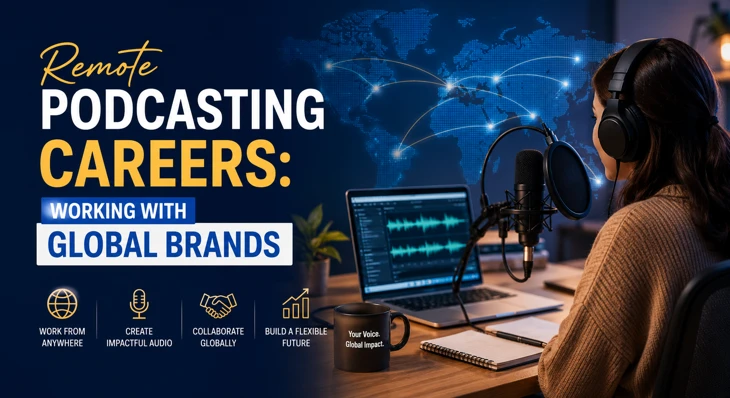
Remote Podcasting Careers: Working With Global Brands
Podcasting has quietly moved from being a niche creative hobby into one of the most influential digital industries in the world. Today, brands are not just experimenting with it—they are actively building entire communication strategies around audio storytelling. And as this shift continues, remote podcasting careers are opening real opportunities for people who want flexible, creative, and globally connected work. What makes this space interesting is how natural it feels. You don’t need a studio job, a media degree, or even expensive equipment to get started. In many cases, all you need is a good ear for stories, a sense of timing, and the patience to shape raw audio into something people actually want to listen to. This guide takes a practical look at how remote podcasting careers work today, what global brands expect, and how individuals are building long-term careers in this growing industry.How Podcasting Became a Global Career Path
A few years ago, podcasting was something people did on the side—often out of passion rather than profession. That has changed completely. With audiences consuming content on the go—during commutes, workouts, or even while working—audio has become one of the most personal forms of media. Unlike short videos or social posts, podcasts hold attention longer, which is exactly what brands are looking for. This is where remote podcasting careers began to gain momentum. Companies realized they didn’t need in-house studios or full-time production teams. Instead, they could collaborate with skilled professionals from anywhere in the world. Today, it’s common to see podcast editors in India working with clients in the US, or scriptwriters in Europe supporting brands in Australia. Geography is no longer a limitation—it’s just background noise.Why Global Brands Are Investing in Podcast Content
If you look closely at modern marketing, there’s a clear pattern: audiences are tired of being interrupted. They want content that feels natural, not forced. Podcasts fit perfectly into this shift. They allow brands to speak in a more relaxed, human tone instead of traditional advertising language. Many companies now use podcasts to:- Share behind-the-scenes stories that feel authentic
- Build trust through long-form conversations
- Position leaders as industry voices
- Connect with niche audiences that are hard to reach elsewhere
The Different Remote Podcasting Careers You Can Explore
One of the biggest misconceptions about podcasting is that it only involves hosting. In reality, most of the work happens behind the scenes—and much of it can be done remotely. Let’s break down some of the most in-demand roles.Podcast Producer
A podcast producer is like the project owner. They shape the episode structure, coordinate guests, manage timelines, and ensure everything comes together smoothly. It’s a role that blends creativity with organization.Audio Editor
This is where raw recordings are transformed into polished episodes. Editors remove background noise, adjust pacing, clean dialogue, and sometimes even add music or sound effects. It’s detailed work, but highly valued by global clients.Scriptwriter
Not every podcast is fully improvised. Many brands rely on scriptwriters to build episode outlines, prepare interview questions, and create narrative flow. Strong writing skills can open consistent freelance opportunities here.Podcast Manager
Think of this role as the operational backbone. Podcast managers handle publishing schedules, uploading episodes, tracking performance, and ensuring consistency across platforms.Marketing Specialist
Even great podcasts need an audience. Marketing specialists help promote episodes through SEO, social media, email campaigns, and collaborations. Growth strategy is a big part of long-term success in podcasting. Each of these roles offers a different entry point, which means you can build a career based on your strengths rather than trying to fit into a single mold.Skills That Actually Matter in This Industry
You don’t need to be technically perfect when starting out. Most people grow into the role over time. What matters more is your ability to understand audio storytelling and deliver consistent work. Some practical skills that help include:- Being able to shape a story so it holds attention
- Basic understanding of audio editing tools like Descript or Audacity
- Knowing how podcast platforms work
- Researching topics in a structured, meaningful way
- Communicating clearly with remote clients
Getting Started Without Overthinking It
Most people delay entering podcasting because they think they need to be “ready.” In reality, readiness comes after you start. A simple way to begin is to run small experiments. You might record a short mock podcast episode or edit a public domain interview just to practice pacing and sound flow. It doesn’t need to be perfect—it just needs to exist. Once you have a few samples, you can slowly build a portfolio. It doesn’t have to be a complex website either. Even a well-organized folder with clear examples can work when you’re starting out. From there, small freelance projects often lead to bigger opportunities. Many global brands prefer working with freelancers who already have hands-on experience, even if it’s self-taught.What It’s Like Working With Global Clients
Working remotely with international brands sounds glamorous, and in many ways, it is. But it also requires discipline. You’ll often find yourself working across time zones, receiving feedback late at night, or adjusting content based on very specific brand guidelines. Most clients expect:- Clean, professional audio output
- Reliable communication without delays
- Consistency in tone and style
- On-time delivery, even with tight deadlines
The Challenges Nobody Talks About
Like any remote career, podcasting comes with its own set of realities. One of the most common challenges is balancing multiple projects at once. When clients are in different time zones, your workday can feel stretched. Another challenge is income stability, especially in the early stages. Freelance podcasting often grows gradually, not overnight. And then there’s the learning curve. Audio editing, storytelling, and client management all improve with experience—but the beginning can feel overwhelming. The professionals who succeed in the long term usually don’t try to avoid these challenges. Instead, they build systems to manage them better over time.Where This Career Is Headed
The future of podcasting is expanding faster than most people realize. As more brands shift toward content-driven marketing, audio is becoming a core part of communication strategies. We’re already seeing:- More companies are launching branded podcast series
- Increased demand for niche storytelling formats
- Growth in multilingual podcast production
- Better remote tools for collaboration and editing
Practical Tips to Grow in Podcasting
Progress in this field usually comes from small, consistent improvements rather than big breakthroughs. It helps to:- Focus on improving one skill at a time
- Listen to high-quality podcasts regularly
- Study how professional episodes are structured
- Build long-term relationships with clients instead of one-off projects
- Keep refining your editing and storytelling style