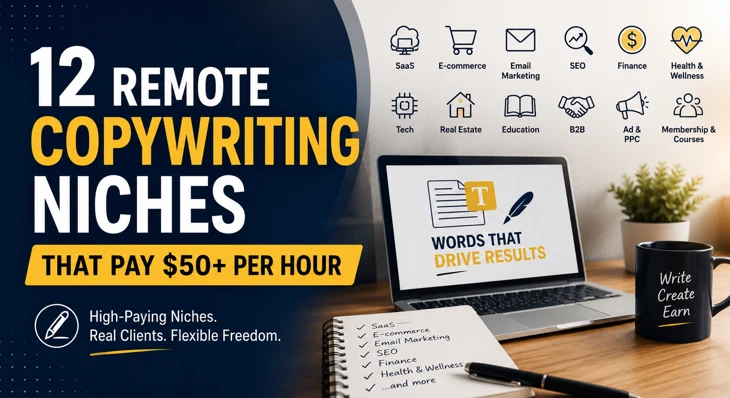
12 Remote Copywriting Niches That Pay $50+ Per Hour
Introduction: Why Remote Copywriting Feels Like a Real Career Shift Now
A few years ago, most people didn’t think of writing as a high-income remote skill. It was often treated like something “nice to have” but not something you could build a high income from. That perception has changed completely.
Today, businesses depend on clear, persuasive writing more than ever. Whether it’s a SaaS tool trying to explain a complex feature or an e-commerce brand competing for attention in a crowded market, words are directly tied to revenue. And when words impact revenue, skilled writers get paid accordingly.
That’s where remote copywriting becomes interesting. It’s not just flexible—it’s financially rewarding when you position yourself in the right direction. Many writers earn $50+ per hour once they step into focused, high-demand copywriting niches rather than general writing.
Let’s walk through the niches that consistently open those doors, along with how they actually work in real client situations—not just theory.
1. SaaS Copywriting: Where Simplicity Meets High Value
SaaS companies build software people use every day, but here’s the tricky part—they often struggle to explain what their product actually does in a way that feels simple.
That’s where copywriters step in.
You’re usually writing landing pages, onboarding emails, and feature explanations. The goal is not to sound clever—it’s to make the product feel obvious and easy to use.
One SaaS client might tell you, “Our tool increases productivity,” but your job is to turn that into something a real user understands instantly. Like showing how they can save two hours every day without changing their routine.
When your writing helps increase sign-ups or reduce churn, clients are more than happy to pay premium rates.
2. E-commerce Copywriting: Turning Browsers Into Buyers
E-commerce is fast-moving, competitive, and emotional. People scroll quickly, make decisions even faster, and rarely read everything.
So your writing has to work hard.
Instead of just listing product features, you’re shaping how a product feels. A skincare product isn’t just “hydrating cream”—it’s confidence in a bottle for someone dealing with dry skin every morning.
Most of your work here includes product descriptions, ad copy, and store pages. Even small wording changes can influence buying decisions, which is why brands invest heavily in experienced writers.
It’s one of those niches where you can literally see your words turning into sales.
3. Email Marketing Copywriting: Quietly One of the Most Powerful Channels
Email might feel old-school, but in marketing terms, it still performs extremely well. Businesses rely on it to nurture customers, bring back abandoned carts, and drive repeat purchases.
What makes email copywriting interesting is the psychology behind it. You’re not just writing one message—you’re guiding someone through a sequence of decisions.
For example, someone signs up for a fitness program but doesn’t purchase. A well-written email sequence can gently address doubts, build trust, and bring them back at the right moment.
That’s real revenue impact, and clients recognize that value quickly.
4. SEO Copywriting: Writing for Humans and Search Engines
SEO writing sits at the intersection of creativity and strategy. It’s not about stuffing keywords everywhere—it’s about understanding what people are searching for and giving them something genuinely helpful.
A good SEO writer knows how to structure content so it flows naturally while still performing well on search engines.
Think of it this way: someone searches for a solution, lands on your article, stays because it’s easy to read, and trusts the brand behind it. That’s the goal.
Because businesses rely on organic traffic for long-term growth, skilled SEO copywriters are always in demand.
5. Finance Copywriting: Where Precision Really Matters
Finance content is a different world altogether. Here, trust is everything. People are making decisions about money, investments, insurance, and long-term planning.
There’s very little room for vague language.
You might be writing for fintech apps, investment platforms, or financial education blogs. The challenge is to simplify complex topics without sacrificing accuracy.
For example, explaining investment risk in a way that feels understandable without oversimplifying it takes skill. That balance is what clients pay for.
6. Health and Wellness Copywriting: Writing That Builds Trust
Health and wellness brands speak to people’s personal lives—fitness, nutrition, mental wellbeing, and lifestyle habits.
Because of that, tone matters a lot. It has to feel supportive, not pushy.
You might be writing sales pages for fitness programs or blog content that educates readers about supplements or routines. The goal is always the same: help people feel confident in their decision.
In this niche, credibility matters just as much as creativity.
7. Tech Copywriting: Making “Complicated” Feel Simple
Technology products can easily overwhelm users. New apps, AI tools, and platforms often have powerful features—but explaining them is the real challenge.
That’s where tech copywriting comes in.
You’re translating technical ideas into everyday language. Instead of saying “machine learning optimization system,” you’re showing how it saves time or improves accuracy in real use cases.
When users understand a product quickly, adoption improves. And that directly impacts business growth.
8. Real Estate Copywriting: Selling More Than Just Space
Real estate writing is less about square footage and more about imagination.
A house isn’t just four walls—it’s morning sunlight in the kitchen, weekend gatherings in the living room, and quiet evenings on the balcony.
Your job is to bring that picture to life through words.
Good property descriptions can increase inquiries and even influence perceived value, which is why agents take copy seriously.
9. Agency Copywriting: Consistent Work, Real Experience
Marketing agencies are constantly juggling multiple clients. That means they always need writers who can step in and deliver quickly.
You might be writing blog posts for one client and ad copy for another—all in the same week.
It’s not always predictable, but it’s great for experience. You get exposure to different industries and writing styles, which helps you grow faster.
10. Personal Branding Copywriting: Helping People Sound Like Themselves
This niche has grown a lot with the rise of LinkedIn creators, coaches, and online entrepreneurs.
Here, you’re not just writing—you’re shaping someone’s voice.
You might help a founder sound more approachable online or help a coach explain their philosophy clearly and in a relatable way.
The challenge is authenticity. The writing has to sound like the person, not like a script.
11. B2B Copywriting: Clear Thinking for Serious Decisions
B2B writing is focused, structured, and often more detailed than consumer writing.
You’re speaking to decision-makers in companies—people who want clarity, not hype.
Case studies, whitepapers, and landing pages are common projects here. The writing supports longer sales cycles, where trust builds over time.
Because deals are high-value, good writing has a direct business impact.
12. Direct Response Copywriting: Writing That Drives Action
This is one of the most performance-driven niches in copywriting.
Every word has a purpose: get the reader to act.
Whether it’s a sales page, advertorial, or video script, the writing is structured around persuasion and emotional triggers.
It’s less about sounding polished and more about understanding what motivates people to click, sign up, or buy.
How to Choose the Right Copywriting Direction
There’s no universal “best” niche. The right choice depends on how you like to write and what kind of work feels natural to you.
Some people enjoy structured, analytical writing. Others prefer storytelling or emotional messaging.
The simplest approach is to pick one niche, stay with it long enough to understand it deeply, and then refine your positioning.
Building Toward + Per Hour in a Realistic Way
Higher-paying copywriting doesn’t happen overnight, but it’s also not as complicated as it seems.
It usually comes down to three things: clarity, consistency, and confidence in your value.
When clients see that your writing improves their business results, rate increases become natural over time.
FAQs
1. Can you really earn + per hour as a remote copywriter?
Yes, especially once you specialize in a niche and build a small portfolio that shows real results.
2. What’s the easiest niche for beginners?
E-commerce and blog writing are often easier starting points because they’re more straightforward.
No. Most successful copywriters learn through practice and real-world projects.
4. How long does it take to start earning?
It varies, but many writers start landing paid work within a few months of consistent effort.
5. Is copywriting stable as a career?
Yes. As long as businesses need marketing, they will need writers.
Conclusion: A Skill That Grows With You
Remote copywriting is more than just writing—it’s a practical, high-impact skill that connects directly to business growth.
When you step into the right niche, your work becomes more valuable, your income potential increases, and your career path becomes more flexible.
It’s not about writing more. It’s about writing with purpose. And once that clicks, the opportunities start to feel very real, very quickly.