📚 Table of Contents
- How the Internet Created a Global Art Marketplace
- Why NFTs Became Important for Digital Artists
- Why Artists Started Exploring NFTs
- Platforms Artists Use to Sell Art Online
- NFT Marketplaces
- Selling Physical Artwork Online
- Why Personal Websites Matter
- Social Media’s Role in Global Art Sales
- Instagram and Art Discovery
- TikTok’s Influence on Art Businesses
- Pinterest and Search Traffic
- Building Trust With International Buyers
- Presentation Influences Buying Decisions
- Communication Matters More Than Most Artists Expect
- Buyers Connect With Real People
- SEO Strategies Artists Use to Increase Art Sales
- Long-Tail Keywords Help Attract Buyers
- Blog Content Builds Authority
- Image SEO Matters More Than People Think
- Real Examples of Artists Selling Globally
- Digital Artists Building NFT Communities
- Traditional Painters Reaching International Collectors
- Photographers Expanding Beyond Client Work
- Challenges Artists Face in Online Art Markets
- Competition Is Extremely High
- NFT Markets Can Change Quickly
- Fees Reduce Profit Margins
- Art Theft Still Happens
- How Artists Build Sustainable Income Online
- Combining Physical and Digital Products
- Subscription Communities
- Commission Work
- Practical Tips for Artists Entering the Global Market
- Focus on Consistency Before Perfection
- Build a Recognizable Identity
- Learn Basic Marketing Skills
- Pay Attention to Community
- Stay Open to Industry Changes
- The Future of Art and NFTs
- FAQs
- How do artists sell NFTs to global buyers?
- Which platform is best for selling digital art online?
- Can traditional artists also sell NFTs?
- Do artists need their own website?
- Is selling NFTs profitable for artists?
- Conclusion
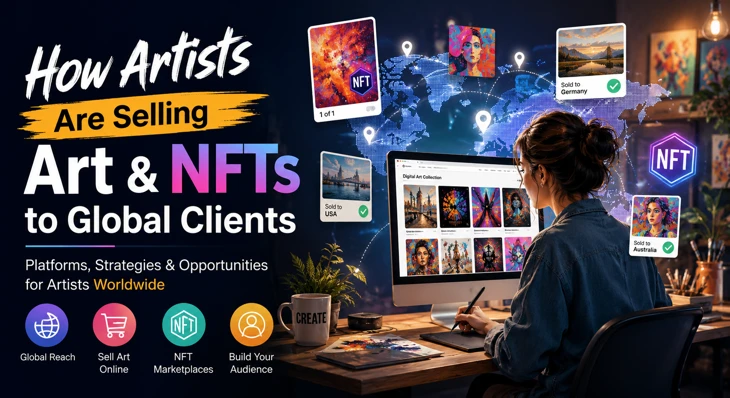
How Artists Are Selling Art & NFTs to Global Clients
A few years ago, most artists had a very predictable path. Create artwork, hope for a gallery opportunity, attend local exhibitions, and slowly build a client base through word of mouth. That model still exists, but it’s no longer the only option. Today, an illustrator sitting in a small apartment can sell NFT artwork to a collector living on another continent. A painter can receive international orders through Instagram without ever stepping inside a gallery. Even photographers and 3D artists are building loyal communities online and turning those audiences into paying clients. The internet changed the business side of art completely. Artists now have direct access to global buyers through social media, NFT marketplaces, personal websites, and digital communities. Instead of waiting for opportunities, creators can build visibility on their own terms. What makes this shift exciting is the level of independence it offers. Artists can control pricing, branding, communication, and the way their work is presented online. Some creators sell original paintings worldwide. Others focus on digital downloads, art prints, or NFT collections. Many combine all of them together. In this article, we’ll explore how artists are selling art and NFTs to global clients, which platforms they rely on, how SEO and social media help them grow, and what creators can do to stand out in an increasingly competitive online art market.How the Internet Created a Global Art Marketplace
Ask almost any independent artist what changed the industry the most, and many will point to the internet. Not because it made art easier to create. Because it made it easier to reach audiences. Years ago, artists often depended on local connections. If your work wasn’t hanging in a gallery or featured at an exhibition, your chances of getting noticed were limited. Now things work differently. Collectors discover artwork while scrolling on their phones late at night. Someone searching for contemporary abstract art prints might land on an artist’s website through Google. A buyer looking for affordable NFT artwork for collectors could end up purchasing from someone they’ve never met in person. That kind of access simply didn’t exist before. What’s interesting is that many successful online artists didn’t start with huge budgets or professional teams. Some started by consistently posting sketches on social media. Others opened small online stores selling prints or commissions. Over time, those audiences grew. Once people connect with an artist’s style and personality, they often continue following their work for years.Why NFTs Became Important for Digital Artists
Digital artists struggled for years with one major problem. Their work was easy to copy. Someone could download an image, repost it elsewhere, and there was often no clear proof of ownership. That made it difficult for creators to sell digital art as something rare or collectible. NFTs changed that conversation. Using blockchain technology, NFTs allow artists to attach ownership records to digital artwork. Buyers receive proof that they own an official version connected to the creator. For many artists, this created an entirely new business opportunity. Instead of relying solely on freelance work or commissions, digital creators can now launch NFT collections and reach collectors worldwide.Why Artists Started Exploring NFTs
NFTs appealed to artists for several reasons:- Digital ownership verification
- Direct sales without middlemen
- Global access to collectors
- Limited edition digital collectibles
- Smart contract royalty payments
Platforms Artists Use to Sell Art Online
There’s no single platform that works for every artist. Some creators focus heavily on NFTs. Others care more about physical print sales. A few prefer building everything through their own website from day one. Most artists experiment before finding the setup that works best for them.NFT Marketplaces
NFT marketplaces became popular because they allowed creators to connect directly with collectors interested in blockchain-based digital ownership. Platforms like:- OpenSea
- Foundation
- Rarible
- SuperRare
- Magic Eden
- Marketplace fees
- Audience quality
- Blockchain compatibility
- Creator tools
- Visibility opportunities
Selling Physical Artwork Online
Traditional artists have also benefited from online marketplaces. Painters, illustrators, and photographers regularly use platforms like Etsy, Saatchi Art, Society6, and Artfinder to sell:- Original paintings
- Canvas prints
- Framed artwork
- Photography prints
- Handmade illustrations
Why Personal Websites Matter
Eventually, many artists realize they need a digital space they fully control. That’s where personal websites become valuable. A professional artist's website can showcase:- Portfolio galleries
- NFT projects
- Print collections
- Commission booking forms
- Blog content
- Email newsletters
- Buy digital art online
- Original handmade paintings online
- Contemporary abstract art prints
- Custom digital portrait commissions
Social Media’s Role in Global Art Sales
Many artists find their first international buyers through social media. That’s one reason platforms like Instagram, TikTok, Pinterest, and X have become so important for creators. Collectors don’t just want to see finished artwork anymore. They enjoy watching the process behind it. Studio clips, rough sketches, failed attempts, packaging videos, and personal stories all help audiences feel connected to the artist. That emotional connection often turns casual followers into buyers.Instagram and Art Discovery
Instagram still plays a huge role in the online art industry. Artists regularly use it to:- Share completed artwork
- Post reels showing their process
- Announce NFT drops
- Upload behind-the-scenes content
- Build relationships with collectors
TikTok’s Influence on Art Businesses
TikTok helped many artists grow much faster than they expected. Simple videos showing painting techniques, sketch progress, or digital illustration workflows often attract huge audiences. Some creators gained thousands of followers from one viral video. Others built full-time businesses simply by posting consistently over time. The platform rewards personality and creativity more than polished perfection, which works in favor of artists willing to share their process honestly.Pinterest and Search Traffic
Pinterest works differently from most social platforms. Instead of fast-moving content feeds, Pinterest behaves more like a visual search engine. Artists use it to drive long-term traffic toward:- Online art stores
- NFT collections
- Blog content
- Commission pages
- Portfolio galleries
Building Trust With International Buyers
One thing many artists learn quickly is this: People hesitate to buy from strangers online. That’s especially true when someone is spending serious money on artwork or NFTs. Collectors want reassurance. They want to know the artist is real, the work is authentic, and the buying experience will be smooth. Small details make a surprisingly big difference.Presentation Influences Buying Decisions
Blurry photos and rushed listings can hurt sales, even when the artwork itself is excellent. Artists who sell successfully online usually spend time improving how their work is presented. That often includes:- Natural lighting
- Clear close-up images
- Framed previews
- Accurate dimensions
- Detailed descriptions
Communication Matters More Than Most Artists Expect
Quick replies, polite communication, and transparency help build stronger relationships with buyers. Many collectors ask questions before purchasing:- Is international shipping available?
- How long will delivery take?
- Does the artwork include a certificate?
- Which blockchain is the NFT minted on?
Buyers Connect With Real People
Collectors are naturally drawn toward artists who feel genuine. That’s why personal storytelling works so well online. Some creators share studio routines. Others talk openly about creative struggles, inspiration, failed experiments, or daily progress. It makes the artist feel human instead of distant. And in many cases, that emotional connection becomes part of the value behind the artwork itself.SEO Strategies Artists Use to Increase Art Sales
Many artists ignore SEO at the beginning. They focus entirely on social media. The problem is that social platforms change constantly. Reach drops, algorithms shift, and visibility becomes unpredictable. SEO works differently. When artists optimize their websites and content properly, they can attract people who are already searching for artwork online. That traffic often converts better because the intent is stronger.Long-Tail Keywords Help Attract Buyers
Instead of targeting broad words like “art” or “NFTs,” creators often focus on more specific search phrases. Examples include:- Buy digital art online
- Affordable NFT artwork for collectors
- Contemporary abstract art prints
- Original handmade paintings online
- Best NFT marketplace for artists
Blog Content Builds Authority
More artists are adding blogs to their websites. Not because they want to become writers. Because useful content helps websites rank in search engines. Artists commonly publish topics like:- How artists sell art online
- Beginner NFT guides
- Digital art tutorials
- Art collecting tips
- Creative process stories
Image SEO Matters More Than People Think
Artwork is visual, so image optimization plays a major role in search visibility. Artists improve image SEO by optimizing:- File names
- Alt text
- Compression
- Descriptions
- Gallery titles
Real Examples of Artists Selling Globally
There’s no single formula for success in the online art world. Different artists grow in completely different ways. Some build audiences slowly over several years. Others experience sudden growth after one viral post or a successful NFT launch.Digital Artists Building NFT Communities
Many digital creators began by simply posting artwork consistently online. No massive marketing budget. No gallery connections. Just regular uploads and audience interaction. As their following grew, some artists started experimenting with NFT collections. Instead of selling random pieces individually, they created themed projects with limited editions, collector rewards, or community perks. That helped turn casual followers into long-term supporters.Traditional Painters Reaching International Collectors
Traditional artists are benefiting too. Many painters who once relied only on local exhibitions now run online stores that ship artwork globally. Some share short videos of:- Studio sessions
- Canvas preparation
- Painting progress
- Packaging orders
- Customer reactions
Photographers Expanding Beyond Client Work
Photographers have also found new ways to earn online. Instead of depending entirely on bookings, many now sell:- Limited edition prints
- NFT photography collections
- Downloadable images
- Stock licenses
- Educational products
Challenges Artists Face in Online Art Markets
Selling art online creates incredible opportunities, but it also comes with real challenges. Many artists discover that building a sustainable online business takes patience.Competition Is Extremely High
The internet gives everyone access to the same platforms. That means collectors are exposed to thousands of artists every day. Standing out requires more than technical skill alone. Artists who grow consistently usually focus on:- A recognizable style
- Strong storytelling
- Consistent branding
- Audience engagement
- Reliable posting habits
NFT Markets Can Change Quickly
NFTs introduced exciting opportunities, but the market can be unpredictable. Some collections receive massive attention, while others struggle to gain traction despite strong artwork. Artists who survive long term tend to focus less on hype and more on building genuine communities. Collectors are more likely to support creators they trust over time.Fees Reduce Profit Margins
Online platforms usually charge fees. Depending on the platform, artists may deal with:- Listing costs
- Marketplace commissions
- Blockchain gas fees
- Payment processing charges
- Currency conversion fees
Art Theft Still Happens
Unfortunately, digital art theft remains common online. Creators often find reposted or stolen versions of their work circulating across the internet. To reduce risks, many artists use:- Watermarks
- Copyright registration
- Blockchain verification
- Reverse image search tools
How Artists Build Sustainable Income Online
Most successful creators do not rely on a single source of income. Instead, they diversify.Combining Physical and Digital Products
Many artists sell a mix of:- Original artwork
- Art prints
- NFTs
- Digital downloads
- Merchandise
- Tutorials
Subscription Communities
Some creators build membership communities through Patreon, Discord, or similar platforms. Supporters pay monthly for benefits like:- Exclusive content
- Early artwork access
- NFT previews
- Tutorials
- Live Q&A sessions
Commission Work
Custom commissions continue to be highly profitable. Artists regularly receive requests for:- Portrait illustrations
- Album artwork
- Brand graphics
- Character design
- NFT collaborations
Practical Tips for Artists Entering the Global Market
Artists entering the online space often feel overwhelmed at first. There are platforms to learn, social media accounts to manage, websites to build, and marketing strategies everywhere. The good news is that most successful artists started small. Very few had everything figured out immediately.Focus on Consistency Before Perfection
Many creators delay posting because they think their portfolio isn’t ready yet. But online growth usually comes from consistency. Artists who keep sharing work, improving gradually, and staying active tend to build momentum over time.Build a Recognizable Identity
People remember artists whose work feels consistent. That doesn’t mean every piece has to look identical. But having a recognizable style, color palette, tone, or presentation helps audiences remember the creator behind the work. Strong branding also creates trust.Learn Basic Marketing Skills
A talented artist can still struggle to gain visibility online. That’s why understanding a few marketing fundamentals helps so much. Useful skills include:- SEO
- Email marketing
- Social media strategy
- Audience engagement
- Content creation