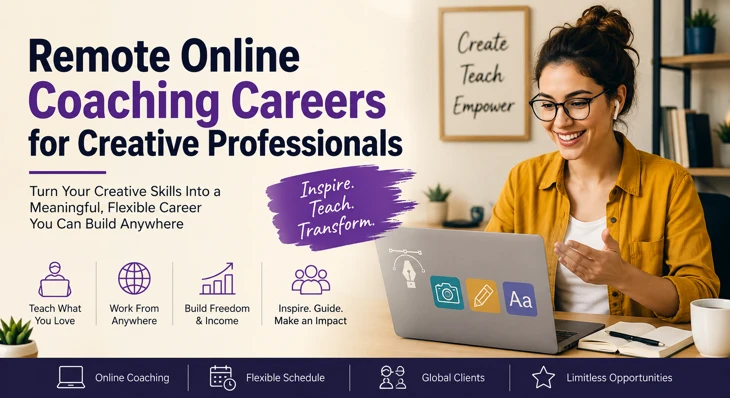
Remote Online Coaching Careers for Creative Professionals
The creative world has shifted in a big way. A few years ago, most designers, writers, photographers, and digital artists relied on studio jobs, agencies, or local clients. Today, things look very different. Many creative professionals are building stable, flexible income streams through remote online coaching careers for creative professionals.
What makes this shift so interesting is that it doesn’t replace creativity—it multiplies it. Instead of only producing work, creatives are now teaching what they know, guiding others, and turning their experience into a service that works from anywhere.
This guide takes a practical look at how remote coaching jobs for creatives actually work, what skills matter, and how real professionals are building long-term careers in this space.
Why Remote Online Coaching Is Growing Among Creative Professionals
There’s a clear reason why remote online coaching careers for creative professionals are becoming so popular: people want direct learning from real practitioners.
Online audiences are no longer satisfied with generic tutorials. They want guidance from someone who has actually worked in the field. A graphic designer teaching design, a writer teaching storytelling, or a photographer explaining real-world techniques feels far more valuable.
At the same time, remote work culture has made it normal to learn and work online. This combination has created strong demand for freelance coaching online across creative industries.
For many professionals, coaching also offers something traditional jobs rarely do—freedom. You decide your schedule, your clients, and your income structure.
Different Paths in Online Coaching Careers for Creatives
One of the strengths of this career path is flexibility. There isn’t just one way to build it. Creative professionals can choose a direction based on their strengths and interests.
Skill-Focused Coaching
This is where most people start. It involves teaching a specific creative skill in a structured way. For example:
A designer might help beginners learn the basics of logo creation or UI design. A writer might teach blog writing, storytelling, or copywriting fundamentals.
The focus here is simple: help learners build real skills they can apply immediately.
Freelancing and Business Coaching
Many creatives are talented but struggle with the business side of things. This is where coaching becomes powerful.
In this model, you guide others on how to:
- Find paying clients
- Set pricing confidently
- Build a professional portfolio
- Grow a sustainable freelance career
This is one of the fastest-growing areas in online coaching careers due to extremely high demand.
Creative Mindset Coaching
Not every challenge is technical. Many creatives struggle with consistency, motivation, or creative burnout.
Coaches in this space help people overcome:
- Lack of direction
- Creative blocks
- Confidence issues
- Productivity struggles
It’s less about tools and more about long-term growth and mental clarity.
Career and Portfolio Coaching
This path focuses on helping creatives get hired or attract clients. It often includes:
- Portfolio improvement
- Resume refinement
- Personal branding guidance
- Interview preparation
It’s highly practical and results-driven, especially for beginners entering competitive industries.
Skills That Make a Strong Remote Creative Coach
Being good at your craft is only one part of the equation. Successful remote coaching jobs for creatives require a mix of technical knowledge and human understanding.
Clear Communication
You need to explain ideas in a way that feels simple and natural. Students should never feel overwhelmed. The best coaches break complex topics into small, digestible steps.
Real Experience in Your Field
People trust coaches who have actually done the work. Your experience as a designer, writer, or creative professional becomes your credibility.
Since everything happens online, you’ll rely on tools for meetings, content delivery, and student interaction. Platforms like video conferencing apps, course tools, and cloud storage systems become part of your daily workflow.
Ability to Guide and Support
Coaching is not just teaching. It’s listening, understanding challenges, and helping someone move forward even when they feel stuck.
How to Start a Freelance Coaching Online Career
Starting something new can feel overwhelming, but the process becomes easier when broken into simple steps.
Start With One Clear Focus
Instead of trying to teach everything, focus on one area you know deeply. For example, instead of general design coaching, you might focus on beginner logo design or freelance writing for startups.
Understand Who You Want to Help
Think about the type of people you want to work with. Are they beginners, freelancers, students, or career switchers? Knowing this helps you shape your coaching style.
Create a Simple Offer
You don’t need a complex system in the beginning. Start with one-on-one sessions or small group coaching. Keep the structure clear and outcome-focused.
Build Visibility Online
Your presence matters. Share helpful content, tips, and small insights on platforms like LinkedIn or Instagram. Over time, this builds trust and attracts clients naturally.
Learn From Your First Clients
Your early sessions are not just business—they are learning experiences. Feedback will help you refine your coaching approach and improve delivery.
Running remote coaching careers for creative professionals becomes much easier when you use the right tools.
For live interaction, tools like Zoom or Google Meet are commonly used. They make sessions smooth and accessible.
For organizing work, tools like Notion or Trello help keep track of students, sessions, and progress.
Cloud storage platforms like Google Drive make it easy to share resources, templates, and assignments.
These tools don’t just support your work—they help you create a professional learning experience.
How Creative Coaches Build Income Online
One of the biggest advantages of online coaching careers is that income is not limited to one source.
One-on-one coaching is usually the starting point. It’s personal, focused, and often priced higher.
Group coaching allows you to work with multiple students at once, increasing both impact and income efficiency.
As you grow, you can create recorded courses that generate passive income over time.
Many coaches also build membership communities where students get ongoing support and learning resources.
Common Challenges in Coaching Careers and How They Evolve
Like any career path, online freelance coaching comes with challenges, especially at the beginning.
Building trust is often the first hurdle. People are more likely to trust coaches who consistently share value and show real results.
Finding the first few clients can also feel slow, but networking and content sharing usually help things move forward.
Time management becomes important as your coaching sessions and content creation grow together.
Pricing is another learning curve. Many new coaches start too low, but gradually adjust as their experience and confidence grow.
A Real Example of How Creative Coaching Grows
Imagine a freelance designer who begins by helping beginners learn logo design through small online sessions.
At first, it’s just a few students. Over time, they start sharing tips and breakdowns on social media. Slowly, more people begin to notice their work.
Eventually, they create a structured coaching program and later a full online course. What started as casual teaching turns into a stable remote online coaching career for creative professionals.
This kind of journey is becoming more common as digital learning continues to grow.
The Future of Remote Online Coaching for Creatives
The future of this space looks strong and steadily evolving.
More learners prefer flexible, personalized learning instead of traditional classroom setups. This keeps demand for remote coaching jobs for creatives consistently high.
We are also seeing new trends like AI-assisted learning tools, hybrid coaching models, and micro-sessions designed for quick skill improvement.
Creative professionals who adapt early will likely find more opportunities and stronger long-term growth.
FAQs
Can beginners start remote coaching careers without experience?
Yes. Many coaches begin with strong subject knowledge and improve their teaching style over time.
Is remote creative coaching a full-time career option?
It can be. Many professionals turn it into a full-time income stream after building a steady client base.
Do I need certifications to start coaching online?
No formal certification is required. Real experience and results matter more.
What is the easiest way to get first clients?
Start by sharing useful content online and offering introductory sessions to build trust.
Which niche is best for creative coaching?
It depends on your skills. Popular areas include design, writing, freelancing, and portfolio building.
Conclusion
Remote online coaching careers for creative professionals are opening new doors for those seeking freedom, flexibility, and meaningful work.
Instead of limiting yourself to traditional roles, you can turn your experience into something scalable and impactful. Whether it’s design, writing, photography, or any other creative skill, there is always someone willing to learn from you.
The key is to start simple, stay consistent, and focus on real value. Over time, freelance coaching online can grow into a strong and rewarding career that fits your lifestyle and goals.