📚 Table of Contents
- So what does this work actually feel like day-to-day?
- Why this career is quietly exploding right now
- Skills that actually matter (and what doesn’t)
- How people actually build a remote career in fashion consulting
- Getting clients feels hard at first (and that’s normal)
- A real-world situation that makes it clearer
- Tools that help without overcomplicating things
- Where is this all heading
- FAQs
- Do I need formal training to start?
- How do clients usually find consultants?
- What should I offer in the beginning?
- Is this a stable career option?
- Do I need expensive tools?
- Is this field still growing?
- Conclusion
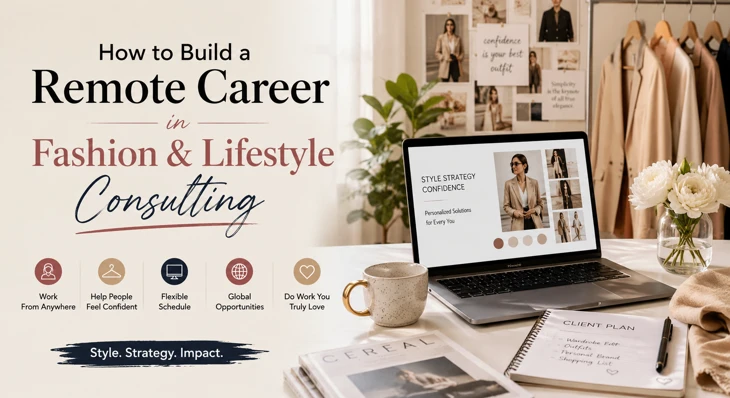
How to Build a Remote Career in Fashion & Lifestyle Consulting
There’s a certain shift happening in how people think about style. It’s no longer just about clothes or trends—it’s about how you show up in everyday life. On video calls, on social media, in interviews, even in casual online conversations. And somewhere in the middle of all this, a new kind of work quietly began to grow: remote fashion and lifestyle consulting. It doesn’t always look glamorous from the outside. Most of the time, it’s just conversations with people who feel a bit stuck with their wardrobe or unsure about their personal image. But for the right kind of person, it becomes a meaningful, flexible career that can be built from anywhere. No studio. No runway. Just real people trying to feel a little more like themselves.So what does this work actually feel like day-to-day?
If you strip away the title, it’s pretty simple. Someone messages you saying they have a big presentation next week and nothing in their wardrobe feels right. Another person might say they keep buying clothes but still feel like they have “nothing to wear.” And then your job starts—not as a fashion expert throwing rules at them, but as someone helping them untangle confusion. Most remote fashion and lifestyle consulting happens through Zoom calls, voice notes, mood boards, and a lot of back-and-forth understanding. It usually includes things like:- Helping people rebuild or simplify their wardrobe
- Making sense of personal style when everything feels messy
- Guiding online shopping so they stop wasting money
- Creating outfits for work, travel, or content creation
- Supporting personal branding through appearance
Why this career is quietly exploding right now
If you’ve ever looked at someone on a video call and thought, “they just look put together,” there’s a reason for that. And people are starting to care about it more than ever. A few things changed at the same time. People are now spending a big part of their lives on screens. Meetings, interviews, content, dating apps, networking—it’s all visual first. At the same time, fashion choices became overwhelming. There are more options than ever, more inspiration than ever, and somehow that has made decisions harder, not easier. Remote work also changed the rules. Nobody is dressing the same way they used to. Comfort matters, but so does looking presentable in a 10 a.m. meeting where your camera is on. And then there’s personal branding. Even if someone doesn’t call it that, they still want to be seen a certain way—more confident, more intentional, more “put together.” Put all of that together, and you get a space where remote fashion and lifestyle consulting fits naturally.Skills that actually matter (and what doesn’t)
A lot of people assume you need to be a fashion expert or have formal training. That helps, sure—but it’s not the real foundation. What matters more is how you think and how you communicate. You need a practical sense of style. Not runway-level theory, but real-life understanding. What works for a corporate meeting is not the same as what works for a weekend brunch or a creator’s photoshoot. You also need to understand people. Because no two clients are the same. One might want to look more confident at work, another might just want to stop overthinking every outfit. And then there’s communication. This is where many people struggle at the beginning. You can’t talk to clients like a textbook. Saying things like “optimize silhouette balance” won’t help anyone. Saying “this will make you look sharper without feeling overdressed” actually will. On the technical side, you’ll naturally end up using tools like:- Zoom or Google Meet for sessions
- Canva for styling visuals
- Pinterest for inspiration boards
- Google Drive or Notion for organizing client plans
How people actually build a remote career in fashion consulting
There’s no single perfect path here, but most people go through a few very similar stages. It usually starts with confusion. Not knowing where to begin, or feeling like you need everything figured out first. You don’t. The better approach is to pick a direction early, even if it feels slightly imperfect. Some people focus on corporate professionals who want to look sharp for work. Others work with creators who are building an online identity. Some prefer minimalist wardrobe styling, helping people simplify their lives rather than adding more options. Once there’s a direction, learning becomes more grounded. You start noticing real problems instead of just consuming fashion content. At some point, you have to move from learning to doing. This is where most growth actually happens. Helping friends, family, or early clients—even for free or at a low rate—teaches you more than any course. You begin to notice patterns. People don’t struggle because they lack clothes. They struggle because they lack clarity. Then comes the portfolio stage. It doesn’t need to be perfect or overly designed. A few before-and-after transformations, some simple style boards, maybe a couple of client messages—that’s enough to start. Over time, you start sharing small insights online. Not trying to go viral, just being useful. A simple tip about work outfits or a breakdown of common styling mistakes can slowly build attention. And eventually, people start reaching out.Getting clients feels hard at first (and that’s normal)
Almost everyone in this field remembers the same phase—no inquiries, no messages, just a lot of effort going unnoticed. The turning point usually isn’t a big strategy. It’s visibility. Talking about what you do in a simple way. Showing small examples of your thinking. Helping people publicly without expecting anything in return at first. Pricing is another early challenge. Many beginners either undercharge or overthink it. A better way is to think in terms of outcomes. What changes for the client after working with you? Confidence, clarity, better presentation—that’s what they’re paying for.A real-world situation that makes it clearer
Think of someone working remotely who keeps feeling slightly “off” during video meetings. Nothing is wrong, but something doesn’t feel right either. They don’t need a full wardrobe makeover. They need direction. After a few sessions with a remote fashion and lifestyle consultant, things slowly shift. They stop guessing what to wear every morning. They understand which colors work better on camera. Their wardrobe becomes smaller but more usable. It’s not dramatic. But it changes how they show up every day. That’s usually the real impact of this work.Tools that help without overcomplicating things
You don’t need complex systems to run this kind of work. Most consultants keep it simple:- Canva for visual breakdowns
- Pinterest for inspiration
- Google Drive for client folders
- Zoom for consultations
- Notion for keeping track of work