📚 Table of Contents
- So what is remote jewelry design, really?
- Why are more people choosing this creative path?
- Skills you’ll actually need (and what beginners often worry about)
- A sense of design that grows with practice
- Learning digital tools without overthinking it
- Knowing materials helps more than you think
- Communication is part of the job, too
- How people actually start from home (without feeling overwhelmed)
- Learning by doing instead of waiting to be “ready.”
- Moving into digital design without stress
- Building a portfolio that actually feels real
- Tools you might use along the way
- Different directions this career can take
- The challenges nobody talks about much
- Small habits that make a big difference
- A simple example of how growth usually happens
- Where this field is heading
- Final thoughts
- FAQs
- Can someone start jewelry design without formal training?
- Do I need expensive software to begin?
- Is CAD mandatory for jewelry design work?
- How long does it take to get comfortable with design tools?
- Can remote jewelry designers work with international clients?
- Is this career stable long-term?
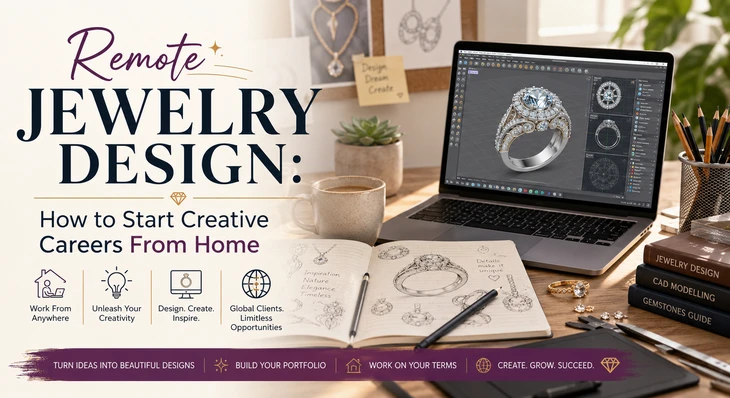
Remote Jewelry Design: How to Start Creative Careers From Home
There’s something quietly exciting about the idea of designing jewelry while sitting at home with a cup of coffee nearby and your laptop open. No studio pressure, no fixed desk, no long commute. Just ideas turning into something real. That’s exactly what remote jewelry design feels like when you start getting into it. It’s not some distant luxury career anymore. It’s practical. It’s flexible. And for many people, it’s becoming a genuine way to earn income while doing something creative. Let’s talk about how this actually works in real life—not the polished version, but the one where people start small, figure things out, and slowly grow into it.So what is remote jewelry design, really?
At its core, remote jewelry design is simply creating jewelry ideas and turning them into usable designs without being physically present in a workshop. You might sketch by hand, build 3D models on software, or even just refine concepts for a brand that handles production. Think of it like this: you focus on imagination and structure, while someone else handles the manufacturing side. That separation is what makes this career possible from home. Some designers work with brands, some take freelance projects, and some eventually build their own jewelry labels. There isn’t just one path—and that’s what makes it interesting.Why are more people choosing this creative path?
If you look around, jewelry has changed a lot. It’s no longer just about traditional gold sets or standard designs. People want pieces that feel personal—something that actually means something to them. That shift has opened doors for independent designers working remotely. At the same time, businesses are more open to hiring designers online rather than maintaining full in-house teams. It reduces costs, but it also brings greater creative variety from around the world. So yes, demand is real. And it’s growing quietly in the background.Skills you’ll actually need (and what beginners often worry about)
Most people assume they need to be “naturally artistic” to start. That’s not entirely true. You don’t need perfect drawing skills on day one. You just need patience and curiosity.A sense of design that grows with practice
Good design often starts with observation. Shapes in leaves, patterns in buildings, even textures in everyday objects—these things slowly start influencing your ideas. At first, your sketches might look rough. That’s normal. Most designers don’t start polished.Learning digital tools without overthinking it
At some point, you’ll move into CAD tools like Rhino, MatrixGold, or similar software. These help turn rough ideas into precise 3D designs that manufacturers can actually use. It might feel technical at first, but most people get comfortable with it after repeated practice rather than with theory.Knowing materials helps more than you think
Even basic awareness of metals, gemstones, and how they behave can change the way you design. For example, some designs look beautiful on screen but are difficult to manufacture. Understanding that balance saves time and frustration later.Communication is part of the job, too
Since you’ll likely work with clients or brands remotely, explaining your ideas clearly matters just as much as creating them. Sometimes clients don’t know exactly what they want. Your job is to help them figure it out visually.How people actually start from home (without feeling overwhelmed)
Most beginners think they need everything figured out before they begin. In reality, it’s usually the opposite—you figure it out while doing it. You start small. Very small. Maybe it begins with simple ring sketches. Or just watching tutorials and trying to recreate basic shapes. Then slowly, something changes. You start noticing improvements without even forcing them.Learning by doing instead of waiting to be “ready.”
There’s a phase where you’ll probably feel like you’re not good enough yet. Almost everyone goes through it. But remote jewelry design is one of those fields where practice matters more than perfect preparation. Even spending 20–30 minutes a day sketching or modeling something simple builds momentum over time. And momentum is what really moves your skills forward.Moving into digital design without stress
When you first open CAD software, it might look a bit overwhelming. Too many buttons. Too many tools. That reaction is normal. The trick is not to learn everything at once. Focus on one small task—like designing a basic ring or pendant. Once that feels comfortable, you build from there. Most people improve faster when they stop trying to master everything and instead focus on repeating small wins.Building a portfolio that actually feels real
A portfolio isn’t about showing perfection. It’s about showing growth. You can include:- Early sketches (even messy ones)
- Simple CAD models
- A few polished designs you’re proud of
Tools you might use along the way
You don’t need a high-end setup to begin. A decent laptop and internet connection can take you surprisingly far. As you grow, you may explore:- CAD software for modeling
- Rendering tools for realistic visuals
- Drawing tablets for sketching ideas more naturally
Different directions this career can take
One of the nice things about remote jewelry design is that it doesn’t lock you into a single role. You might work as a freelance designer taking custom orders. Or collaborate remotely with jewelry brands on collections. Some people specialize only in CAD modeling. And then there are those who eventually build their own online jewelry brands and sell directly to customers. There’s room to grow in multiple directions.The challenges nobody talks about much
It’s not always smooth, and it’s better to be honest about that. Learning software can feel slow at first. You’ll probably get stuck more than once. Competition is global, so standing out takes time and consistency. And working from home requires discipline—because no one is there to structure your day for you. But none of these are permanent barriers. They’re just part of the process.Small habits that make a big difference
Progress in this field doesn’t come from big leaps. It comes from small, steady habits. Like:- Updating your work regularly, even slightly
- Observing real jewelry designs and analyzing them
- Trying different styles instead of sticking to one too early
- Accepting feedback without overthinking it