📚 Table of Contents
- Why Remote Event Planning Is Growing So Fast
- What Does a Remote Event Planner Do?
- Common Responsibilities of a Virtual Event Planner
- Skills Needed for a Successful Virtual Event Career
- Strong Communication Skills
- Time Management and Organization
- Technical Confidence
- Problem-Solving Ability
- Marketing and Promotion Skills
- How to Start a Remote Event Planning Career
- Learn the Basics of Virtual Event Management
- Choose a Niche
- Build Your Online Presence
- Start Freelancing
- Network Consistently
- Best Platforms for Virtual Event Planning Jobs
- Freelance Platforms
- Remote Job Boards
- Social Media Networking
- Tools Every Remote Event Planner Should Use
- Video Conferencing Platforms
- Project Management Tools
- Email Marketing Software
- Design and Branding Tools
- Challenges of Remote Event Planning
- Managing Different Time Zones
- Technical Issues
- Audience Engagement
- Competition in the Industry
- How to Grow a Long-Term Online Event Planning Business
- Focus on Client Experience
- Create Repeatable Systems
- Build Multiple Income Streams
- Collect Testimonials and Case Studies
- Real-Life Example of a Remote Event Planning Career
- Future Trends in Virtual Event Management
- Hybrid Events Will Continue Growing
- AI and Automation Tools
- Greater Demand for Interactive Experiences
- Global Client Opportunities
- Tips for Standing Out as a Virtual Event Planner
- Develop a Personal Brand
- Keep Learning
- Be Reliable
- Offer Solutions, Not Just Services
- Conclusion
- FAQs
- How do I start a career in remote event planning?
- What skills are important for virtual event planners?
- Can remote event planning become a full-time career?
- What platforms are best for online events?
- Is remote event planning profitable?
- Do I need a degree to become a virtual event planner?
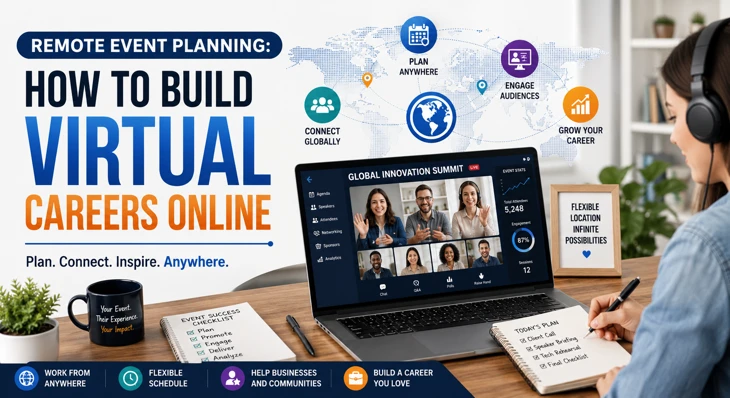
Remote Event Planning: How to Build Virtual Careers Online
A few years ago, most people associated event planning with hotel ballrooms, conference halls, and face-to-face meetings. Today, things look very different. Businesses, coaches, startups, and even nonprofit organizations are hosting events online more than ever before. That shift has created exciting opportunities for people who want flexible careers in remote event planning. What once depended heavily on in-person meetings, venue visits, and physical coordination has expanded into a thriving online industry. Today, remote event planning careers offer opportunities for professionals seeking flexibility, creativity, and the ability to work from anywhere. From virtual conferences and online workshops to hybrid product launches and digital networking sessions, businesses now rely on remote event planners to create smooth online experiences. This shift has opened the door for freelancers, entrepreneurs, and professionals who want to build a career in virtual event management without being tied to a specific location. If you are wondering how to start a career in remote event planning, what skills you need, or how to attract clients online, this guide will walk you through everything you need to know.Why Remote Event Planning Is Growing So Fast
Virtual events first gained momentum when companies began operating remotely, but the industry continued to grow as businesses discovered real long-term benefits. Online events are often more affordable, easier to scale, and accessible to people from different countries. Companies quickly realized that virtual events reduce travel costs, increase attendance, and allow businesses to connect with global audiences. Today, organizations of all sizes use online events for:- Team meetings and corporate conferences
- Virtual trade shows
- Online training sessions
- Webinars and workshops
- Digital networking events
- Product launches
- Remote fundraising events
- Online coaching programs
What Does a Remote Event Planner Do?
A remote event planner is responsible for creating smooth online experiences for attendees, speakers, and clients. Instead of focusing mainly on physical venues, virtual event planners manage digital platforms, online schedules, attendee engagement, and technical coordination. Instead of handling physical decorations and venue logistics, virtual event planners focus on online attendee experiences, technical coordination, scheduling, and digital engagement.Common Responsibilities of a Virtual Event Planner
A remote event planning professional may handle:- Selecting online event platforms
- Managing virtual event schedules
- Coordinating speakers and presenters
- Sending invitations and registration links
- Monitoring live sessions
- Handling audience engagement tools
- Managing virtual networking rooms
- Troubleshooting technical issues
- Coordinating marketing and promotions
- Reviewing post-event analytics
Skills Needed for a Successful Virtual Event Career
Building a successful remote event planning career requires a mix of communication, organization, technical knowledge, and creativity.Strong Communication Skills
Virtual events involve multiple moving parts. You may need to coordinate with clients, speakers, designers, marketers, and technical teams across different time zones. Good communication prevents misunderstandings and keeps everyone aligned, especially when teams are working remotely from different locations.Time Management and Organization
Remote event coordinators often juggle several tasks at once. Managing schedules, deadlines, attendee registrations, and speaker coordination requires excellent organizational skills. Using project management tools like Trello, Asana, or ClickUp can make daily workflows much easier.Technical Confidence
You do not need advanced technical knowledge to succeed, but you should feel comfortable using online event tools and solving basic technical issues during live sessions. Popular virtual event tools include:- Zoom
- Microsoft Teams
- Hopin
- Google Meet
- Webex
- Eventbrite
- Airmeet
Problem-Solving Ability
Online events rarely go perfectly. Internet issues, microphone problems, or delayed speakers can happen anytime. A great virtual event manager stays calm under pressure and finds quick solutions.Marketing and Promotion Skills
Many remote event planners also help clients promote events online. Understanding email marketing, social media promotion, and basic SEO can help increase attendance.How to Start a Remote Event Planning Career
You do not necessarily need a formal degree to build a successful career in remote event planning. Many professionals enter the industry by learning practical skills, helping with smaller projects, and gaining experience through freelance work. Many successful professionals begin with small projects, online certifications, or freelance work.Learn the Basics of Virtual Event Management
Start by understanding how online events operate. Watch webinars, attend virtual conferences, and study how professional events are organized. You can also take affordable online courses focused on:- Event management
- Virtual event production
- Digital marketing
- Project management
- Remote communication
Choose a Niche
Specializing in a specific type of event can help you stand out. Popular niches include:- Corporate virtual events
- Online education webinars
- Virtual wedding planning
- Remote fundraising events
- Digital business conferences
- Online coaching events
- Hybrid event management
Build Your Online Presence
Before clients hire you for virtual event management, they want to see that you are organized, professional, and confident in handling online events. Create:- A professional website
- A LinkedIn profile
- A portfolio of sample events
- Social media pages showcasing your work
Start Freelancing
For many beginners, freelancing is the easiest way to gain experience in the remote event planning industry while building confidence and client relationships. You can find clients through:- Freelance marketplaces
- LinkedIn networking
- Facebook business groups
- Industry communities
- Referral partnerships
Network Consistently
Relationships matter in the event industry. Join online communities related to:- Event planning
- Marketing
- Entrepreneurship
- Virtual assistants
- Remote work
Best Platforms for Virtual Event Planning Jobs
As remote work grows, more companies are hiring professionals for online event management.Freelance Platforms
Freelancers can find remote event planning jobs on platforms like:- Upwork
- Fiverr
- Freelancer
- PeoplePerHour
Remote Job Boards
Many businesses now hire remote event coordinators directly. Popular remote job websites include:- We Work Remotely
- FlexJobs
- Remote.co
- LinkedIn Jobs
- Indeed
- Remote virtual event coordinator jobs
- Online event planner jobs
- Work-from-home event management careers
- Remote conference planning opportunities
Social Media Networking
LinkedIn is especially valuable for event professionals. Sharing event tips, posting behind-the-scenes insights, and engaging with industry discussions can help attract clients naturally.Tools Every Remote Event Planner Should Use
Every successful virtual event relies heavily on technology, which is why learning the right tools can make your work much easier and more professional. Using the right tools can improve organization, communication, and attendee experience.Video Conferencing Platforms
Reliable communication platforms are essential. Top choices include:- Zoom for webinars and workshops
- Microsoft Teams for corporate meetings
- Google Meet for quick collaborations
- Webex for large-scale conferences
Project Management Tools
Managing tasks and timelines becomes easier with:- Trello
- ClickUp
- Asana
- Monday.com
Email Marketing Software
Email campaigns help increase attendance and engagement. Useful tools include:- Mailchimp
- ConvertKit
- ActiveCampaign
- Brevo
Design and Branding Tools
Strong visuals improve online event experiences. Many event planners use:- Canva
- Adobe Express
- Figma
Challenges of Remote Event Planning
Like any online career, remote event planning has advantages and challenges. Understanding those challenges early can help you prepare more effectively.Managing Different Time Zones
International clients and attendees may join from various countries. Careful scheduling is important to avoid confusion.Technical Issues
Internet problems, software crashes, and audio failures can disrupt events. Experienced virtual event planners always prepare backup plans.Audience Engagement
Keeping online attendees focused is harder than managing in-person audiences. Interactive features like polls, Q&A sessions, breakout rooms, and live chats help maintain engagement.Competition in the Industry
As remote work becomes more popular, more professionals are entering the virtual event management field. Building a personal brand and offering specialized services can help you stand out.How to Grow a Long-Term Online Event Planning Business
Building a sustainable remote event planning career requires more than technical skills. In the long run, reputation matters just as much as technical skill. Clients often return to planners they trust, especially when events run smoothly, and communication stays clear.Focus on Client Experience
Happy clients often become repeat clients. Respond quickly, stay organized, and communicate clearly throughout every project. Simple actions like sending follow-up summaries or checking in after events can leave a strong impression.Create Repeatable Systems
As your workload grows, systems become essential. Create templates for:- Event checklists
- Client onboarding
- Speaker coordination
- Event timelines
- Post-event reports
Build Multiple Income Streams
Many remote event professionals increase their income by offering related services. Additional services may include:- Webinar marketing
- Virtual assistant support
- Event copywriting
- Social media management
- Sponsorship coordination
- Online course launch support
Collect Testimonials and Case Studies
Positive feedback builds credibility. After successful events, ask clients for testimonials or permission to create case studies. Real-world examples help future clients trust your expertise.Real-Life Example of a Remote Event Planning Career
Consider Sarah, a former office administrator who wanted more flexibility in her career. She started by helping small business coaches organize Zoom webinars on weekends. At first, her responsibilities included managing attendee registrations and moderating live chats. As she gained experience, Sarah expanded into full-service virtual event management. Within two years, she was coordinating international online conferences for coaching businesses and earning significantly more than her previous office salary. Her success came from:- Building strong client relationships
- Learning digital event tools
- Specializing in webinar launches
- Creating efficient systems
- Consistently marketing her services online