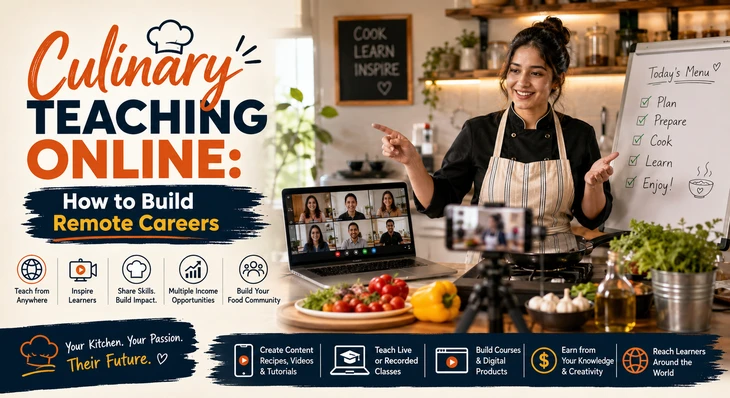
Culinary Teaching Online: How to Build Remote Careers
Introduction: When Cooking Skills Meet the Digital World
There was a time when learning to cook meant standing in a physical kitchen, watching a chef closely, and trying to copy every movement in real time. That experience still matters, but things have shifted in a very different direction. Today, online culinary education has created a new way for people to learn and teach cooking without being in the same room.
What’s interesting is how natural this shift feels now. People are already used to learning everything online—from languages to fitness routines—so cooking has simply followed suit. A home kitchen, a smartphone, and a bit of confidence are often enough to begin.
For chefs, bakers, and passionate home cooks, this shift is not just convenient. It has quietly opened a door to remote careers that didn’t really exist a decade ago. And for many, it has become a way to turn everyday cooking skills into something meaningful and financially stable.
How Culinary Teaching Online Became a Real Career Path
If you look closely, this trend didn’t happen overnight. It grew slowly as technology became easier and people became more comfortable learning through screens.
A student today doesn’t necessarily want rigid classroom timings. They want flexibility. They want to pause a recipe video, try it in their kitchen, and come back again when needed. That kind of learning experience simply fits modern life better.
At the same time, food curiosity has gone global. Someone sitting in India might want to learn Italian pasta, while someone in Europe may want to explore Asian street food techniques. This demand has made online culinary education feel almost limitless in scope.
And then there’s accessibility. Traditional culinary schools can be expensive and time-consuming. Online learning removes many of those barriers and allows more people to enter the world of cooking without pressure.
All of this combined has turned culinary teaching online into a serious remote career option rather than just a side hobby.
What It Really Takes to Teach Cooking Online
People often assume that being a great cook is enough. But teaching online adds a completely different layer to the skill.
The first thing that matters is clarity. When someone is learning through a screen, they cannot lean over your shoulder or ask immediate questions in the same way. Every instruction has to be simple, slow, and easy to follow. Even something as basic as chopping onions needs to be explained in a way that feels natural and reassuring.
Then comes presence. You don’t need to be overly polished or performative, but you do need to be comfortable being seen and heard. Many successful instructors actually grow because they feel relatable rather than perfect.
There is also a quiet technical side to it. Lighting, sound, camera angles, and even the kitchen background all influence how learners experience your content. You don’t need expensive equipment, but you do need consistency in how your videos or live sessions look and sound.
Most importantly, teaching online is about patience. You are not just cooking—you are guiding someone who may be trying that dish for the very first time.
Different Ways People Build Careers in Culinary Teaching Online
One of the most encouraging things about this field is that there is no single path. People build careers in different ways depending on their comfort and creativity.
Some focus entirely on live cooking sessions, where they cook alongside students in real time. Others prefer recorded lessons that people can follow at their own pace. There are also instructors who never host live classes at all but instead build libraries of recipes and cooking guides that continue to generate income over time.
A growing number of people also specialize. Baking, for example, has become a strong niche. Bread-making, pastries, and desserts tend to perform extremely well because learners enjoy visual transformation—from simple ingredients to finished products.
Then there are those who focus on structured learning programs. Instead of individual recipes, they create step-by-step courses that take someone from beginner to confident home cook.
And finally, some instructors build personal brands where they combine teaching with storytelling, lifestyle content, and food experiments. This often leads to collaborations, sponsorships, and long-term audience growth.
Starting From Zero: What the First Steps Actually Look Like
Most people think they need a perfect setup before they begin. In reality, the starting phase is usually much simpler.
It often begins with a single recipe video. Something small, familiar, and easy to explain. Not because it needs to go viral, but because it helps you understand how teaching feels on camera.
From there, consistency becomes more important than complexity. Posting regularly—even if it’s simple content—helps build familiarity with your audience. Over time, people start recognizing your style, your tone, and the way you explain things.
Choosing a niche also becomes important early on. Trying to teach everything at once can feel overwhelming. But focusing on one direction, whether it’s home meals, desserts, or quick recipes, helps build clarity in your content.
Eventually, platforms like YouTube, Instagram, or online course websites become your classroom. Each one plays a different role in how you connect with learners.
While the heart of this career is cooking, the support system is technology.
A simple smartphone can act as your camera, especially in the beginning. Good natural lighting often works better than expensive studio setups. Clear audio, however, makes a big difference, so even a basic microphone can improve the quality of your teaching.
For live sessions, tools such as video conferencing platforms enable real-time interaction. For recorded content, simple editing apps help you trim, arrange, and polish your videos without needing advanced skills.
Over time, many instructors also explore course platforms where they can organize their lessons into structured programs. These platforms make it easier to turn knowledge into a steady income stream.
Social media also plays a quiet but powerful role. It’s often where discovery happens. A single short cooking clip can attract new learners from all over the world.
Challenges You Don’t Always Expect in Online Culinary Teaching
While this career looks flexible and creative, it does come with its own set of challenges.
One of the biggest is the lack of physical presence. You cannot correct someone’s hand movement directly or taste the food they prepare. This means your instructions must be extra precise and visual.
Another challenge is attention span. Online learners can get distracted easily. This is why storytelling, real-life kitchen mistakes, or small tips often help keep them engaged.
Technical issues also happen more often than expected. Internet drops, lightning strikes, or audio issues can interrupt the flow. Over time, most instructors learn to prepare backup options.
And of course, there is competition. Many people are entering this space. What truly sets someone apart is not just skill, but personality, consistency, and the ability to connect with learners in a real way.
What Long-Term Success in This Field Looks Like
Success in culinary teaching online does not happen in a straight line. It builds gradually.
At first, it may feel like little progress—fewer views, fewer students, or slow growth. But over time, consistency creates recognition. People begin to trust your recipes, your guidance, and your teaching style.
Many successful instructors eventually build multiple income streams. Some earn through paid courses, others through live workshops, brand collaborations, or subscription-based content.
What makes this career unique is its flexibility. You are not tied to a fixed location or schedule. Your kitchen becomes your workspace, and your creativity becomes your main asset.
A Realistic Look at How Careers Evolve
Many people who are now successful in this field didn’t start with a plan. A common story is that of someone who began sharing simple home recipes online casually.
Over time, those small videos started attracting attention. People began asking questions, requesting tutorials, and sharing feedback. That interaction slowly turned into a community.
Eventually, structured teaching emerged from that community. What started as casual sharing turned into online classes and, later, a steady source of income.
This kind of growth is no longer rare. It’s becoming a normal pathway in the world of online culinary education.
The Future of Culinary Teaching Online
The future of this field is moving toward even more interactive learning. Technology is making it possible for students to experience cooking in more immersive ways.
We are already seeing improvements in video quality, live interaction tools, and guided learning systems. In the coming years, the experience may become even more engaging, with smarter tools helping instructors guide students step by step.
Despite all the technological changes, one thing will remain the same: people will always want to learn how to cook. And they will always look for someone who can teach them in a simple, human way.
FAQs: Culinary Teaching Online
Yes. Many successful instructors are self-taught. What matters most is skill, consistency, and the ability to explain clearly.
How long does it take to build an audience?
It varies. Some grow slowly over months, while others take longer. Consistency plays a bigger role than speed.
Do I need expensive equipment to begin?
Not at all. A smartphone and basic lighting are enough to start.
Can this become a full-time career?
Yes. Many instructors earn income through multiple streams, such as courses, live classes, and collaborations.
What type of cooking content works best online?
Simple, beginner-friendly recipes and visually appealing dishes usually perform very well.
Conclusion: Turning Everyday Cooking into a Remote Career
Culinary teaching online is not just a modern trend—it is a real opportunity to build a meaningful career from something you already enjoy. It blends creativity, communication, and consistency into a flexible professional path.
You don’t need a perfect start. You only need a willingness to share what you know and improve along the way. Over time, small steps add up to a strong presence, and that presence can grow into a full-time remote career built around cooking.
At its core, this journey is about more than food. It is about connection, learning, and helping others feel confident in their own kitchens.