📚 Table of Contents
- What Is E-Sports Coaching?
- Why Remote Gaming Careers Are Growing Fast
- Increased Demand for Competitive Improvement
- Growth of the Global E-Sports Industry
- Flexible Remote Work Opportunities
- Skills Needed to Become an E-Sports Coach
- Deep Knowledge of the Game
- Communication Skills
- Patience and Adaptability
- Replay Analysis Skills
- How to Start a Remote E-Sports Coaching Career
- Choose Your Game and Niche
- Build Credibility
- Create an Online Presence
- Set Up Coaching Services
- Best Platforms for E-Sports Coaching
- Metafy
- Gamer Sensei
- Fiverr and Upwork
- Discord Communities
- How to Earn Money as an Online Gaming Coach
- Coaching Sessions
- Educational Content
- Team Coaching
- Community Memberships
- Challenges in Remote E-Sports Coaching
- Building Trust as a Beginner
- Burnout and Long Screen Time
- Constant Game Updates
- Real-Life Example of a Remote Gaming Career
- Tips to Succeed in E-Sports Coaching
- Focus on Student Results
- Build a Personal Brand
- Keep Learning
- Network Within Gaming Communities
- The Future of Remote Gaming Careers
- FAQs About E-Sports Coaching and Remote Gaming Careers
- Can you make money as an online gaming coach?
- Do you need to be a professional gamer to become a coach?
- Which games are best for e-sports coaching?
- How do beginner gaming coaches find clients?
- Is remote gaming coaching a full-time career?
- Conclusion
E-Sports Coaching: How to Build Remote Gaming Careers
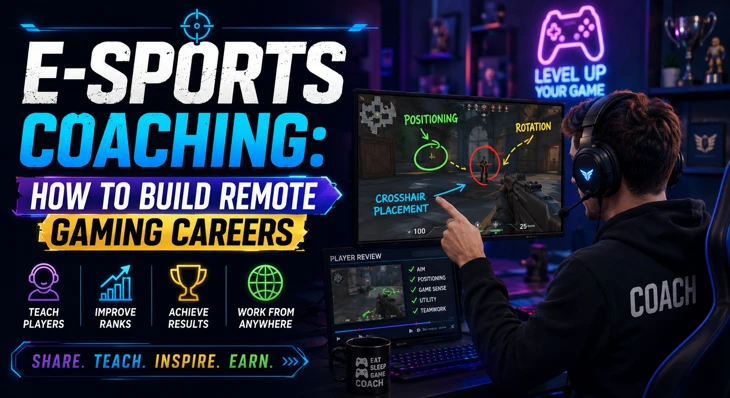
The gaming industry is no longer limited to casual entertainment or professional tournaments. Over the last decade, e-sports has transformed into a multi-billion-dollar industry that creates career opportunities far beyond competitive gameplay. One of the fastest-growing areas within this space is e-sports coaching, especially remote coaching. Gamers from around the world now hire coaches to improve their skills, rank higher in competitive games, build streaming careers, and even prepare for professional tournaments. This shift has opened the door for skilled players to turn their gaming knowledge into a flexible remote career. Whether you are a competitive gamer, content creator, or someone passionate about gaming strategy, remote e-sports coaching offers a practical way to earn income while working from anywhere. In this guide, you will learn how e-sports coaching works, what skills are needed, how to attract students online, and how to create a sustainable remote gaming career.What Is E-Sports Coaching?
E-sports coaching involves teaching players how to improve their gameplay, strategy, communication, and overall performance in competitive games. Coaches work with beginners, intermediate players, and even advanced competitors who want to reach higher rankings or compete professionally. Unlike traditional gaming tutorials on YouTube, coaching is personalized. Coaches analyze gameplay, identify mistakes, recommend strategies, and help players develop stronger habits. Remote e-sports coaching takes this process online. Sessions are typically conducted through voice chat, video calls, game replays, or live streaming platforms. Popular games for e-sports coaching include:- Valorant
- League of Legends
- Fortnite
- Dota 2
- Counter-Strike 2
- Apex Legends
- Call of Duty
- Rocket League
- Overwatch 2
- PUBG and BGMI
Why Remote Gaming Careers Are Growing Fast
Remote gaming careers have become more accessible because gaming communities are inherently digital. Players already spend time online, making virtual coaching a natural fit. Several factors are driving this growth.Increased Demand for Competitive Improvement
Modern multiplayer games are more competitive than ever. Ranking systems, leaderboards, and tournaments encourage players to improve continuously. Many gamers are willing to invest in coaching to rank faster and avoid frustration. For example, a player stuck in a lower competitive rank in Valorant may hire a coach to improve aim, map awareness, and team communication. Even small improvements can significantly impact gameplay results.Growth of the Global E-Sports Industry
The e-sports industry attracts millions of viewers, sponsorships, and professional organizations worldwide. According to industry reports, e-sports revenue continues to rise every year due to streaming, advertising, and tournament investments. This growth creates demand not only for players but also for analysts, trainers, and coaches.Flexible Remote Work Opportunities
Remote e-sports coaching allows people to work independently without needing a physical office. Coaches can schedule sessions globally, build personal brands online, and create multiple income streams. This flexibility appeals to students, freelancers, gamers, and even former professional players.Skills Needed to Become an E-Sports Coach
Being highly ranked in a game is helpful, but coaching requires much more than raw skill. Successful gaming coaches combine technical expertise with communication and teaching abilities.Deep Knowledge of the Game
You must understand:- Game mechanics
- Meta strategies
- Character or weapon selection
- Map control
- Team coordination
- Decision-making under pressure
- Updates and patch changes
Communication Skills
A good coach explains concepts clearly and constructively. Some players learn quickly through demonstrations, while others need step-by-step guidance. Instead of criticizing mistakes aggressively, effective coaches focus on practical improvement. For example: Instead of saying, “Your positioning is terrible,” a better coaching approach would be: “Your positioning leaves you exposed to multiple angles. Let’s work on safer positioning near cover during rotations.” Constructive feedback builds trust and encourages long-term clients.Patience and Adaptability
Not every student improves at the same speed. Some players struggle with mechanics, while others need help with confidence or teamwork. Strong coaches adapt their teaching style based on the player’s skill level and learning habits.Replay Analysis Skills
Replay analysis is one of the most valuable parts of online gaming coaching. Coaches often review recorded gameplay to identify:- Repeated mistakes
- Poor rotations
- Weak aim habits
- Slow reactions
- Communication breakdowns
- Resource management issues
How to Start a Remote E-Sports Coaching Career
Starting a remote gaming coaching business does not require a massive investment. However, it does require consistency, credibility, and a clear strategy.Choose Your Game and Niche
Trying to coach every game usually weakens your expertise. Instead, focus on one or two competitive games where you have strong experience. You can also specialize further. Examples include:- FPS aim coaching
- Strategy coaching
- Team communication coaching
- Beginner improvement programs
- Ranked climbing guidance
- Tournament preparation
Build Credibility
Players want proof that a coach can deliver results. You can build credibility by:- Sharing your competitive rank
- Posting gameplay clips
- Uploading educational content
- Showing client testimonials
- Streaming coaching sessions
- Creating strategy guides
Create an Online Presence
A strong online presence is essential for remote gaming careers. Platforms that work well for gaming coaches include:- Discord communities
- YouTube
- Twitch
- TikTok
- X (formerly Twitter)
- Gaming forums
Set Up Coaching Services
Decide how your coaching sessions will work. Popular coaching formats include:One-on-One Coaching
Personalized live sessions where you watch gameplay and provide direct feedback.Replay Reviews
Students send recorded matches for detailed analysis.Group Coaching
Coaching multiple players together can increase income efficiency.Subscription Coaching
Monthly memberships provide recurring income through ongoing support. Many coaches combine several formats to diversify revenue.Best Platforms for E-Sports Coaching
Several online platforms help gaming coaches connect with players.Metafy
Metafy is one of the most recognized coaching platforms for gamers. Coaches can create profiles, list services, and attract players across multiple games.Gamer Sensei
This platform connects students with experienced gaming coaches for personalized training sessions.Fiverr and Upwork
Freelance platforms can also help beginners land their first coaching clients. However, competition is higher, so strong profiles and reviews are important.Discord Communities
Many gaming communities actively look for coaches inside Discord servers. Building genuine relationships within communities often leads to referrals.How to Earn Money as an Online Gaming Coach
Remote gaming careers can become surprisingly profitable when approached professionally. Here are some common income streams.Coaching Sessions
Most coaches charge hourly rates. Rates vary based on:- Skill level
- Game popularity
- Coaching experience
- Competitive achievements
- Audience size
Educational Content
Many coaches earn additional income through:- YouTube ad revenue
- Twitch subscriptions
- Sponsored content
- Paid courses
- Strategy eBooks
Team Coaching
Amateur and semi-professional teams often hire coaches to improve communication, strategy, and performance. Team coaching can provide more stable long-term work than one-time sessions.Community Memberships
Some gaming coaches build paid Discord communities where members receive:- Weekly tips
- Replay reviews
- Practice drills
- Group sessions
- Meta updates
Challenges in Remote E-Sports Coaching
Like any career, remote gaming coaching comes with challenges.Building Trust as a Beginner
Without testimonials or a large audience, finding your first clients can feel difficult. The best solution is consistency. Posting educational content regularly helps establish authority over time.Burnout and Long Screen Time
Gaming careers involve extended hours in front of screens. Coaches who ignore balance often experience burnout. Setting clear schedules and limiting daily coaching hours helps maintain long-term productivity.Constant Game Updates
Competitive games change frequently through patches and balance updates. Coaches must continuously learn and adapt strategies. Staying updated is part of the job.Real-Life Example of a Remote Gaming Career
Consider a skilled Apex Legends player who begins posting educational clips on TikTok. Initially, the videos received only a few hundred views. However, the creator consistently uploads tips on aiming, positioning breakdowns, and ranked strategies. After several months, one clip explaining late-game rotations goes viral. Players start asking for personalized coaching. The creator begins offering:- Replay analysis sessions
- Private coaching calls
- Team strategy reviews
- Monthly Discord memberships
Tips to Succeed in E-Sports Coaching
Success in remote e-sports coaching rarely happens overnight. Consistency and professionalism matter just as much as gaming skill.Focus on Student Results
The best coaches prioritize player improvement. When students see real progress, they are more likely to leave positive reviews and recommend your services.Build a Personal Brand
Your online reputation matters. Use consistent branding across platforms, maintain professional communication, and share valuable insights regularly.Keep Learning
Gaming trends evolve constantly. Successful coaches study:- Patch updates
- Professional tournaments
- New strategies
- Competitive meta changes
- Training methods
Network Within Gaming Communities
Connections often lead to opportunities. Joining tournaments, Discord servers, Reddit discussions, and streaming communities can expand your visibility. Many coaches gain clients simply by being active and helpful in gaming spaces.The Future of Remote Gaming Careers
Remote gaming careers are expected to grow significantly over the next decade. As e-sports becomes more mainstream, coaching will likely become even more specialized. Future opportunities may include:- Mental performance coaching for gamers
- AI-assisted gameplay analysis
- Youth gaming development programs
- Professional academy coaching
- Virtual reality e-sports training