📚 Table of Contents
- Why LinkedIn Matters for Remote Job Seekers
- Optimize Your LinkedIn Headline for Remote Opportunities
- Weak Example
- Better Example
- Create a Professional LinkedIn About Section
- Example Structure
- Use the Right Keywords Throughout Your Profile
- Important Long-Tail Keywords for Remote Careers
- Build a Remote-Friendly Experience Section
- Highlight Skills That Matter in Remote Work
- Add Skills and Certifications Strategically
- High-Value Skills for Remote Careers
- Certifications Can Strengthen Your Credibility
- Use a Professional Profile Photo and Banner
- Tips for a Strong Profile Photo
- Build a Strong LinkedIn Network
- Connect With the Right People
- Example Connection Request
- Post Content Consistently
- Content Ideas for LinkedIn
- Use LinkedIn Features That Support Remote Job Search
- Turn On “Open to Work”
- Use Job Alerts
- Follow Remote-First Companies
- Write Better LinkedIn Messages to Recruiters
- Example Recruiter Message
- Gather Recommendations and Social Proof
- Stay Active in LinkedIn Communities
- Avoid Common LinkedIn Mistakes
- Common Problems Include
- Real-Life Example of a Successful LinkedIn Remote Job Strategy
- Consistency Is the Real Secret
- Frequently Asked Questions
- How do I optimize my LinkedIn profile for remote jobs?
- What should I put in my LinkedIn headline for remote work?
- How often should I post on LinkedIn?
- Can LinkedIn really help me get remote jobs?
- Which skills are most important for remote careers?
- Conclusion
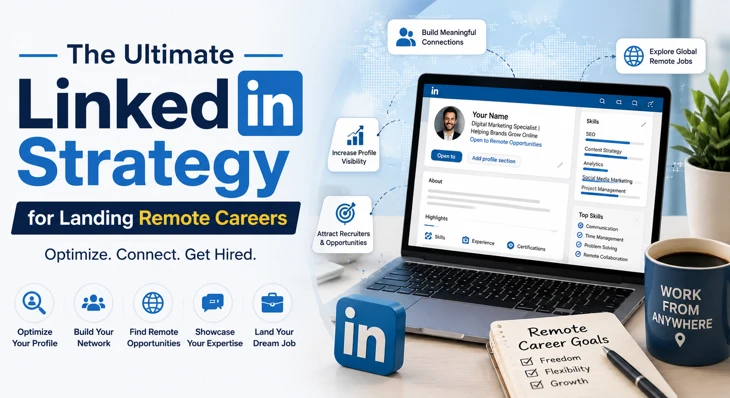
The Ultimate LinkedIn Strategy for Landing Remote Careers
A few years ago, remote jobs felt like a niche option. Today, they have become a serious career path for professionals who value flexibility, independence, and the ability to work with companies worldwide. Companies across industries are actively hiring remote employees, but competition is growing fast. Simply having a LinkedIn profile is no longer enough. You need a strategy that helps recruiters notice you, trust your expertise, and contact you for the right opportunities. LinkedIn is no longer just a place to upload your resume and send connection requests. Today, it functions as a digital resume, personal brand portfolio, networking hub, and job search engine all in one. Whether you are a beginner searching for your first remote role or an experienced professional looking to transition into remote work, the right LinkedIn strategy can significantly improve your chances. This article breaks down practical strategies you can use to improve your LinkedIn presence, attract remote recruiters, grow your network, and increase your chances of getting hired for remote positions.Why LinkedIn Matters for Remote Job Seekers
Many hiring managers search LinkedIn for candidates before publishing job openings on major job boards. Many companies that hire remote employees prefer proactive sourcing rather than waiting for applications. This means your profile needs to work for you even when you are offline. A strong LinkedIn presence helps you:- Increase visibility to remote recruiters
- Build professional credibility
- Showcase remote-friendly skills
- Network with global professionals
- Access hidden job opportunities
- Demonstrate communication and industry knowledge
Optimize Your LinkedIn Headline for Remote Opportunities
The headline section is usually the first thing people notice when they land on your profile. Most people make the mistake of listing only their job title. Instead, use your headline strategically to highlight your expertise and remote career goals. A good LinkedIn headline for remote jobs should include:- Your role or specialization
- Relevant skills
- Industry keywords
- Remote work intent
- Value proposition
Weak Example
“Marketing Executive at XYZ Company”Better Example
“Digital Marketing Specialist | SEO & Content Strategy Expert | Helping Brands Grow Online | Open to Remote Opportunities” This version instantly tells recruiters what you do and what type of opportunities you are seeking. Using long-tail keywords like “remote digital marketing specialist,” “remote software developer,” or “work from home customer support expert” can also improve profile discoverability in LinkedIn searches.Create a Professional LinkedIn About Section
Your About section should feel authentic and easy to follow, rather than sounding overly polished or robotic. Avoid copying generic resume summaries. Instead, focus on your experience, achievements, strengths, and career direction. A strong About section for remote careers should include:- Your professional background
- Core skills
- Key achievements
- Experience with remote collaboration
- Career goals
- Personality and work style
Example Structure
Start with a strong introduction: “Over the last five years, I have helped eCommerce brands improve online visibility through SEO-driven content strategies and data-focused marketing campaigns.” Then explain your strengths: “I enjoy building systems, collaborating across teams, and solving complex problems in fast-paced remote environments.” End with a clear direction: “I’m currently open to remote opportunities where I can contribute to growth-focused digital marketing projects.” Keep the tone conversational and natural. Recruiters want to see the person behind the profile.Use the Right Keywords Throughout Your Profile
LinkedIn’s search system works similarly to Google in many ways. Recruiters search for specific terms when looking for candidates. If your profile lacks relevant keywords, you may never appear in search results. Include targeted keywords naturally in:- Headline
- About section
- Experience section
- Skills section
- Certifications
- Featured content
Important Long-Tail Keywords for Remote Careers
Some examples include:- best LinkedIn strategy for remote jobs
- How to get remote jobs on LinkedIn
- Optimize LinkedIn profile for remote work
- LinkedIn tips for remote job seekers
- remote work networking strategy
- LinkedIn profile optimization for remote careers
- remote job search strategy
- work from home career opportunities
Build a Remote-Friendly Experience Section
The Experience section should explain impact, not just daily tasks. It should highlight measurable achievements and demonstrate readiness for remote work. Instead of writing: “Managed social media accounts.” Write: “Managed social media campaigns across five platforms, increasing engagement by 42% while collaborating with a fully remote marketing team.” This approach communicates results and remote collaboration experience simultaneously.Highlight Skills That Matter in Remote Work
Remote employers often prioritize candidates who demonstrate:- Self-motivation
- Time management
- Communication skills
- Project management
- Digital collaboration
- Problem-solving
- Adaptability
Add Skills and Certifications Strategically
Your listed skills help LinkedIn understand where your profile should appear in recruiter searches. Choose skills that align with both your profession and remote work environments.High-Value Skills for Remote Careers
- Remote collaboration
- Communication
- Project management
- SEO
- Content writing
- Customer relationship management
- Data analysis
- Software development
- Digital marketing
- Virtual team leadership
Certifications Can Strengthen Your Credibility
Recruiters often trust candidates who continue learning independently. Certifications show initiative and commitment. Popular certifications include:- Google Digital Marketing Certifications
- HubSpot Certifications
- AWS Certifications
- Meta Blueprint Certifications
- Project Management Certifications
- LinkedIn Learning Courses
Use a Professional Profile Photo and Banner
A professional photo can influence how seriously recruiters view your profile within seconds. Profiles with professional photos generally receive more profile views and connection requests.Tips for a Strong Profile Photo
- Use natural lighting
- Wear professional or smart casual clothing
- Choose a clean background
- Smile naturally
- Avoid heavy filters
- A designer can showcase creative work
- A marketer can use branding visuals
- A developer can use clean tech-inspired graphics
- A writer can use a minimal professional banner
Build a Strong LinkedIn Network
Strong professional relationships often lead to remote opportunities faster than online applications alone. Many remote opportunities are filled through referrals and professional recommendations. Do not focus only on collecting random connections. Build a relevant network strategically.Connect With the Right People
Focus on:- Recruiters hiring remotely
- Industry professionals
- Hiring managers
- Founders of remote-first companies
- Alumni from your college or previous workplace
- Professionals in your target industry
Example Connection Request
“Hi Sarah, I came across your profile while researching remote marketing opportunities. I really enjoyed your recent post on remote team collaboration and would love to connect.” Simple and genuine messages usually work better than formal templates.Post Content Consistently
Many professionals stay silent on LinkedIn, but regular activity can make your profile far more visible to recruiters and hiring teams. You do not need to become an influencer. Even sharing valuable insights once or twice a week can help recruiters notice you.Content Ideas for LinkedIn
- Industry insights
- Lessons from projects
- Productivity tips for remote work
- Career experiences
- Case studies
- Professional achievements
- Helpful resources
- Thoughtful opinions on trends
Use LinkedIn Features That Support Remote Job Search
LinkedIn offers several built-in tools that can improve your remote job search strategy.Turn On “Open to Work”
This feature allows recruiters to see that you are actively exploring opportunities. You can also specify:- Preferred job titles
- Work locations
- Remote-only preferences
- Employment type
Use Job Alerts
Set alerts for keywords like:- remote content writer
- remote project manager
- work from home software developer
- remote customer success manager
Follow Remote-First Companies
Many companies regularly post openings directly on LinkedIn. Examples of remote-friendly companies include:- GitLab
- Zapier
- Automattic
- Buffer
- Shopify
- HubSpot
Write Better LinkedIn Messages to Recruiters
Cold messaging recruiters can work surprisingly well when done correctly. One common mistake is sending messages that immediately ask for employment without first building a connection. Instead, focus on building a professional conversation.Example Recruiter Message
“Hi James, I noticed your company is actively hiring remote content specialists. I have four years of experience in SEO-focused content writing and would love to learn more about your hiring process. Looking forward to connecting.” Short, respectful, and specific messages usually get better responses.Gather Recommendations and Social Proof
Recommendations can strengthen trust in your profile. Ask previous managers, colleagues, or clients to write recommendations highlighting:- Communication skills
- Reliability
- Collaboration
- Results achieved
- Remote work abilities
Stay Active in LinkedIn Communities
Joining industry-related groups can help you discover opportunities and connect with professionals. Participate in discussions instead of silently observing. Helpful engagement includes:- Answering questions
- Sharing insights
- Commenting thoughtfully
- Offering advice
- Supporting others’ content
Avoid Common LinkedIn Mistakes
Even experienced professionals sometimes weaken their LinkedIn presence because of simple, avoidable errors.Common Problems Include
- Incomplete profiles
- Generic headlines
- No profile photo
- Lack of activity
- Weak About sections
- Keyword stuffing
- Sending spammy connection requests
- Copying resume language directly
Real-Life Example of a Successful LinkedIn Remote Job Strategy
Consider a graphic designer who struggled to find remote clients for months. Instead of applying to hundreds of jobs at random, she focused on improving her LinkedIn presence. She updated her headline with relevant keywords, uploaded portfolio samples, started posting weekly design tips, and connected with startup founders. Within three months:- Her profile views increased significantly
- Recruiters started messaging her directly
- She received freelance project offers
- She eventually landed a full-time remote role with an international startup
Consistency Is the Real Secret
Some professionals update their profiles once and expect instant results, but LinkedIn growth usually takes time. LinkedIn growth takes consistency. Think of LinkedIn as a long-term professional investment rather than a one-time setup. Small actions done consistently create momentum:- Posting weekly
- Networking daily
- Updating skills regularly
- Engaging with industry content
- Applying strategically