📚 Table of Contents
- Introduction
- The Everyday Reality of Remote Work and Mental Health
- Remote Work Mental Health Impact: The Two Sides Nobody Talks About
- What people often appreciate
- What slowly becomes difficult
- Digital Burnout in Remote Work Environments
- Signs of digital burnout that are becoming common
- Work From Home Burnout: When Home Stops Feeling Like Rest
- Hybrid Work and the Search for Balance
- Virtual Workplace Wellbeing: More Than Just a Policy
- What this looks like in practice
- Communication Overload and the Pressure to Stay Online
- How Remote Work Is Changing the Global Mental Health Conversation
- Real-Life Scenario: Adjusting to the Remote Work Rhythm
- The Future of Remote Work and Mental Well-being
- FAQs
- 1. How does remote work affect mental health?
- 2. What is digital burnout in remote work environments?
- 3. Why is work-from-home burnout becoming so common?
- 4. How can remote work mental health be improved?
- 5. Is hybrid work better for mental well-being?
- Conclusion
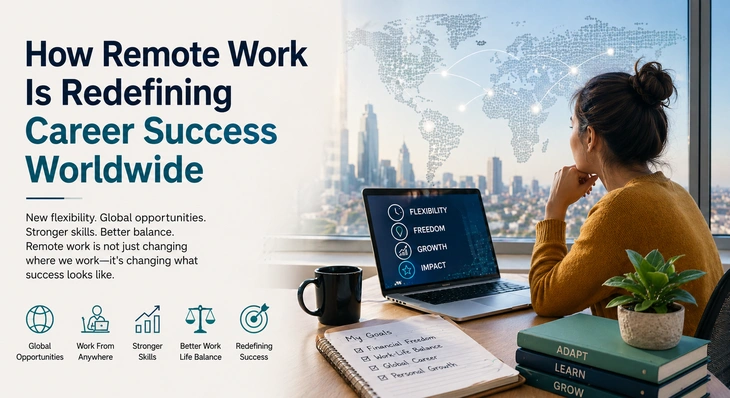
How Remote Work Is Changing the Global Mental Health Conversation
Introduction
Remote work didn’t arrive with a dramatic announcement. It slipped into everyday life quietly, then suddenly became the norm for millions of people. What used to feel like a flexible perk is now a standard way of working across industries, from tech and marketing to finance and education. And with that shift, something unexpected happened—the conversation around mental health at work became more open, more personal, and far more urgent. People who once separated “work life” and “home life” into neat compartments now find both happening in the same space. A kitchen table turns into a desk. A bedroom becomes a meeting room. And slowly, the mind starts adjusting to a reality where work never fully “leaves.” This article explores how remote work mental health challenges are shaping global discussions, why digital burnout is becoming so common, and how employees and companies are trying to rebuild balance in a world that is always connected.The Everyday Reality of Remote Work and Mental Health
For many professionals, remote work feels like freedom at first. No traffic. No rigid office timings. No rushing through mornings just to reach a desk on time. But after the initial comfort wears off, a different pattern often emerges. Work starts stretching quietly into personal time. Breaks become shorter. Notifications feel harder to ignore. And even when the laptop is closed, the mind doesn’t always switch off. This is where remote work mental health starts becoming a real concern—not in obvious ways, but in small, everyday shifts. Some people feel calmer and more in control. Others feel mentally “stuck” in work mode all day. Most experience something in between. The truth is simple: remote work changes how the brain understands boundaries.Remote Work Mental Health Impact: The Two Sides Nobody Talks About
There’s no single way remote work affects people. It depends on personality, job type, and even home environment. But certain patterns show up again and again.What people often appreciate
Remote work brings relief in ways that are easy to understand:- No exhausting daily commute
- More time with family or personal routines
- Flexibility to work during productive hours
- A quieter environment with fewer interruptions
What slowly becomes difficult
At the same time, challenges build up quietly:- Work hours start blending into personal time
- Social interaction reduces significantly
- Screen exposure increases without breaks
- The sense of teamwork becomes weaker over time
Digital Burnout in Remote Work Environments
Digital burnout doesn’t always look dramatic. It doesn’t always mean collapsing from exhaustion. More often, it shows up in subtle ways that people ignore at first. Too many tabs open. Too many meetings. Too many messages that feel urgent even when they’re not. Slowly, the mind stops processing information efficiently.Signs of digital burnout that are becoming common
- Feeling mentally tired even after rest
- Difficulty focusing on simple tasks
- Low patience during virtual meetings
- Reduced motivation to start work
- Feeling overwhelmed by constant notifications
Work From Home Burnout: When Home Stops Feeling Like Rest
Work-from-home burnout is slightly different. It’s more emotional than physical. It happens when the home stops feeling like a place to relax and starts feeling like an extension of the office. There’s no clear “end of the day.” Just a slow fading of energy. For example, someone working in customer support across time zones might respond to messages late at night and again early in the morning. Over time, sleep gets affected, concentration drops, and even small tasks feel heavier than they should. What makes this harder is that it doesn’t feel urgent at first. It builds quietly. That’s why structured routines and clear expectations are becoming essential to protecting mental health in remote work.Hybrid Work and the Search for Balance
Hybrid work has become a middle path for many organizations trying to solve the challenges of full remote setups. A few days in the office. A few days at home. Enough structure to maintain connection, enough flexibility to avoid burnout. Many employees say hybrid work helps them mentally “reset.” Simply changing the environment makes a difference. But it’s not perfect. Without proper planning, hybrid setups can feel inconsistent. Some people end up feeling left out of conversations happening in-office. Others struggle to track schedules and the flow of communication. When done thoughtfully, though, hybrid work can reduce isolation and support better mental balance.Virtual Workplace Wellbeing: More Than Just a Policy
A few years ago, mental health at work was often treated as a side topic. Today, it’s part of workplace planning. Organizations are realizing that productivity and wellbeing are closely connected. Instead of expecting employees to “push through,” companies are starting to adjust their work culture.What this looks like in practice
- Flexible working hours instead of rigid schedules
- Mental health support through online platforms
- Encouraging employees to actually take breaks
- Managers trained to recognize stress early
- Cutting down unnecessary meetings that drain time and energy
Communication Overload and the Pressure to Stay Online
One of the less visible problems in remote work is communication overload. It sounds harmless at first—being connected all the time. But over weeks and months, it becomes exhausting. Messages pile up. Notifications never stop. And even during rest hours, there’s a feeling that something important might be missed. This creates an “always-on” mindset that quietly affects mental health. Some employees describe it as mental background noise that never fully disappears. To reduce this, many companies are now encouraging slower communication rhythms, clearer expectations for responses, and fewer urgent interruptions.How Remote Work Is Changing the Global Mental Health Conversation
Perhaps the biggest shift is not in how people work—but in how openly they talk about mental health. Remote work has made struggles more visible in unexpected ways. During video calls, people see each other in personal environments. They notice fatigue, stress, or disengagement more easily. Conversations around anxiety, burnout, and emotional wellbeing have become more normal in professional spaces. Across industries, there is growing acceptance that mental health is not separate from work performance—it directly influences it. This shift is reducing stigma and encouraging earlier support instead of delayed intervention.Real-Life Scenario: Adjusting to the Remote Work Rhythm
Imagine a content strategist working for a global brand. At first, remote work feels ideal. No commute. Flexible hours. More personal time. But after a few months, the lines begin to blur. She finds herself answering emails late at night and checking messages during weekends. Gradually, fatigue builds up. Her company notices this pattern and introduces structured check-ins, clearer work-hour boundaries, and optional offline focus days. Slowly, things improve. Not because the workload changes dramatically, but because the structure returns. That’s the key difference in remote work mental health outcomes—structure changes everything.The Future of Remote Work and Mental Well-being
Remote work is no longer a temporary trend. It’s becoming part of how modern work operates. And as it continues to evolve, mental health will remain central to the conversation. We are already seeing early signs of change:- More personalized work schedules
- Smarter tools that reduce communication overload
- AI-supported productivity and wellness systems
- Stronger boundaries between work time and personal time