📚 Table of Contents
- Why Dual Careers Are Becoming More Common in Remote Work
- Benefits of Managing Dual Careers While Working Remotely
- Building Multiple Income Streams
- Expanding Skills Faster
- Greater Career Flexibility
- More Personal Satisfaction
- Challenges Professionals Face With Dual Careers
- Time Management Difficulties
- Burnout and Mental Exhaustion
- Communication Overload
- Difficulty Maintaining Work-Life Balance
- Practical Ways to Manage Dual Careers Successfully
- Create a Reliable Daily Structure
- Use Time Blocking Techniques
- Focus on High-Impact Work
- Avoid Overscheduling
- Set Strong Boundaries Between Careers
- Separate Workspaces
- Define Clear Working Hours
- Learn When to Decline Opportunities
- Use Productivity Tools to Stay Organized
- Project Management Software
- Centralized Calendars
- Organized Communication Systems
- Protect Physical and Mental Well-Being
- Make Sleep a Priority
- Take Regular Breaks
- Stay Physically Active
- Communicate Professionally and Transparently
- Understand Employment Agreements
- Set Realistic Expectations
- Develop Long-Term Career Goals
- Clarify Your Priorities
- Reevaluate Regularly
- Real-Life Examples of Remote Professionals Managing Dual Careers
- The Designer Building an Online Teaching Business
- The HR Professional Offering Career Consulting
- The Healthcare Worker Running a Digital Wellness Brand
- Best Practices for Long-Term Success With Dual Careers
- The Future of Remote Work and Dual Careers
- FAQs About Managing Dual Careers While Working Remotely
- Is it possible to manage two remote careers successfully?
- What are the best remote jobs for dual careers?
- How can professionals avoid burnout while working remotely?
- Should professionals tell employers about a second career?
- How many hours should professionals work when managing dual careers?
- Conclusion
Remote Work for Professionals: How to Manage Dual Careers
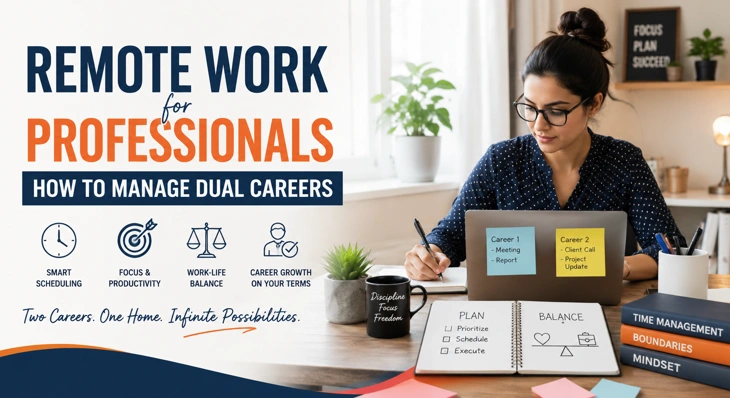
Remote work is no longer a temporary trend or a niche benefit offered by a handful of companies. It has become a major part of how modern professionals build careers, earn income, and create flexible lifestyles. Along with that shift, more people are exploring the idea of managing dual careers while working remotely. Some professionals keep a stable remote position while growing a freelance business on the side. Others combine consulting work with entrepreneurship, online teaching with corporate roles, or creative projects with client-based services. For many people, the decision is not only about making extra money. It is also about building financial security, learning new skills, and creating more freedom over the long term. At the same time, balancing two careers remotely can become overwhelming without proper systems in place. Long hours, overlapping schedules, and constant digital communication can quickly drain energy and reduce productivity. The good news is that managing dual careers successfully is possible with the right approach. Professionals who create clear boundaries, organize their schedules, and protect their well-being are often able to grow both careers without sacrificing their personal lives. A lot of professionals never planned to manage two careers at once. It usually starts small. Someone takes on a freelance client after work, launches a weekend side project, or begins teaching online for extra income. Over time, that second role grows into something meaningful. What makes this possible today is the flexibility that comes with remote work. People are no longer tied to long commutes or strict office schedules. That extra time gives professionals room to experiment with different income streams and career paths. For some, the second career is a financial safety net. For others, it is a creative outlet or a long-term business idea they hope to grow eventually.Why Dual Careers Are Becoming More Common in Remote Work
The rise of remote work opportunities has completely changed how professionals think about employment. In the past, building two careers at the same time often meant dealing with exhausting commutes and rigid office schedules. Today, flexible work environments allow people to use their time more efficiently. Several trends are contributing to the growth of dual careers:- Flexible remote work schedules
- Expanding freelance marketplaces
- Increased demand for digital services
- Rising financial goals and living expenses
- Interest in career independence
- Desire to pursue passion-driven work
Benefits of Managing Dual Careers While Working Remotely
Working across two career paths can create advantages that go far beyond income.Building Multiple Income Streams
One of the biggest reasons professionals pursue dual careers is financial stability. Depending entirely on one employer can feel risky, especially during uncertain economic periods. Having a second source of income creates an additional layer of security. Professionals with dual careers often use their extra income for:- Emergency savings
- Debt reduction
- Investments
- Travel goals
- Business growth
- Retirement planning
Expanding Skills Faster
Managing two careers often accelerates professional growth. Someone balancing remote project management with freelance content writing may strengthen skills such as:- Communication
- Leadership
- Time management
- Client handling
- Problem-solving
- Strategic planning
Greater Career Flexibility
Professionals with multiple career paths are often more adaptable when industries change. If one income source experiences slowdowns or layoffs, another can provide stability. This flexibility can reduce stress and create more control over future career decisions.More Personal Satisfaction
Many professionals use dual careers to pursue work they genuinely enjoy. A finance professional may run a photography business on weekends. A teacher might launch an online language tutoring service. Remote work makes it easier to turn personal interests into profitable opportunities.Challenges Professionals Face With Dual Careers
Although remote dual careers offer flexibility, they also come with challenges that should not be ignored.Time Management Difficulties
Time management sounds simple until two careers begin competing for attention at the same time. A remote employee may finish a full day of meetings only to jump straight into freelance deadlines at night. Before long, every hour starts feeling scheduled. This is where many professionals struggle. There is always another email to answer, another project to review, or another task waiting in the background. Without structure, the workday quietly stretches into personal time.Burnout and Mental Exhaustion
Burnout rarely happens overnight. Usually, it builds slowly. A professional skips breaks for a few weeks, works through weekends, and tells themselves the busy schedule is temporary. Then the exhaustion starts showing up in small ways. Simple tasks take longer. Motivation drops. Sleep becomes inconsistent. Managing dual careers remotely can be rewarding, but constantly switching between responsibilities takes real mental energy.Communication Overload
Managing two careers remotely often means handling multiple communication channels at once. Emails, video calls, client messages, and team discussions can quickly become difficult to manage without organized systems.Difficulty Maintaining Work-Life Balance
Remote professionals sometimes fall into the habit of staying online all day. Over time, this can negatively impact:- Relationships
- Physical health
- Stress levels
- Personal time
- Overall productivity
Practical Ways to Manage Dual Careers Successfully
Professionals who succeed with remote dual careers usually rely on consistent habits and realistic expectations.Create a Reliable Daily Structure
A structured schedule is essential when balancing multiple responsibilities. Without a clear plan, professionals often waste time switching between tasks or responding to distractions.Use Time Blocking Techniques
Many remote professionals underestimate how much time is lost during the day due to constant task switching. Checking emails while attending meetings, jumping between projects, or multitasking for hours often creates more stress than actual progress. Time blocking works because it removes some of that mental clutter. Instead of deciding what to do every 15 minutes, professionals assign certain parts of the day to specific responsibilities. A remote employee might focus fully on company work until late afternoon, then shift attention to freelance clients later in the evening. That separation helps the brain stay focused longer and reduces the feeling of having to do everything at once.Focus on High-Impact Work
Not every task deserves immediate attention. Professionals should prioritize activities that directly contribute to:- Revenue generation
- Client satisfaction
- Long-term growth
- Business development
- Career advancement
Avoid Overscheduling
Trying to maximize every minute of the day usually leads to exhaustion. Leaving space between meetings and projects allows professionals to handle unexpected situations without constant stress.Set Strong Boundaries Between Careers
Boundary management plays a major role in long-term success. Without boundaries, work can slowly take over personal life.Separate Workspaces
Even small physical or digital changes can improve focus. Examples include:- Using separate devices
- Creating different browser profiles
- Setting up dedicated work areas
- Organizing projects in separate systems
Define Clear Working Hours
Professionals should communicate their availability clearly to clients and employers. Responding to messages at all hours may seem productive at first, but it often creates unrealistic expectations. Healthy work limits improve both productivity and mental well-being.Learn When to Decline Opportunities
One of the hardest lessons for ambitious professionals is realizing that more work is not always better. At the beginning, it is tempting to accept every freelance client, every collaboration request, or every side opportunity that appears. Saying yes feels productive. But eventually, overloaded schedules start affecting work quality and personal health. Experienced professionals often become more selective over time. They pay attention to whether a project is worth the energy, not just the paycheck. That mindset usually leads to better long-term results.Use Productivity Tools to Stay Organized
Technology can make remote dual careers much easier to manage. The right tools help professionals reduce confusion and stay on top of deadlines.Project Management Software
Platforms such as Trello, Asana, ClickUp, and Notion can help organize tasks, timelines, and priorities. These systems reduce the chances of missing important deadlines.Centralized Calendars
Keeping all meetings and responsibilities in one calendar makes scheduling far easier. Professionals should include:- Work meetings
- Client calls
- Personal appointments
- Breaks
- Deep work sessions
Organized Communication Systems
Managing communication efficiently is essential when balancing multiple careers. Professionals can reduce stress by organizing:- Emails
- Video calls
- Team chats
- Client discussions
Protect Physical and Mental Well-Being
Long-term productivity depends heavily on health. Professionals who ignore recovery often experience declining performance over time.Make Sleep a Priority
Sleep directly influences:- Focus
- Memory
- Decision-making
- Mood
- Energy levels
Take Regular Breaks
A surprising number of remote professionals work for hours without standing up from their desks. It may not seem serious in the moment, but long stretches of nonstop work usually lead to lower concentration later in the day. Even short breaks can help reset mental focus. Some people step outside for ten minutes. Others stretch, make coffee, or spend a few minutes completely away from screens. The specific habit matters less than the pause itself.Stay Physically Active
Many remote professionals spend long hours sitting at desks. Simple activities such as walking, yoga, or home workouts can improve energy levels and reduce stress.Communicate Professionally and Transparently
Strong communication helps prevent misunderstandings across both careers.Understand Employment Agreements
Before starting freelance work or a second remote job, professionals should review company policies carefully. Some employers have restrictions involving:- Outside work
- Competitor relationships
- Intellectual property
- Confidentiality agreements
Set Realistic Expectations
Professionals should avoid promising unrealistic turnaround times. Clear communication and dependable delivery build trust with both employers and clients.Develop Long-Term Career Goals
Managing dual careers works best when professionals have a clear sense of direction. Without long-term goals, it becomes easy to stay busy without making meaningful progress.Clarify Your Priorities
Professionals should regularly ask themselves:- Which career offers stronger growth potential?
- Which work feels most rewarding?
- What financial goals matter most?
- What type of lifestyle do I want?
Reevaluate Regularly
Career priorities can change over time. Professionals should occasionally review:- Income growth
- Stress levels
- Time commitments
- Personal satisfaction
- Future opportunities
Real-Life Examples of Remote Professionals Managing Dual Careers
The Designer Building an Online Teaching Business
A freelance graphic designer once described her routine as "working two full days inside one." During weekdays, she handled branding projects for a remote agency. At night, she taught beginner design classes online. At first, she tried to do everything manually, from scheduling students to answering every message herself. The workload quickly became exhausting. Things improved once she simplified her process. She created fixed teaching hours, automated bookings, and stopped replying to messages outside working hours. That structure made both careers easier to manage without feeling constantly overwhelmed.The HR Professional Offering Career Consulting
A human resources manager began providing resume consulting services after office hours. Instead of accepting unlimited clients, the consultant limited weekly appointments to maintain work-life balance. Within a few years, the consulting business grew into a profitable full-time career.The Healthcare Worker Running a Digital Wellness Brand
A healthcare professional launched an online wellness coaching business while continuing part-time clinical work. Using scheduling software and pre-recorded educational content helped reduce workload and improve efficiency. These examples highlight an important lesson: sustainable systems matter more than working nonstop.Best Practices for Long-Term Success With Dual Careers
Professionals who successfully manage remote work and dual careers often follow similar habits. Important practices include:- Following a consistent routine
- Protecting personal time
- Using automation tools
- Setting realistic workloads
- Prioritizing physical health
- Reviewing goals regularly
- Avoiding excessive multitasking
- Building reliable support systems