📚 Table of Contents
- The Shift Toward Remote Hiring
- Access to a Larger Talent Pool
- Example: Tech Companies Expanding Globally
- Reduced Operational Costs
- Why Cost Savings Matter More Today
- Improved Employee Productivity
- Real-World Workplace Changes
- Faster Hiring and Recruitment Processes
- Greater Workforce Diversity
- Diversity Improves Business Performance
- Better Employee Retention
- The Growing Demand for Flexible Work
- Business Continuity and Flexibility
- Increased Global Coverage and Customer Support
- Around-the-Clock Operations
- Technology Has Made Remote Work Easier
- Challenges Employers Face With Remote Teams
- Communication Barriers
- Managing Company Culture
- Cybersecurity Concerns
- Industries Rapidly Adopting Remote Teams
- Technology and Software Development
- Digital Marketing Agencies
- Customer Support Services
- Education and Online Learning
- Finance and Consulting
- Why Small Businesses Benefit the Most
- The Future of Remote Work
- Frequently Asked Questions
- Is remote hiring cheaper than local hiring?
- Why do employees prefer remote work?
- Are remote teams productive?
- What industries hire remote workers the most?
- What are the biggest challenges of remote work?
- Will remote work continue growing in the future?
- Conclusion
Why Employers Are Preferring Remote Teams Over Local Hires
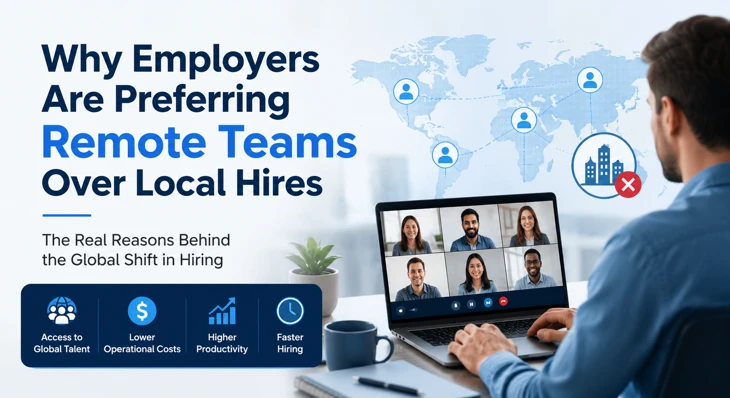
Hiring trends look very different today compared to just a few years ago. What started as a temporary adjustment for many businesses has gradually turned into a long-term hiring strategy that companies now actively prefer. Employers across industries are moving away from traditional local hiring and building remote teams instead. From startups to global corporations, businesses are realizing that remote work offers far more than flexibility. It provides access to skilled professionals worldwide, reduces operational costs, improves productivity, and enhances business continuity. Remote hiring is no longer something only software companies talk about. Businesses in marketing, finance, healthcare, customer service, education, and many other industries are building remote teams because the model simply works for them. This shift raises an important question: why are employers increasingly choosing remote teams over local hires? In this article, we’ll explore the real reasons behind this hiring trend, the business advantages of remote teams, the challenges companies face, and what the future of work may look like.The Shift Toward Remote Hiring
Before 2020, many employers believed productivity depended on physical office presence. Remote work was often viewed as a privilege rather than a reliable business model. That perception changed quickly. As businesses adapted to global disruptions, they discovered that employees could work effectively from anywhere. Many organizations not only maintained productivity but also improved performance while operating remotely. This experience transformed how companies think about hiring. Instead of limiting recruitment to a specific city or region, employers began searching for talent globally. The focus shifted from “Where does this person live?” to “Can this person deliver results?” That mindset continues to reshape recruitment strategies today.Access to a Larger Talent Pool
A major reason businesses are choosing remote teams over local hires is the ability to reach talent from anywhere in the world. Companies that focus only on local hiring usually have a much smaller pool of candidates to choose from. In competitive industries, finding someone with the right experience or technical skills can become frustrating and time-consuming. Remote work removes those location barriers almost instantly. A company based in New York can hire a software developer from India, a graphic designer from Brazil, and a marketing strategist from Canada — all without opening additional offices. This wider reach allows businesses to:- Find highly skilled professionals faster
- Hire niche experts for specialized roles
- Build diverse teams with different perspectives
- Reduce hiring delays caused by local talent shortages
Example: Tech Companies Expanding Globally
Many technology companies struggled for years to fill local positions due to intense competition for developers and engineers. By switching to remote hiring, businesses gained access to talented professionals in emerging tech markets worldwide. This reduced recruitment pressure and improved hiring speed. Today, fully distributed tech companies operate successfully with employees spread across multiple countries and time zones.Reduced Operational Costs
Cost reduction is another big reason employers are shifting toward remote teams. Traditional office setups require companies to spend money on:- Office rent
- Utilities
- Furniture
- Internet infrastructure
- Office maintenance
- Security services
- Employee commuting benefits
- Product development
- Employee salaries
- Marketing campaigns
- Business expansion
- Employee training
Why Cost Savings Matter More Today
Rising commercial real estate prices and increasing operational expenses have pushed companies to rethink traditional workplace models. Many organizations now realize they can operate efficiently without maintaining large physical offices. Some companies have even adopted hybrid or fully remote structures permanently because the financial benefits are too significant to ignore.Improved Employee Productivity
Many business owners once believed employees would lose focus while working from home, but real-world experience has shown something very different. However, many employers report the opposite. In many cases, remote employees enjoy:- Fewer workplace distractions
- Less commuting stress
- Better work-life balance
- More flexible schedules
- Increased job satisfaction
Real-World Workplace Changes
Many businesses now use project management tools like Slack, Asana, Trello, and Zoom to streamline communication and collaboration. These platforms allow remote teams to stay connected while maintaining efficiency. Employers have discovered that productivity depends more on effective systems and leadership than physical office attendance.Faster Hiring and Recruitment Processes
Traditional hiring methods are often slower than companies expect. Businesses often spend weeks or months trying to find suitable candidates within a limited geographic area. Remote recruitment accelerates this process. Since employers can hire from multiple regions or countries, they have access to more applicants immediately. This makes it easier to:- Fill urgent positions quickly
- Reduce time-to-hire
- Improve candidate quality
- Avoid talent shortages
Greater Workforce Diversity
Another important advantage of remote hiring is workplace diversity. When employers recruit globally, they bring together people from different:- Cultures
- Educational backgrounds
- Industries
- Experiences
- Perspectives
Diversity Improves Business Performance
Businesses that prioritize inclusive hiring often gain competitive advantages. Employees from different backgrounds contribute unique insights that help companies adapt to changing customer needs. Remote hiring makes this level of diversity much easier to achieve.Better Employee Retention
Keeping skilled employees has become harder for businesses in almost every industry. Many professionals now prioritize flexibility when choosing jobs. Employees increasingly value:- Flexible work arrangements
- Location independence
- Better work-life balance
- Reduced commuting stress
- More control over schedules
The Growing Demand for Flexible Work
Job seekers today often evaluate flexibility before salary. Many candidates actively avoid companies that require full-time office attendance unless absolutely necessary. Employers that ignore this shift may struggle to attract top talent.Business Continuity and Flexibility
Remote work also gives businesses more stability during unexpected situations. Natural disasters, transportation disruptions, political instability, or public health emergencies can disrupt office operations. Distributed teams provide greater resilience. Since employees work from multiple locations, companies are less vulnerable to localized disruptions. This flexibility improves long-term business stability. Organizations with remote infrastructure already in place can adapt faster to changing circumstances.Increased Global Coverage and Customer Support
Companies with remote teams across different time zones can provide extended customer support hours. Instead of relying on a single office schedule, businesses can maintain operations almost continuously. This is especially valuable for:- SaaS companies
- E-commerce businesses
- Customer service providers
- International corporations
- Online education platforms
Around-the-Clock Operations
For example, a customer support company may have agents working in Asia, Europe, and North America. This setup ensures customer inquiries are addressed quickly without requiring employees to work overnight shifts. It improves efficiency while supporting healthier employee schedules.Technology Has Made Remote Work Easier
Remote work would not be possible at today’s scale without modern digital tools. Cloud computing, video conferencing, project management software, and communication platforms have transformed workplace collaboration. Teams can now:- Share files instantly
- Conduct virtual meetings
- Track project progress
- Collaborate in real time
- Manage workflows remotely
Challenges Employers Face With Remote Teams
Of course, managing remote teams is not completely effortless. Employers must actively address these issues to build successful remote teams.Communication Barriers
Remote communication can sometimes create misunderstandings. Without face-to-face interaction, employees may struggle with collaboration or delayed responses. Businesses often solve this problem by:- Setting clear communication guidelines
- Using collaboration platforms
- Scheduling regular virtual meetings
- Encouraging transparency
Managing Company Culture
Building a strong workplace culture remotely requires intentional effort. Employers need to create opportunities for team bonding, recognition, and engagement. Virtual events, online team activities, and regular feedback sessions can help maintain employee connection.Cybersecurity Concerns
Remote work increases the importance of cybersecurity. Employees accessing company systems from different locations can create security risks. Many businesses now invest in:- VPN protection
- Secure cloud systems
- Multi-factor authentication
- Cybersecurity training
Industries Rapidly Adopting Remote Teams
Although remote work began gaining attention in the tech sector, many industries now rely heavily on remote teams.Technology and Software Development
Software companies were among the earliest adopters of remote hiring. Developers, engineers, designers, and IT specialists can work efficiently from virtually anywhere.Digital Marketing Agencies
Content writers, SEO specialists, social media managers, and graphic designers commonly work remotely today. Agencies benefit from hiring specialized talent worldwide.Customer Support Services
Remote customer support teams allow businesses to provide global service coverage while reducing office costs.Education and Online Learning
Online tutoring, virtual classrooms, and remote training programs have expanded rapidly. Educational organizations increasingly hire remote instructors and support staff.Finance and Consulting
Many consulting firms and financial service providers now operate with hybrid or remote teams. Secure digital systems allow professionals to collaborate effectively without centralized offices.Why Small Businesses Benefit the Most
Remote hiring can be especially valuable for small businesses. Smaller companies often struggle to compete with large corporations in local job markets. By hiring remotely, they gain access to affordable, highly skilled talent globally. This creates opportunities for:- Faster business growth
- Better talent acquisition
- Lower operational costs
- Improved scalability
The Future of Remote Work
At this point, remote work has moved far beyond being just a workplace trend. Many experts believe flexible work models will continue growing over the next decade. While some businesses are returning to office-based systems, many organizations now prefer hybrid or fully remote structures. Future workplaces will likely focus more on:- Results instead of office attendance
- Flexible schedules
- Digital collaboration
- Employee well-being
- Global talent acquisition