📚 Table of Contents
- Why Global Remote Jobs Are More Competitive Than Traditional Roles
- 1. Applying to Every Remote Job Without Customization
- Why This Hurts Your Chances
- How to Avoid This Mistake
- 2. Ignoring Time Zone Expectations
- Real-World Example
- What You Should Do Instead
- 3. Using a Weak or Outdated Resume
- Common Resume Problems
- What Remote Recruiters Want to See
- 4. Not Optimizing LinkedIn for Remote Opportunities
- Signs of a Poor LinkedIn Profile
- How to Improve Your Profile
- 5. Applying Without Researching the Company
- Why Research Matters
- What to Research Before Applying
- 6. Failing to Demonstrate Remote Work Skills
- Important Remote Work Skills
- How to Showcase These Skills
- 7. Writing Generic Cover Letters
- What Makes a Strong Cover Letter
- Example of a Better Approach
- 8. Poor Communication During the Hiring Process
- Common Communication Mistakes
- Tips for Better Professional Communication
- 9. Ignoring Portfolio or Work Sample Requirements
- Why Portfolios Matter
- What Makes a Strong Portfolio
- 10. Underestimating the Importance of Video Interviews
- Common Video Interview Mistakes
- How to Prepare Properly
- 11. Applying for Roles Without Matching Core Skills
- Why Strategic Applications Work Better
- Better Strategy for Job Applications
- 12. Giving Up Too Quickly
- The Reality of Remote Hiring
- How to Stay Consistent
- Additional Tips to Improve Your Global Remote Job Search
- Build a Personal Brand
- Learn In-Demand Remote Skills
- Improve English Communication Skills
- How Long Does It Usually Take to Get a Remote Job?
- FAQs About Applying for Global Remote Careers
- Do remote companies hire international candidates without experience?
- What are the best platforms to find global remote jobs?
- Is a cover letter necessary for remote job applications?
- What skills are most important for remote work?
- How can I improve my chances of getting hired remotely?
- Conclusion
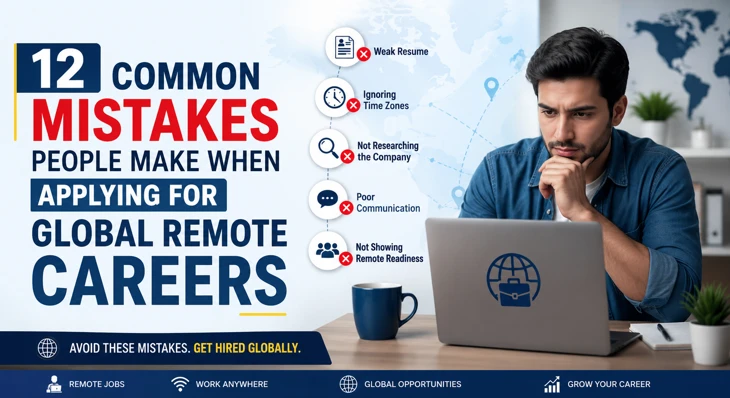
12 Common Mistakes People Make When Applying for Global Remote Careers
Remote work has transformed the modern job market. Professionals are no longer limited to opportunities within their city or country. Today, companies hire skilled talent from across the globe, creating exciting possibilities for people seeking flexibility, higher earning potential, and international career exposure. But while global remote careers are growing rapidly, competition is becoming tougher every year. Thousands of applicants often compete for a single remote role. Many talented professionals struggle not because they lack skills, but because they make avoidable mistakes during the application process. From poorly written resumes to failing remote interviews, small errors can quickly reduce your chances of getting hired. Understanding these mistakes can help you stand out and improve your chances of success when applying for international remote jobs. In this guide, we’ll break down 12 common mistakes people make when applying for global remote careers and explain how to avoid them.Why Global Remote Jobs Are More Competitive Than Traditional Roles
Global remote jobs attract candidates from multiple countries instead of a single local area. That means recruiters receive applications from people with diverse backgrounds, experiences, and salary expectations. Companies hiring remote workers also look for more than technical qualifications. They want professionals who can:- Communicate clearly
- Work independently
- Manage time effectively
- Collaborate across time zones
- Adapt to a remote work culture
- Solve problems without constant supervision
1. Applying to Every Remote Job Without Customization
One of the biggest mistakes candidates make is sending the same resume and cover letter to every company. Recruiters can instantly recognize generic applications. A resume designed for a local office role may not work for a global remote company.Why This Hurts Your Chances
Most remote companies use Applicant Tracking Systems (ATS) to filter resumes. If your application does not include role-specific keywords or relevant skills, it may never reach a recruiter. For example, if a company is hiring a remote content strategist, they may specifically look for terms like:- Remote collaboration
- SEO content writing
- Project management tools
- Cross-functional communication
How to Avoid This Mistake
Customize every application by:- Updating keywords based on the job posting
- Matching your skills with role requirements
- Highlighting remote work experience
- Tailoring your cover letter to the company
2. Ignoring Time Zone Expectations
Many applicants overlook the importance of time zones when applying for remote jobs. Global companies often require overlapping work hours. If you apply without checking scheduling expectations, you may waste time pursuing unsuitable roles.Real-World Example
Imagine a candidate based in India applying for a remote job with a company in California. The role requires daily overlap from 9 AM to 1 PM Pacific Time. That translates to late-night working hours in India. Some candidates realize this only during the final interview stage, creating frustration for both sides.What You Should Do Instead
Before applying:- Check the required working hours
- Confirm overlap expectations
- Mention flexibility if applicable
- Be honest about availability
3. Using a Weak or Outdated Resume
A poorly structured resume is one of the fastest ways to lose opportunities. Many job seekers still use outdated resume formats designed for traditional office jobs. Remote employers expect resumes that are clean, results-focused, and easy to scan.Common Resume Problems
- Long paragraphs
- Generic responsibilities
- Lack of measurable achievements
- Irrelevant experience
- Poor formatting
- Missing remote work tools
What Remote Recruiters Want to See
Your resume should clearly highlight:- Remote collaboration experience
- Communication skills
- Productivity tools
- Results and achievements
- Independent work capability
4. Not Optimizing LinkedIn for Remote Opportunities
LinkedIn plays a major role in global hiring. Recruiters often check profiles before scheduling interviews. If your profile looks incomplete or inactive, it can weaken your credibility.Signs of a Poor LinkedIn Profile
- Missing profile photo
- Weak headline
- No work samples
- Incomplete experience section
- Few connections
- No recommendations
How to Improve Your Profile
Use a professional headline that reflects your expertise. Instead of: “Marketing Professional” Try: “Remote SEO Content Writer Helping SaaS Brands Increase Organic Traffic” Also:- Add measurable achievements
- Include portfolio links
- Request recommendations
- Share industry insights occasionally
5. Applying Without Researching the Company
Many candidates rush through applications without learning about the company. This mistake becomes obvious during interviews. When recruiters ask: “What interests you about our company?” Generic answers usually hurt credibility.Why Research Matters
Global remote companies value alignment. They want people who understand their mission, products, culture, and audience. Candidates who show genuine interest appear more committed and professional.What to Research Before Applying
Spend at least 15–20 minutes reviewing:- Company website
- Team structure
- Products or services
- Recent news
- Social media presence
- Company culture
6. Failing to Demonstrate Remote Work Skills
Remote work requires a unique skill set. Some applicants focus only on technical qualifications and forget to demonstrate their ability to work remotely.Important Remote Work Skills
Employers often prioritize candidates who can:- Communicate asynchronously
- Stay productive independently
- Manage deadlines
- Use collaboration tools
- Handle virtual meetings professionally
How to Showcase These Skills
Mention tools you’ve used, such as:- Slack
- Zoom
- Trello
- Asana
- Notion
- Google Workspace
- Managing remote clients
- Leading virtual projects
- Coordinating across time zones
7. Writing Generic Cover Letters
A weak cover letter can make your application forgettable. Many applicants simply repeat their resume or use copied templates. Recruiters read hundreds of applications. Generic letters rarely create interest.What Makes a Strong Cover Letter
An effective remote job cover letter should:- Address the company directly
- Explain why you fit the role
- Mention relevant achievements
- Show enthusiasm for remote work
- Demonstrate communication skills
Example of a Better Approach
Instead of saying: “I am excited to apply for this opportunity.” Try: “I’m particularly interested in this role because your company’s remote-first culture and focus on global collaboration align closely with my experience managing distributed content projects.” Specificity sounds more authentic.8. Poor Communication During the Hiring Process
Communication matters even before you get hired. Delayed replies, unclear emails, or unprofessional behavior can quickly damage your chances. Remote companies rely heavily on written communication. Recruiters often evaluate how candidates communicate throughout the hiring process.Common Communication Mistakes
- Late interview responses
- Unclear emails
- Informal language
- Misspelled messages
- Poor video interview etiquette
Tips for Better Professional Communication
- Respond promptly
- Keep messages concise
- Double-check grammar
- Use professional language
- Prepare before interviews
9. Ignoring Portfolio or Work Sample Requirements
For many remote jobs, resumes alone are not enough. Companies want proof of skills. Yet many candidates skip portfolio links or submit weak work samples.Why Portfolios Matter
A strong portfolio helps employers quickly evaluate your capabilities. This is especially important for roles like:- Content writing
- Graphic design
- Software development
- Video editing
- Digital marketing
- UX/UI design
What Makes a Strong Portfolio
Your portfolio should:- Showcase the best work only
- Be easy to navigate
- Include measurable results
- Highlight real projects
- Demonstrate versatility
10. Underestimating the Importance of Video Interviews
Remote interviews are often conducted entirely online. Some candidates treat video interviews casually, which can create a negative impression.Common Video Interview Mistakes
- Poor lighting
- Loud background noise
- Weak internet connection
- Lack of preparation
- Reading scripted answers
- Unprofessional appearance
How to Prepare Properly
Before your interview:- Test your internet connection
- Check audio and video quality
- Choose a quiet environment
- Research common interview questions
- Practice concise answers
11. Applying for Roles Without Matching Core Skills
Some job seekers apply for every remote opening they see, even when they lack the required qualifications. While ambition is good, constantly applying for unsuitable roles can waste time and reduce focus.Why Strategic Applications Work Better
Remote hiring is highly competitive. Recruiters often shortlist candidates who closely match the job requirements. Instead of applying to 100 random jobs, focus on roles where your skills align strongly.Better Strategy for Job Applications
Create a shortlist based on:- Your strongest skills
- Industry experience
- Remote readiness
- Career goals
- Language requirements
12. Giving Up Too Quickly
Many people expect immediate results when applying for global remote careers. But remote job searches can take time. Rejection is common, especially in competitive international markets.The Reality of Remote Hiring
Even highly qualified candidates may submit dozens of applications before receiving interviews. Sometimes the issue is not your skills. Timing, competition, or company priorities can influence outcomes.How to Stay Consistent
Successful remote job seekers usually:- Improve applications continuously
- Build skills regularly
- Expand professional networks
- Learn from feedback
- Stay patient and persistent
Additional Tips to Improve Your Global Remote Job Search
Beyond avoiding common mistakes, there are several ways to strengthen your remote career strategy.Build a Personal Brand
A visible online presence can help recruiters discover you. You can:- Share industry insights on LinkedIn
- Publish articles
- Join remote work communities
- Participate in discussions
- Showcase expertise publicly
Learn In-Demand Remote Skills
Global companies often prioritize skills such as:- SEO
- Data analysis
- Software development
- Digital marketing
- UX design
- AI tools
- Project management
Improve English Communication Skills
For many international remote jobs, strong English communication is essential. Focus on:- Writing clarity
- Video communication
- Professional email etiquette
- Listening comprehension
How Long Does It Usually Take to Get a Remote Job?
The timeline varies depending on:- Industry demand
- Experience level
- Skill specialization
- Portfolio strength
- Networking efforts