📚 Table of Contents
- Why Full-Stack Development Is One of the Best Remote Career Paths
- High Demand Across Global Companies
- Flexibility and Location Independence
- Better Income Opportunities
- Faster Career Growth
- Best Platforms for Building Remote Careers in Full-Stack Development
- GitHub – Your Developer Portfolio in Action
- Why GitHub Matters for Remote Developers
- How to Use GitHub Effectively
- LinkedIn – Professional Visibility for Remote Jobs
- Why LinkedIn Is Important
- How to Optimize Your Profile
- Upwork – Freelance Platform for Real-World Experience
- Why Developers Choose Upwork
- How to Succeed on Upwork
- Toptal – High-End Remote Development Opportunities
- What Makes Toptal Different
- Best For
- Stack Overflow Jobs – Skill-Based Hiring Platform
- Key Benefits
- How to Stand Out
- Remote OK – Dedicated Remote Job Board
- Why It Works Well
- Smart Application Strategy
- Wellfound (AngelList) – Startup-Focused Careers
- Benefits of Using Wellfound
- Real Example
- Essential Skills for Remote Full-Stack Development Careers
- Core Technical Skills
- Additional Technical Knowledge
- Soft Skills That Matter
- How to Build a Strong Remote Developer Profile
- Practical Steps
- Pro Tip
- Challenges in Remote Full-Stack Careers
- Common Challenges
- How to Handle Them
- Future of Remote Full-Stack Development Careers
- Emerging Trends
- FAQs
- 1. Is full-stack development a good career for remote work?
- 2. Which platform is best for beginners in full-stack development?
- 3. Can I become a remote full-stack developer without a degree?
- 4. How long does it take to become job-ready?
- 5. What is the best way to get remote full-stack jobs quickly?
- Conclusion
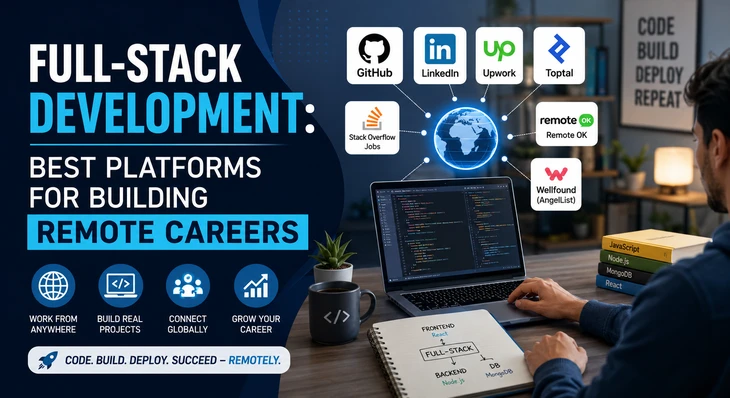
Full-Stack Development: Best Platforms for Building Remote Careers
The demand for full-stack development has grown rapidly over the last few years and continues to open doors for professionals seeking flexibility, independence, and global opportunities. Remote work is no longer a trend—it has become a long-term career model, especially in the tech industry. Among all roles in software engineering, full-stack developers are uniquely well-positioned because they can manage both front-end and back-end systems. If you are aiming to build a remote career in full-stack development, the real challenge is not just learning the skills—it is knowing where to apply them, how to showcase your work, and which platforms can actually connect you with real opportunities. This guide breaks everything down in a practical, easy-to-follow way so you can start building a sustainable remote career.Why Full-Stack Development Is One of the Best Remote Career Paths
Full-stack development refers to working on both client-side and server-side applications. In simple terms, it means you can build a complete web application from scratch. This versatility makes full-stack developers extremely valuable in remote job markets.High Demand Across Global Companies
Every business today relies on web applications. From startups to enterprise-level companies, everyone needs developers who can handle complete systems. This consistent demand makes full-stack development one of the most stable remote career options.Flexibility and Location Independence
Remote full-stack developers can work from anywhere as long as they have a stable internet connection. Whether it’s a freelance project or a full-time remote role, the work can be delivered without being physically present in an office.Better Income Opportunities
Because full-stack developers can manage multiple layers of development, companies often prefer hiring them over separate front-end and back-end specialists for smaller or medium-sized teams. This increases earning potential in both freelance and full-time remote roles.Faster Career Growth
Understanding the complete system architecture helps developers move into senior roles, tech leadership positions, or even freelance entrepreneurship faster than many specialized roles.Best Platforms for Building Remote Careers in Full-Stack Development
Finding the right platforms is just as important as learning the right technologies. The following platforms help full-stack developers gain experience, build visibility, and secure remote opportunities.GitHub – Your Developer Portfolio in Action
GitHub is one of the most powerful platforms for any full-stack developer building a remote career. It acts as your public coding portfolio.Why GitHub Matters for Remote Developers
- Shows real coding ability instead of just claims on a resume
- Helps you collaborate on open-source projects
- Builds credibility with recruiters and clients
How to Use GitHub Effectively
To stand out, focus on building meaningful projects such as:- Full-stack web applications (MERN or similar stacks)
- API-based backend systems
- Authentication systems with secure login flows
- Responsive front-end dashboards
LinkedIn – Professional Visibility for Remote Jobs
LinkedIn plays a major role in connecting full-stack developers with remote employers.Why LinkedIn Is Important
- Direct access to recruiters worldwide
- Remote job postings from verified companies
- Opportunity to build a personal tech brand
How to Optimize Your Profile
- Use keywords like “full-stack developer,” “remote web developer,” and “MERN stack developer” naturally in your headline
- Post updates about your projects and learning journey
- Engage with developer communities and industry posts
Upwork – Freelance Platform for Real-World Experience
Upwork is one of the most practical platforms for building a remote career as a full-stack developer through freelancing.Why Developers Choose Upwork
- Access to global clients
- Flexible work schedule
- Opportunity to build long-term client relationships
How to Succeed on Upwork
- Start with small projects to build reviews
- Write personalized proposals instead of generic ones
- Add GitHub links and live project demos
Toptal – High-End Remote Development Opportunities
Toptal is known for connecting top-tier developers with premium clients.What Makes Toptal Different
- Strict screening process ensures high-quality talent
- Access to high-paying remote projects
- Long-term professional contracts
Best For
Experienced full-stack developers who are confident in both technical and communication skills.Stack Overflow Jobs – Skill-Based Hiring Platform
Stack Overflow is widely trusted in the developer community and offers a more skill-focused hiring approach.Key Benefits
- Technical job listings from reputable companies
- Strong developer ecosystem
- Focus on real skills instead of traditional resumes
How to Stand Out
- Participate in coding discussions
- Solve problems and build reputation points
- Share your technical expertise through answers
Remote OK – Dedicated Remote Job Board
Remote OK is built specifically for remote tech roles, making it highly relevant for full-stack developers.Why It Works Well
- Fully remote job listings only
- Updated frequently with global opportunities
- Covers startups and established companies
Smart Application Strategy
Apply early, tailor your resume for each job, and highlight relevant full-stack projects.Wellfound (AngelList) – Startup-Focused Careers
Wellfound is ideal for developers interested in startup environments and fast-paced product development.Benefits of Using Wellfound
- Direct access to startup founders
- Opportunity to work on early-stage products
- Possibility of equity-based compensation
Real Example
A full-stack developer joining a startup may work on building MVPs, improving scalability, and shaping product features from the ground up.Essential Skills for Remote Full-Stack Development Careers
To succeed across these platforms, technical and soft skills must go hand in hand.Core Technical Skills
- HTML, CSS, JavaScript
- React, Vue, or Angular
- Node.js, Django, or Laravel
- MongoDB, MySQL, PostgreSQL
Additional Technical Knowledge
- REST APIs and GraphQL
- Git and version control systems
- Deployment tools like AWS, Docker, and Vercel
- Basic UI/UX understanding
Soft Skills That Matter
- Clear communication
- Time management
- Problem-solving mindset
- Ability to work independently
How to Build a Strong Remote Developer Profile
A strong profile significantly increases your chances of getting remote opportunities.Practical Steps
- Build at least 3–5 real-world full-stack projects
- Host your portfolio online
- Keep your GitHub active and organized
- Add project descriptions with clear outcomes
Pro Tip
Instead of listing skills, demonstrate them through working applications. Employers value proof of work over claims.Challenges in Remote Full-Stack Careers
Remote work offers freedom, but it also comes with challenges that require discipline.Common Challenges
- Communication gaps across time zones
- Staying motivated without supervision
- High competition in global job markets
How to Handle Them
- Use tools like Trello, Notion, or Jira for organization
- Create a structured daily routine
- Continuously upgrade your technical skills
Future of Remote Full-Stack Development Careers
The future of full-stack development is closely tied to the expansion of remote work and digital transformation.Emerging Trends
- AI-assisted development workflows
- Cloud-based full-stack architectures
- Microservices-based applications
- Low-code and no-code integrations