📚 Table of Contents
- Why Freelance Careers in Creative Arts Are Growing Rapidly
- Popular Freelance Careers in Graphic Design & Creative Arts
- Freelance Graphic Designer
- Freelance UI/UX Designer
- Freelance Illustrator
- Motion Graphics Designer
- Freelance Photographer
- Freelance Video Editor
- Skills Needed for a Successful Freelance Creative Career
- Strong Design Fundamentals
- Software Proficiency
- Communication Skills
- Time Management
- Personal Branding
- How to Start a Freelance Career in Graphic Design
- Build a Strong Portfolio
- Choose a Niche
- Create Profiles on Freelance Platforms
- Use Social Media to Attract Clients
- Income Potential for Freelance Graphic Designers and Creative Professionals
- Common Freelance Pricing Models
- Challenges of Freelance Careers in Creative Arts
- Inconsistent Income
- Client Revisions and Difficult Feedback
- Competition
- Self-Discipline
- Tips to Build a Long-Term Freelance Creative Career
- Focus on Client Experience
- Keep Learning New Skills
- Develop Multiple Income Streams
- Network with Other Creatives
- Real-Life Example of a Successful Freelance Designer
- Future of Freelance Careers in Graphic Design & Creative Arts
- FAQs About Freelance Careers in Graphic Design & Creative Arts
- Is graphic design freelancing a good career?
- How much do freelance graphic designers earn?
- Do I need a degree to become a freelance designer?
- Which freelance creative skill is most in demand?
- How do beginners find freelance design clients?
- Can freelance creative work become a full-time career?
- Conclusion
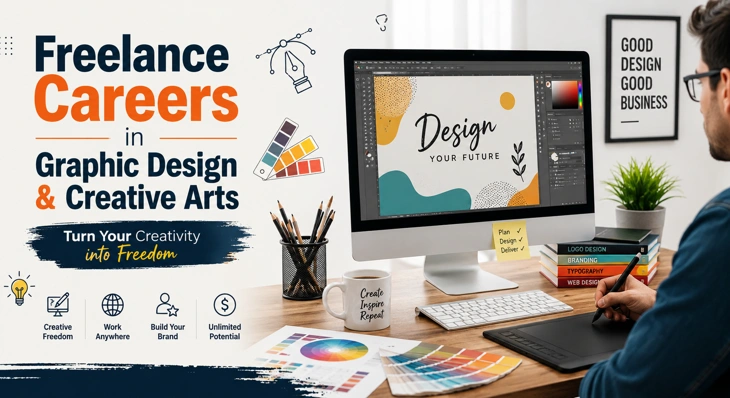
Freelance Careers in Graphic Design & Creative Arts
The world of work has changed dramatically over the last decade. Traditional office jobs are no longer the only path for creative professionals. Today, thousands of artists, designers, illustrators, animators, and visual storytellers are building successful freelance careers from home, coworking spaces, or even while traveling. Freelancing in graphic design and creative arts is no longer seen as a side hustle. It has become a serious and rewarding career option for people who want flexibility, creative freedom, and control over their income. Whether someone is passionate about logo design, digital illustration, motion graphics, branding, UI/UX design, or photography, freelance creative work offers endless opportunities for professional growth while working on meaningful projects. In this guide, we’ll explore how freelance careers in graphic design and creative arts work, the skills needed to succeed, income opportunities, challenges, and practical strategies for building a sustainable creative business.Why Freelance Careers in Creative Arts Are Growing Rapidly
The demand for visual content is at an all-time high. Businesses need branding, social media graphics, websites, advertising materials, videos, and digital experiences to stay competitive online. At the same time, companies are increasingly hiring freelance designers instead of maintaining large in-house creative teams. Freelancers allow businesses to scale projects quickly while accessing specialized talent from around the world. This shift has opened the door for creative professionals to work independently and build flexible careers. Some major reasons why freelance creative careers are booming include:- Growth of digital marketing and social media
- Increased demand for branding and visual storytelling
- Rise of remote work culture
- Easy access to global clients through freelance platforms
- Affordable creative tools and software
- Expansion of eCommerce businesses needing design support
Popular Freelance Careers in Graphic Design & Creative Arts
Freelancing is not limited to just logo design. The creative industry includes many specialized career paths.Freelance Graphic Designer
Graphic designers create visual assets for brands, businesses, and marketing campaigns. Their work may include:- Logos
- Business cards
- Brochures
- Packaging designs
- Social media graphics
- Advertisements
- Website visuals
Freelance UI/UX Designer
UI/UX designers focus on user experience and digital interfaces. They help create websites, mobile apps, and digital products that are visually appealing and easy to use. This is one of the highest-paying freelance creative careers today because companies prioritize customer experience.Freelance Illustrator
Illustrators create original artwork for books, websites, advertising campaigns, games, magazines, and social media. Some illustrators specialize in:- Character design
- Children’s books
- Editorial illustration
- Fashion illustration
- NFT artwork
- Comic art
Motion Graphics Designer
Motion graphics artists combine animation, typography, and visual effects to create engaging video content. Brands increasingly use animated content for:- YouTube videos
- Instagram reels
- Product explainers
- Online ads
- Corporate presentations
Freelance Photographer
Photography freelancing includes several niches, such as:- Product photography
- Wedding photography
- Fashion photography
- Food photography
- Real estate photography
- Travel photography
Freelance Video Editor
Video editors help creators and brands turn raw footage into polished content. With the rise of YouTube, podcasts, online courses, and social media content, freelance video editing has become a profitable remote career.Skills Needed for a Successful Freelance Creative Career
Creative talent matters, but freelancing requires more than artistic ability. Successful freelancers combine technical expertise with communication, organization, and business skills.Strong Design Fundamentals
Understanding color theory, typography, layout, composition, and visual hierarchy is essential for graphic design and creative work. Clients want work that not only looks attractive but also communicates effectively.Software Proficiency
Most freelance creative professionals use industry-standard tools such as:- Adobe Photoshop
- Adobe Illustrator
- Adobe InDesign
- Adobe After Effects
- Figma
- Canva
- Blender
- Procreate
Communication Skills
Freelancers regularly interact with clients, discuss revisions, explain ideas, and manage expectations. Clear communication helps avoid misunderstandings and improves client satisfaction.Time Management
Freelancers often manage multiple projects at once. Meeting deadlines consistently is critical for building trust and earning repeat business.Personal Branding
A strong online presence helps creative freelancers stand out in a competitive market. This includes:- A professional portfolio website
- Social media presence
- LinkedIn profile
- Behance or Dribbble portfolio
- Consistent visual identity
How to Start a Freelance Career in Graphic Design
Starting can feel overwhelming, especially for beginners. However, most successful freelancers started with small projects and gradually built their portfolios.Build a Strong Portfolio
A portfolio is often more important than a degree. Clients want to see examples of real work and creative thinking. Even beginners can create sample projects such as:- Brand identity concepts
- Mock website designs
- Social media campaigns
- Packaging concepts
- Poster designs
Choose a Niche
Generalists can find work, but specialists often earn more. For example, a designer who focuses specifically on restaurant branding or SaaS website design may attract higher-paying clients because of niche expertise. Popular freelance design niches include:- eCommerce branding
- Social media design
- Real estate marketing materials
- Fitness brand design
- Podcast cover art
- Packaging design
- UX design for startups
Create Profiles on Freelance Platforms
Many beginners find their first clients through online freelance marketplaces. Popular platforms include:- Upwork
- Fiverr
- Freelancer
- Toptal
- PeoplePerHour
Use Social Media to Attract Clients
Instagram, LinkedIn, Pinterest, TikTok, and Behance are powerful platforms for showcasing creative work. A designer who consistently shares projects, design tips, and behind-the-scenes content can gradually attract inquiries from potential clients. For example, many freelance logo designers gain visibility by posting logo redesign concepts for famous brands.Income Potential for Freelance Graphic Designers and Creative Professionals
One of the biggest advantages of freelancing is income flexibility. There is no fixed salary cap. Earnings depend on:- Skill level
- Experience
- Portfolio quality
- Client base
- Niche specialization
- Pricing strategy
Common Freelance Pricing Models
Freelancers typically charge clients using one of these models:Hourly Pricing
Clients pay based on the time spent on the project. This model works well for ongoing creative support.Project-Based Pricing
A fixed fee is charged for the complete project. For example:- Logo design package
- Website UI design
- Brand identity kit
- Social media template set
Retainer Pricing
Clients pay a recurring monthly fee for ongoing creative services. This provides more predictable income and long-term stability.Challenges of Freelance Careers in Creative Arts
Freelancing offers freedom, but it also comes with challenges. Understanding these realities helps creative professionals prepare effectively.Inconsistent Income
Unlike salaried jobs, freelance income can fluctuate. Some months may bring several projects, while others may feel slow. Building a base of recurring clients and maintaining savings can reduce financial stress.Client Revisions and Difficult Feedback
Creative work is subjective. Some clients may request multiple revisions or struggle to communicate their vision clearly. Professional communication and clear contracts help manage expectations.Competition
The freelance marketplace is competitive. However, strong branding, niche expertise, and high-quality work can help freelancers stand out.Self-Discipline
Freelancers are responsible for managing their own schedules. Without discipline, procrastination and burnout can become serious problems. Creating routines and maintaining work-life balance is essential.Tips to Build a Long-Term Freelance Creative Career
Freelancing success rarely happens overnight. Most thriving creative professionals build their careers gradually through consistency and relationship-building.Focus on Client Experience
Good design alone is not enough. Clients remember freelancers who:- Communicate clearly
- Deliver on time
- Respond professionally
- Solve problems creatively
- Make the process smooth and stress-free
Keep Learning New Skills
The creative industry changes constantly. Design trends, software, and marketing needs evolve quickly. Freelancers who continue learning stay competitive. Useful skills to learn include:- Motion graphics
- 3D design
- AI-assisted design tools
- UX research
- Video editing
- Copywriting basics
- Branding strategy
Develop Multiple Income Streams
Many successful creatives diversify their income. In addition to client work, they may sell:- Design templates
- Online courses
- Digital products
- Stock illustrations
- Fonts
- Presets
- Print-on-demand products
Network with Other Creatives
Networking can open unexpected opportunities. Creative professionals often collaborate on projects or refer clients to each other. Joining online communities, attending design events, and participating in creative forums can help build valuable industry connections.Real-Life Example of a Successful Freelance Designer
Consider the example of a self-taught graphic designer who started by creating Instagram post templates for local businesses. Initially, the projects paid very little. However, the designer consistently improved skills, built a portfolio, and shared work online. Within two years, the designer expanded into branding packages for startups and began working with international clients. Eventually, the monthly income exceeded the salary from a previous full-time office job. This kind of growth is increasingly common in the freelance creative industry. The key factors behind success are usually:- Consistency
- Skill improvement
- Professional communication
- Strong portfolio presentation
- Patience during slow periods
Future of Freelance Careers in Graphic Design & Creative Arts
The future looks highly promising for freelance creatives. Businesses are investing more heavily in digital experiences, content marketing, branding, and visual storytelling. Emerging technologies such as AI-generated design tools are changing workflows, but they are not replacing human creativity. Instead, creative professionals who adapt and combine human creativity with modern tools will likely gain an advantage. Areas expected to see strong demand include:- UI/UX design
- Motion graphics
- Brand strategy
- Interactive design
- Short-form video content
- 3D visualization
- AR/VR creative design