📚 Table of Contents
- Understanding Freelancing and Local Jobs
- What Is Freelancing?
- What Are Local Jobs?
- Why Students Prefer Global Freelancing Opportunities
- Higher Income Opportunities
- Working With International Clients
- Flexible Work Schedules
- Better Academic Balance
- Work From Anywhere Advantage
- Opportunities Beyond Local Markets
- Skill-Based Career Growth
- High-Demand Freelance Skills for Students
- Building Real-World Experience Early
- Portfolio Matters More Than Degrees
- Technology Has Made Freelancing Easier
- Growth of Freelance Platforms
- Career Independence Appeals to Students
- Freelancing Encourages Self-Learning
- Limitations of Traditional Local Jobs
- Limited Earning Growth
- Social Media Influence on Freelancing Culture
- Rise of the Digital Work Lifestyle
- Challenges Students Face in Freelancing
- Importance of Professionalism
- Why Global Work Is the Future for Students
- Expansion of Remote Careers
- Tips for Students Starting Freelancing
- Learn One High-Income Skill
- Build a Professional Portfolio
- Start Small and Gain Experience
- Continue Learning Regularly
- Final Thoughts
Freelancing vs. Local Jobs: Why Students Prefer Global Work
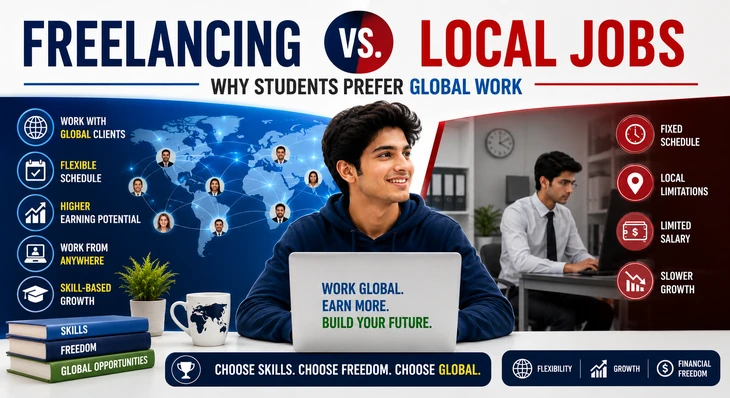
The modern workforce is changing rapidly, and students are at the center of this transformation. Traditional part-time jobs that once dominated student employment are gradually being replaced by digital opportunities that offer flexibility, freedom, and global exposure. Today, many students are choosing freelancing over local jobs because it allows them to work with international clients, earn competitive income, and develop future-ready skills. From content writing and graphic design to coding and digital marketing, freelancing has become a viable career option for students seeking financial independence while continuing their education. The rise of remote work, online platforms, and digital communication tools has made it easier than ever for students to connect with clients worldwide. This shift is more than a trend. It reflects changing priorities among younger generations who value flexibility, skill-based growth, and global career opportunities.Understanding Freelancing and Local Jobs
Before comparing both career paths, it is important to understand how freelancing differs from traditional local employment.What Is Freelancing?
Freelancing is a form of independent work in which individuals provide services to clients on a per-project basis rather than working as permanent employees. Students can work remotely for companies or individuals from different countries while managing their own schedules. Some of the most popular freelance services for students include:- SEO content writing
- Graphic design
- Web development
- Social media management
- Video editing
- Digital marketing
- Virtual assistance
- Online tutoring
What Are Local Jobs?
Local jobs are traditional work opportunities available within a student’s nearby area. These jobs often require physical presence and fixed schedules. Common local jobs for students include:- Retail assistant
- Receptionist
- Tutor
- Call center executive
- Office assistant
- Delivery staff
- Data entry operator
Why Students Prefer Global Freelancing Opportunities
The increasing demand for remote work for students is driven by several important factors. Students are now prioritizing flexibility, career growth, and financial independence over traditional part-time employment.Higher Income Opportunities
One of the biggest reasons students choose freelancing over local jobs is the potential to earn more money. Local jobs in many cities often provide limited salaries, especially for part-time workers. Freelancing, however, gives students access to international clients who are willing to pay higher rates for quality work. For example:- A local office assistant may earn a fixed monthly salary.
- A freelance writer working with overseas clients can earn significantly more based on project value and skill level.
Working With International Clients
Global clients often value skills more than formal experience. Students who can deliver high-quality work in areas such as content writing, design, programming, or marketing can secure projects regardless of their age or educational background. Since many international companies pay in stronger currencies, students can substantially increase their income compared to traditional local jobs.Flexible Work Schedules
Managing studies and work simultaneously can be challenging. Traditional jobs usually require students to adhere to fixed working hours, which may conflict with classes, exams, and assignments. Freelancing provides flexibility, allowing students to work according to their own schedules. Students can:- Choose when to work
- Accept projects based on availability
- Reduce workload during exams
- Work during weekends or evenings
- Manage multiple clients from home
Better Academic Balance
Many students find it easier to maintain academic performance while freelancing because they can adjust their workload according to their study schedules. Unlike local jobs with strict attendance requirements, freelancing offers more control over time management.Work From Anywhere Advantage
One major advantage of freelancing is location independence. Students no longer need to travel to offices or workplaces daily. Instead, they can work from:- Home
- College hostels
- Libraries
- Cafes
- Co-working spaces
Opportunities Beyond Local Markets
Freelancing allows students living in smaller towns or limited job markets to access international opportunities. Instead of depending only on nearby employers, students can work with clients from countries such as:- United States
- Canada
- Australia
- United Kingdom
- Germany
- Singapore
Skill-Based Career Growth
Freelancing focuses more on practical skills than academic qualifications. In many traditional jobs, employers prioritize degrees and certifications. In freelancing, however, clients care more about:- Quality of work
- Portfolio strength
- Communication skills
- Timely project delivery
- Professionalism
High-Demand Freelance Skills for Students
Students are increasingly learning digital skills that have strong global demand. Popular freelance skills include:- SEO content writing
- Graphic designing
- Website development
- Social media marketing
- Search engine optimization
- UI/UX design
- Video editing
- Email marketing
Building Real-World Experience Early
Freelancing gives students practical industry experience at an early stage. Instead of studying only theoretical concepts, students work on real projects for real clients. This helps them develop:- Problem-solving abilities
- Communication skills
- Client handling experience
- Deadline management
- Professional confidence
Portfolio Matters More Than Degrees
In the freelance world, a strong portfolio can often be more valuable than formal qualifications. Students who consistently deliver quality work can build credibility and attract higher-paying clients over time.Technology Has Made Freelancing Easier
Modern technology has played a major role in the growth of freelancing. Today, students can easily:- Attend virtual meetings
- Send invoices online
- Receive international payments
- Communicate through collaboration tools
- Manage projects remotely
Growth of Freelance Platforms
Freelance marketplaces have created opportunities for students to connect with businesses worldwide. These platforms allow students to:- Create professional profiles
- Showcase portfolios
- Apply for projects
- Build client reviews
- Develop long-term relationships
Career Independence Appeals to Students
Modern students increasingly value independence and flexibility. Freelancing gives them control over:- Work schedules
- Project selection
- Income goals
- Client relationships
- Career direction
Freelancing Encourages Self-Learning
Freelancers must constantly upgrade their skills to stay competitive in the market. This encourages students to improve in areas such as:- Communication
- Branding
- Negotiation
- Time management
- Digital tools
Limitations of Traditional Local Jobs
Although local jobs still provide useful work experience, many students feel that they offer limited career growth. Traditional part-time roles often involve repetitive tasks with minimal learning opportunities. Examples include:- Basic cashier work
- Routine customer support
- Manual data entry
- Simple administrative tasks
Limited Earning Growth
Local jobs usually have fixed salary structures. Students may continue working long hours without significant income growth. Freelancing, on the other hand, allows students to increase rates as their skills and experience improve. This scalability makes freelancing more attractive for ambitious students.Social Media Influence on Freelancing Culture
Social media platforms have played a major role in promoting freelancing among students. Content creators, freelancers, and entrepreneurs regularly share success stories, remote work tips, and income opportunities online. This digital exposure motivates students to explore global freelance careers.Rise of the Digital Work Lifestyle
Many students are attracted to the idea of remote work because it offers:- Flexible schedules
- Creative freedom
- Location independence
- Better work-life balance
- Global networking opportunities
Challenges Students Face in Freelancing
Despite its advantages, freelancing also comes with challenges. Students may face difficulties such as:- Finding initial clients
- Managing inconsistent income
- Handling project deadlines
- Competing with experienced freelancers
- Maintaining productivity at home
Importance of Professionalism
Successful freelancers focus on:- Timely delivery
- Clear communication
- Quality work
- Reliability
- Client satisfaction
Why Global Work Is the Future for Students
The global workforce is shifting toward digital collaboration and remote employment. Companies across industries are increasingly hiring remote talent because it helps:- Reduce operational costs
- Access skilled professionals worldwide
- Improve flexibility
- Increase productivity
Expansion of Remote Careers
Freelancing opportunities are no longer limited to creative industries. Today, students can find remote work opportunities in:- Technology
- Education
- Finance
- Healthcare support
- Marketing
- Customer service
- Research assistance
Tips for Students Starting Freelancing
Students who want to begin freelancing can improve their chances of success by following practical strategies.Learn One High-Income Skill
Instead of trying multiple services at once, students should focus on mastering one valuable skill first. Examples include:- SEO writing
- Graphic design
- Web development
- Video editing
Build a Professional Portfolio
A strong portfolio helps students attract better clients. Students should showcase:- Sample projects
- Personal work
- Testimonials
- Certifications
- Skills and achievements
Start Small and Gain Experience
Beginners should focus on small projects initially to build confidence and collect positive reviews. Small projects help students:- Understand client expectations
- Improve communication
- Learn project workflows
- Build long-term credibility