📚 Table of Contents
- Understanding Remote AI Prompt Engineering
- Why Companies Need Prompt Engineers
- Why Remote AI Prompt Engineering Is Becoming a Global Career
- Rapid AI Adoption Across Industries
- Remote Work Has Become Mainstream
- Lower Barrier to Entry Compared to Traditional Tech Roles
- Essential Skills for a Successful AI Prompt Engineering Career
- Strong Written Communication Skills
- Critical Thinking and Problem Solving
- Understanding AI Tools and Models
- Research Skills
- Basic Technical Knowledge
- How to Learn AI Prompt Engineering From Scratch
- Start With Free AI Platforms
- Study Real Prompt Examples
- Build Personal AI Projects
- Take Specialized Online Courses
- Building a Strong Prompt Engineering Portfolio
- What to Include in Your Portfolio
- Create Industry-Specific Samples
- Document Results Clearly
- Finding Remote AI Prompt Engineering Jobs
- Freelance Platforms
- Remote Job Boards
- LinkedIn Networking
- Direct Outreach
- How to Stand Out in the Global AI Market
- Develop a Niche
- Build a Personal Brand
- Keep Learning Continuously
- Real-Life Example of Building a Remote AI Career
- Common Mistakes to Avoid in AI Prompt Engineering
- Depending Entirely on AI Outputs
- Ignoring Industry Knowledge
- Overcomplicating Prompts
- Neglecting Ethical Considerations
- Future Scope of Remote AI Prompt Engineering
- Frequently Asked Questions
- Is AI prompt engineering a good remote career?
- Do I need coding skills to become an AI prompt engineer?
- How long does it take to learn prompt engineering?
- Can freelancers work as remote AI prompt engineers?
- What industries hire AI prompt engineers?
- What tools should beginners learn for AI prompt engineering?
- Conclusion
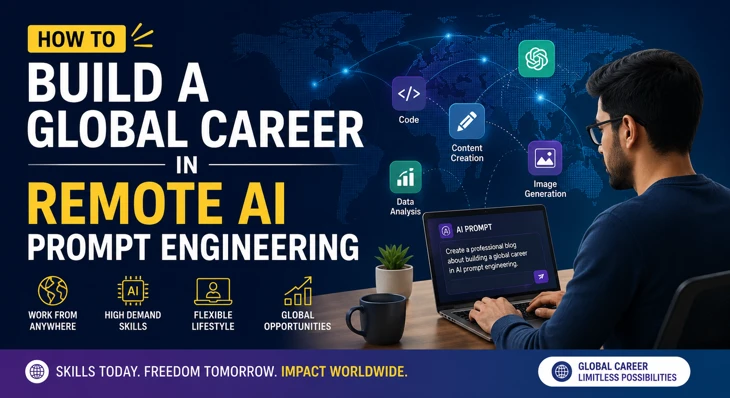
How to Build a Global Career in Remote AI Prompt Engineering
Artificial intelligence is no longer a future concept reserved for tech giants. It is already transforming the way companies write content, automate customer support, analyze data, build software, and improve productivity. As AI tools continue to expand across industries, a new career path has quietly emerged with massive global demand: remote AI prompt engineering. For professionals looking to build a location-independent career, Prompt Engineering offers a unique opportunity. You do not always need a computer science degree or years of coding experience to get started. What companies often need are people who understand language, communication, creativity, business goals, and how to guide AI systems effectively. Today, startups, agencies, SaaS companies, marketing teams, and enterprise organizations are hiring remote AI prompt engineers to improve workflows, create better AI outputs, and optimize AI-driven operations. If you want to learn how to build a global career in remote AI prompt engineering, this guide will walk you through the skills, strategies, tools, and career-building steps that actually matter.Understanding Remote AI Prompt Engineering
AI prompt engineering is the process of designing instructions that help AI systems generate accurate, useful, and high-quality responses. These prompts can be used for content generation, coding assistance, customer support automation, research, data analysis, image creation, and much more. A remote AI prompt engineer works online with clients or companies from different countries. Instead of working from a traditional office, they collaborate through digital platforms, AI tools, and remote communication systems. The role is growing because businesses are investing heavily in generative AI technologies, but often struggle to get reliable results from AI models. A skilled prompt engineer bridges that gap.Why Companies Need Prompt Engineers
AI tools are powerful, but their outputs depend heavily on the quality of instructions provided. Poor prompts create vague or inaccurate results. Strong prompts improve:- Content quality
- Workflow automation
- Customer experience
- Research efficiency
- AI-generated code accuracy
- Marketing performance
- Business productivity
Why Remote AI Prompt Engineering Is Becoming a Global Career
Several factors are driving global demand for AI prompt engineering professionals.Rapid AI Adoption Across Industries
Businesses in healthcare, finance, education, eCommerce, legal services, digital marketing, and software development are integrating AI into daily operations. As AI usage grows, organizations need specialists who can customize prompts for specific business goals.Remote Work Has Become Mainstream
After the rise of the remote work culture, companies became more comfortable hiring international talent. Many organizations now prioritize skills over location. This opens the door for professionals worldwide to work with global clients and international AI companies.Lower Barrier to Entry Compared to Traditional Tech Roles
Unlike many technical careers, AI prompt engineering can be learned without a formal degree. Strong communication, research ability, creativity, analytical thinking, and AI experimentation often matter more than advanced programming skills. This makes it one of the most accessible AI careers for beginners.Essential Skills for a Successful AI Prompt Engineering Career
Building a long-term remote AI career requires more than simply typing prompts into an AI tool. Companies want professionals who can think strategically and consistently improve AI performance.Strong Written Communication Skills
Language is the foundation of prompt engineering. You must learn how to write clear, structured, and goal-oriented instructions. Good prompt engineers understand:- Tone and context
- User intent
- Structured formatting
- Conversational flow
- Precision in wording
Critical Thinking and Problem Solving
AI-generated outputs are not always perfect. A prompt engineer must analyze responses, identify weaknesses, and refine instructions. For example, if an AI-generated marketing campaign sounds robotic, the prompt engineer adjusts the prompt to create a more natural tone. This iterative process is a core part of the job.Understanding AI Tools and Models
You do not need to become a machine learning engineer, but you should understand how modern AI tools function. Learn the basics of:- Large language models (LLMs)
- Generative AI
- Context windows
- AI hallucinations
- Prompt chaining
- AI workflows
- Automation systems
Research Skills
Remote AI prompt engineers often work across multiple industries. One day, you may help a healthcare company create AI workflows, while another day you assist an eCommerce brand. Fast and accurate research skills help you create better prompts and understand industry-specific requirements.Basic Technical Knowledge
Although coding is not mandatory for every role, understanding simple technical concepts can help you stand out. Learning basics:- Python
- APIs
- Automation tools
- No-code platforms
- AI integrations
How to Learn AI Prompt Engineering From Scratch
Many beginners assume AI careers require expensive degrees or complex certifications. In reality, consistent practice matters more.Start With Free AI Platforms
Begin experimenting with popular AI tools daily. Practice writing prompts for:- Blog writing
- Social media content
- Customer support
- Resume creation
- Data summarization
- Email campaigns
- Research assistance
Study Real Prompt Examples
One of the fastest ways to improve is by analyzing successful prompts. Pay attention to:- Prompt structure
- Tone instructions
- Context setup
- Role assignment
- Output formatting
- Constraints and rules
Build Personal AI Projects
Hands-on projects help you gain practical experience. You could create:- AI content templates
- Automated FAQ systems
- AI-assisted marketing workflows
- Prompt libraries for businesses
- AI productivity systems
Take Specialized Online Courses
Several platforms now offer courses focused on AI prompt engineering, generative AI workflows, and AI productivity. Look for programs that emphasize practical application rather than theory alone.Building a Strong Prompt Engineering Portfolio
Your portfolio is often more important than a resume. Clients and employers want proof that you can generate useful AI-driven outcomes.What to Include in Your Portfolio
A strong AI prompt engineering portfolio should include:- Real prompt examples
- Before-and-after AI output improvements
- Workflow case studies
- Industry-specific prompt solutions
- AI automation examples
- Writing samples
- Process explanations
Create Industry-Specific Samples
Instead of showing only generic prompts, create industry-specific examples. For example:- AI prompts for healthcare content
- Customer support chatbot prompts
- SEO content generation prompts
- eCommerce product description workflows
- HR recruitment automation prompts
Document Results Clearly
Companies care about outcomes. If your prompts helped:- Reduce editing time
- Improve content quality
- Increase productivity
- Streamline workflows
- Generate more accurate responses
Finding Remote AI Prompt Engineering Jobs
Once you build foundational skills, the next step is finding opportunities.Freelance Platforms
Freelancing is often the fastest way to enter the field. Many businesses are actively searching for AI specialists on freelance marketplaces. Popular platforms include:- Upwork
- Fiverr
- Freelancer
- Toptal
- PeoplePerHour
Remote Job Boards
Dedicated remote job platforms frequently post AI-related roles. Search for positions like:- AI prompt engineer
- Generative AI specialist
- AI content strategist
- AI workflow consultant
- Conversational AI specialist
- AI automation assistant
LinkedIn Networking
LinkedIn has become one of the best platforms for building a global AI career. Optimize your profile with keywords related to:- Remote AI prompt engineering
- Generative AI
- AI workflow optimization
- Prompt design
- AI content systems
Direct Outreach
Many companies still do not realize they need prompt engineers until someone demonstrates their value. You can reach out to:- Marketing agencies
- SaaS startups
- eCommerce brands
- AI tool companies
- Content agencies
- Online education businesses
How to Stand Out in the Global AI Market
Competition is growing, so positioning yourself strategically matters.Develop a Niche
General prompt engineering is useful, but specialization increases opportunities. You could focus on:- AI content marketing
- AI customer support systems
- AI automation workflows
- Healthcare AI prompts
- Legal AI assistance
- eCommerce AI optimization
- Educational AI systems
Build a Personal Brand
A visible online presence can attract international clients. Consider:- Posting AI insights on LinkedIn
- Writing blogs about AI workflows
- Sharing prompt tips
- Creating YouTube tutorials
- Participating in AI communities
Keep Learning Continuously
AI evolves rapidly. Prompt engineering techniques that work today may change within months. Stay updated with:- New AI tools
- AI model updates
- Automation trends
- Industry use cases
- Ethical AI practices
Real-Life Example of Building a Remote AI Career
Consider a freelance content writer who started experimenting with AI tools to speed up blog production. At first, they simply used AI for idea generation. Over time, they learned how to create structured prompts that produced better outlines, stronger SEO content, and faster editing workflows. They documented these workflows and started offering AI content optimization services to clients. Within a year, they transitioned from traditional freelance writing to remote AI consulting and prompt engineering. This type of transition is becoming increasingly common. Many professionals from non-technical backgrounds are successfully entering the AI industry by combining domain expertise with AI workflow skills.Common Mistakes to Avoid in AI Prompt Engineering
Depending Entirely on AI Outputs
AI is a tool, not a replacement for human judgment. Strong prompt engineers carefully review, refine, and validate outputs.Ignoring Industry Knowledge
A generic prompt may not work well for specialized industries. Understanding the audience and business context improves AI performance significantly.Overcomplicating Prompts
Long prompts are not always better. Clear and structured instructions usually outperform confusing or overloaded prompts.Neglecting Ethical Considerations
Responsible AI usage matters. Professionals should understand:- Data privacy
- Bias risks
- Content accuracy
- Ethical automation practices
Future Scope of Remote AI Prompt Engineering
The future looks promising for skilled prompt engineers. As AI tools become integrated into everyday business operations, the demand for professionals who can optimize AI interactions will continue to grow. Future opportunities may include:- AI workflow consulting
- Enterprise AI training
- AI product development
- AI operations management
- Human-AI collaboration systems
- AI quality assurance