📚 Table of Contents
- Introduction
- Real Career Journeys in Green Tech
- Why Some Industries Fade and Others Thrive
- Simple Ways to Start Without Going Back to School
- Facing the Fear of Change (and How to Overcome It)
- Everyday Analogies That Make Green Tech Simple
- Essential Skills That Make You Stand Out in Green Tech
- Where Green Tech Careers Are Heading
- A Simple Roadmap to Begin Your Green Tech Journey
- Your Next Step Toward a Green Future
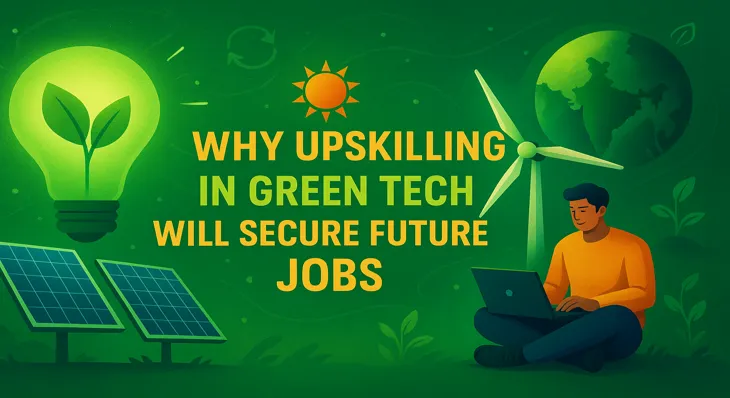
Why Upskilling in Green Tech Will Secure Future Jobs
Introduction
Have you noticed how quickly jobs are changing? What felt secure ten years ago doesn’t always guarantee stability today. The world is shifting—climate concerns are pushing industries to reinvent themselves, and technology is advancing at an unprecedented pace. You might be wondering: How do I stay relevant in such a competitive job market? The answer? Upskilling. And the most brilliant move right now is in green tech—the space where future jobs are being created. As industries adapt to provide solutions for climate change and drive eco-friendly innovation, individuals with the right sustainability skills are becoming highly sought after. No matter if you’re starting your career or planning your next big move, understanding the clean energy transition is crucial to your future workforce readiness.Real Career Journeys in Green Tech
Let’s look at Raj, a mechanical engineer who once worked in a traditional power plant. His career seemed steady, but the growing buzz around cleaner, greener energy made him nervous. Instead of waiting for his job to become outdated, he enrolled in short courses that taught the basics of environmental technology. Within two years, he pivoted into solar and wind energy, joining a company at the forefront of clean energy innovation. Or consider Maya, a business graduate passionate about achieving the Sustainable Development Goals. She observed how organizations were integrating circular economy models and noted the rapid hiring of people with green skills by companies. By earning green tech certifications, she secured a management position at a rapidly growing renewable energy startup. These stories prove that career growth in sustainability isn’t just a buzzword—it’s a path that’s changing lives and creating opportunities.Why Some Industries Fade and Others Thrive
Ever wondered why some industries fade while others thrive? It’s because they adapt. And those who adapt with them—by learning new sustainability skills—secure their future. Isn’t that what most of us want? Security and growth. When you think about renewable energy jobs or careers tied to environmental engineering skills, it’s clear: the more industries invest in climate change solutions, the more opportunities open for people ready to join the movement. The question is, will you prepare for it now, or later when the competition is tougher?Simple Ways to Start Without Going Back to School
Look, here’s the thing: you don’t need to go back to school for four years to be part of this wave. You’ll find short-term certifications, weekend workshops, and online training that fit right into your routine. You’re not starting from scratch—you’re just upgrading what you already know. See, when you add environmental technology or clean energy transition skills to your resume, you stand out. It’s like adding a new engine to your car—it doesn’t replace what’s there, it just makes it run faster and better.Facing the Fear of Change (and How to Overcome It)
I get it. Change is scary. You might be thinking, “What if I fail? What if it’s too late for me?” But you’re not alone—many professionals feel the same when they first explore climate-friendly careers. Learning something new feels overwhelming at first—but that’s how growth always starts. Here’s the truth: industries everywhere are shifting toward sustainable development goals. Companies urgently need people who understand the green economy, who can bring eco-friendly innovation into their business models. Upskilling isn’t a race against others—it’s your way of thriving in the new normal.Everyday Analogies That Make Green Tech Simple
Think of it like upgrading your phone. You don’t throw away your old device because it doesn’t work; you upgrade to enjoy better features, faster speed, and future compatibility. Upskilling works the same way—you’re upgrading your skills so you’re ready for what’s coming. In schools, we learn step by step—first the basics, then the advanced levels. Similarly, professionals in solar and wind energy careers didn’t start out as experts. They began with miniature courses and built confidence. Think of the circular economy as advanced recycling—it’s about reusing, repurposing, and reducing waste at scale. When you make these small shifts, you’re not just improving yourself—you’re aligning with the future workforce readiness that employers are actively seeking.Essential Skills That Make You Stand Out in Green Tech
To thrive in this new era, you need to focus on the right tools and skills. Building expertise in green technology means exploring areas like:- Sustainability skills: Understanding how to implement eco-friendly innovation across industries.
- Environmental technology: Tools that monitor, reduce, or replace harmful ecological practices.
- Green tech certifications: Short programs that validate your knowledge in clean energy transition or environmental engineering skills.
- Circular economy principles: Learning how to reduce waste, recycle effectively, and design products that last.
- Carbon accounting tools: Tracking emissions and helping companies meet climate targets.
- ESG reporting basics: Communicating environmental, social, and governance performance transparently.
Where Green Tech Careers Are Heading
The future of work is green. Whether you call it sustainability, eco-friendly innovation, or the clean energy transition, one thing is sure: opportunities are multiplying. When you develop sustainability skills, you place yourself at the center of green workforce demand. Career growth in sustainability is no longer a niche—it’s mainstream. Imagine transitioning from a traditional role into a skills-based position in environmental engineering, or leveraging your business background to manage careers in solar and wind energy. That’s where the demand lies. Insights from platforms like Naukri Mitra reveal a growing demand worldwide, with an increasing number of companies hiring experts who can guide them toward achieving their sustainable development goals. Governments, too, are investing heavily in climate-friendly initiatives, from the EU’s Green Deal to India’s National Solar Mission.A Simple Roadmap to Begin Your Green Tech Journey
So, how do you get started?- Identify your current skills. What do you already know that connects to green industries?
- Pick one area to upskill. Maybe renewable energy jobs or environmental technology.
- Enroll in short courses. Look for green tech certifications that fit your schedule and budget.
- Gain practical experience—volunteer in sustainability projects or internships.
- Network in the industry. Connect with people already working in the green economy.
- Stay updated. Follow climate change solutions and emerging tools.