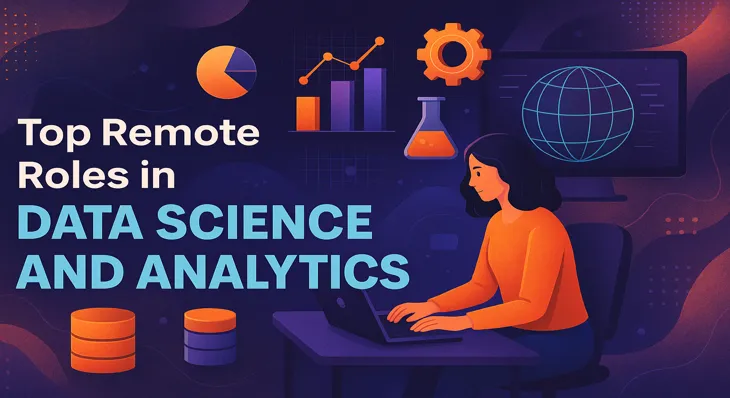
Top Remote Roles in Data Science and Analytics
? Introduction: The Data Revolution—Now Remote
These days, many people in data never set foot in an office. A healthcare analyst in Mumbai, a fintech engineer in Warsaw, a visualization consultant in Buenos Aires—they’re all working remotely, shaping decisions for companies continents away. Ten years ago, most of those jobs would have meant moving to San Francisco, London, or Singapore. Now the work travels instead of the worker.
In this article, I’ll walk through the types of remote data roles growing fastest, what employers actually look for, and some practical ways to break into the field. Think of it less like a guidebook and more like comparing notes with a colleague who’s been watching these trends up close.
? Why This Topic Matters
If you’ve spent time in analytics, you already know data isn’t abstract anymore—it’s in the driver’s seat. A retail startup analyzes Shopify churn reports to determine why customers leave. Hospitals track re-admission numbers daily. Logistics firms rely on dashboards to anticipate shipping delays before they escalate. These aren’t side projects; they’re central to how organizations make choices.
The kicker is that geography no longer decides who gets to work on these problems. A data analyst sitting in a quiet town can consult for a Fortune 500 logistics chain. A freelancer in Manila can manage multiple projects simultaneously, generating income from various industries. Remote work hasn’t just moved people out of offices—it’s multiplied the reach of anyone with the right skills.
? Key Benefits, Trends, and Solutions
Global projects without moving
I’ve seen people collaborate with teams spread across four time zones. It means late-night Zoom calls sometimes, sure, but also exposure to problems and perspectives that you won’t find by sticking to one local market.
Specialization matters more than ever.
Employers are no longer impressed by “general data person” profiles. They want someone who can untangle messy streaming pipelines, or design interactive dashboards that execs actually use, or tune machine learning models until predictions stop wobbling. Being the go-to person for a narrow skill set can be a real advantage.
Careers shaped on your terms
Remote setups let you decide: do you want stability with one employer, or the variety of jumping between projects? Some people lock into a single role for years. Others line up freelance contracts across various industries, building a range of skills and independence. Neither choice is better—it depends on what you value.
Cloud and AI baked in
Most companies have already shifted workloads to AWS, Azure, or Google Cloud. And almost every new analytics problem has an AI angle, whether it’s natural language models or anomaly detection. If you know how to bridge cloud infrastructure with practical AI, you’re ahead of the curve.
?️ How to Launch Your Remote Data Career
Get the basics right
Statistics, SQL, Python, and a visualization tool like Power BI or Tableau. These are table stakes. Without them, you’ll struggle to move up the ladder.
Turn learning into proof.
Certificates from Coursera or AWS Academy help, but employers want to see them applied. Perhaps that’s a GitHub repository with clean, well-documented code. Maybe it’s a dashboard you built for a nonprofit. Tangible work beats a polished CV line every time.
Make your work visible.
I know professionals who landed jobs just because they posted their side projects on LinkedIn. Writing about what you learned—or even the mistakes you made—gets you noticed. Open-source contributions do the same.
Search where the good jobs live.
Not every opportunity is on LinkedIn. Communities like Kaggle, Toptal, or data-focused Discord groups often share roles you won’t see elsewhere. Being active there means hearing about gigs before they hit mainstream boards.
A real-world story
Priya, a data engineer in Bengaluru, didn’t wait for recruiters. She contributed code to open-source analytics tools and wrote about her process in posts that felt more like diary entries than résumés. Recruiters noticed, and she was offered her first remote role. Her case demonstrates that visibility—when conveyed in your own voice—can be enough to alter your career path.
⚡ Overcoming Common Challenges
Communication gaps
In an office, you can lean over and ask. Remotely, silence can mean confusion. Writing more explicit messages, checking assumptions, and documenting decisions keep teams from going in circles.
Staying connected
Yes, working from home can feel isolating. People counter this by setting up virtual coffee chats, joining niche Slack groups, or collaborating on freelance projects. It doesn’t erase the quiet, but it keeps the workday from feeling cut off.
Chasing a moving target
Tools don’t stop changing. Yesterday’s must-have library might be tomorrow’s legacy system. Reading blogs, subscribing to newsletters, and experimenting with new frameworks isn’t optional if you want to stay sharp.
Handling sensitive data
Whether it’s patient records or financial transactions, remote workers often touch sensitive material. Knowing basic security practices and regulations, such as GDPR, isn’t just about compliance—it’s part of being trusted with the work.
? Final Thoughts
Remote data jobs aren’t a side effect of the pandemic. They’ve become part of the industry’s backbone. Whether you’re debugging a pipeline at 2 a.m. or presenting a dashboard to a client halfway across the globe, the chance to contribute isn’t tied to an office badge anymore.
The opportunities are real, but they go to people who mix skill with visibility and adaptability. Sometimes, a single project or even one post that showcases your thinking is enough to open the next door. Staying engaged and curious makes sure you’re ready when that happens.
❓ FAQs & Tips
Q: What skills matter most for remote data roles?
Analytical thinking, SQL, Python or R, and tools like Tableau or Power BI. Additionally, comfort with cloud platforms—such as AWS, Google Cloud, or Azure—keeps you relevant.
Q: Are there freelance or part-time opportunities?
Plenty. Upwork, Toptal, and niche data communities all list short-term projects. Many people use them to establish credibility before taking on larger roles.
Q: How can I stand out in applications?
Show independence—point to projects where you solved real problems, not just classroom exercises. Highlight results—did your model save costs, improve accuracy, or speed up reporting? That’s what gets attention.
Bonus Tip:
If you’re new, don’t wait for permission. Volunteer your skills with an NGO, contribute to open-source, or analyze public datasets. Those early projects give you both practice and stories to share when interviews come around.