📚 Table of Contents
- Why Hybrid Jobs Became the Standard
- Real-Life Stories from the Hybrid World
- Key Remote and Hybrid Work Trends in 2025
- Inside the 2025 Hybrid Office Setup
- Managing the Hybrid Workforce Effectively
- Technology Driving Remote and Hybrid Work
- Boosting Employee Productivity in Hybrid Jobs
- Work-Life Balance Strategies That Truly Work
- The Human Side of Hybrid Work
- Challenges of Hybrid Work
- Hybrid Work Flexibility: Shaping the Future of Jobs
- Final Thoughts
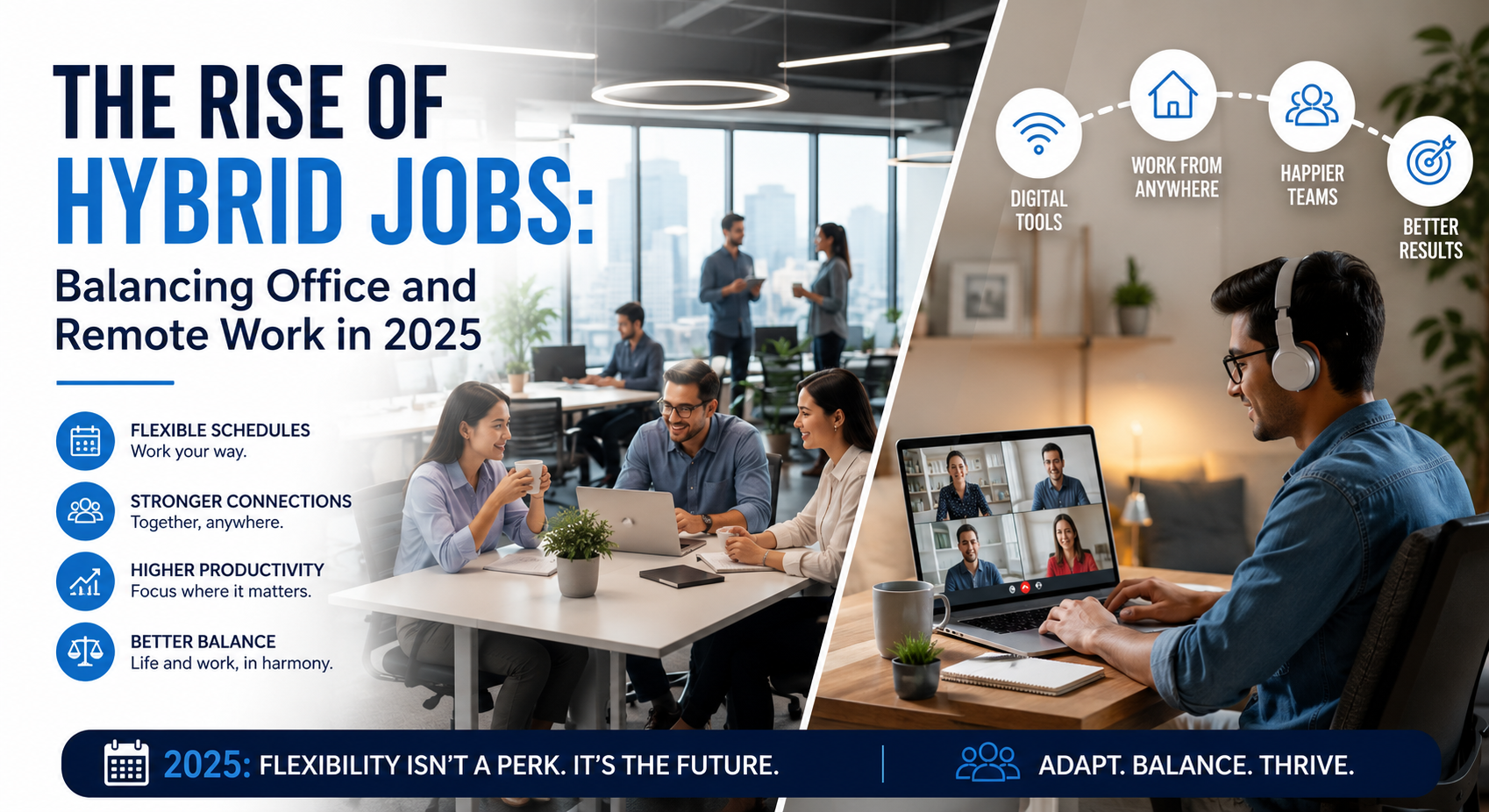
The Rise of Hybrid Jobs: Balancing Office and Remote Work in 2025
Ever catch yourself missing the office buzz but loving the peace of working from home? You’re not alone. In 2025, hybrid jobs aren’t just a passing trend—they’ve become the standard way of working. This shift is reshaping how we think about work, productivity—and even life outside the office. Here’s why hybrid jobs are taking off, how they’re reshaping culture, and what it really means for you.Why Hybrid Jobs Became the Standard
Think back a few years. Freelancers or IT professionals primarily use remote work. Then the pandemic hit, and suddenly everyone—from teachers to accountants—was online. That massive shift proved one thing: work could be done anywhere. But let’s be honest—not everything about remote life was perfect. People missed coffee runs, team huddles, and even the chatter during commute traffic. Turns out, the best fix was balance—mixing the two worlds instead of choosing one. Hybrid jobs give you the best of both. You can enjoy a flexible work schedule—working from home on some days and in the office on others. Companies quickly realized that this setup not only kept teams connected but also boosted productivity.Real-Life Stories from the Hybrid World
Take Maya, a marketing lead. She told me how draining it was to commute every single day. Now, she works three days at home and two at the office. Home days are for deep creative work. Office days? Quick feedback and team bonding. She swears her energy’s better, and she’s actually getting more done than ever. Or Arjun, a software engineer and new dad. Hybrid work lets him be there for his baby’s first steps while still leading projects. He calls it “life-changing” because he no longer feels like he has to pick between his career and family. And then there’s Priya, a college student turned content creator. She started a part-time hybrid role with a design agency. Being able to attend classes in the morning and work remotely in the afternoon gave her a head start in her career. For her, hybrid isn’t just convenient—it’s the reason she can study and earn at the same time. You can probably see the shift here—it’s not just about location, it’s about lifestyle.Key Remote and Hybrid Work Trends in 2025
What’s shaping hybrid work this year? For one, remote work trends indicate that employees now expect flexibility as a standard benefit, similar to health insurance. Companies that don’t offer it lose talent quickly. Job seekers scan for hybrid job opportunities before considering salary and benefits. Even fresh graduates and interns demand it. You’ll also notice the explosion of digital workplace solutions. Instead of drowning in late-night Slack pings, people rely on tools that cut clutter and bring clarity:- Project dashboards for tracking progress
- Smart scheduling apps that prevent back-to-back meetings
- AI-driven platforms that trim endless email chains
- Cloud systems that make file sharing painless
Inside the 2025 Hybrid Office Setup
Walk into a modern office in 2025 and you’ll notice right away—it doesn’t look like the cubicle farms of the past. The space is designed for collaboration: lounge areas, pods for huddles, and flexible seating. This is a hybrid office setup, designed to support both face-to-face teamwork and virtual meetings. Some companies even let employees “book a desk” through an app. That way, you only go in when you need space, and the office never feels overcrowded. In many cities, co-working spaces are also part of the mix, letting employees work closer to home when they don’t want a long commute.Managing the Hybrid Workforce Effectively
Leading a hybrid team isn’t just about assigning tasks—it’s about balance. Managers practice virtual team management, focusing less on whether someone’s at their desk and more on whether the project hits the mark. Did it get done? Is the client happy? That’s the real scoreboard. Strong companies back this up with a corporate hybrid policy. It spells out the rules: how many office days, how to schedule meetings, and what flexibility actually means. Without this clarity, hybrid setups can feel messy. With it, stress drops and trust grows.Technology Driving Remote and Hybrid Work
Hybrid work wouldn’t exist without tech. Video calls, chat apps, and remote collaboration tools are the glue holding it all together. In 2025, they’ve leveled up. Meetings aren’t just recorded anymore—they’re auto-transcribed, summarized, and even spit out the next steps. AI monitors workloads, ensuring that no one is overwhelmed by tasks. When you think about technology in remote work, it’s not just about talking to each other. It’s about making the home-office blend feel seamless. Some teams are even experimenting with VR platforms, where remote workers join as avatars. Sure, it’s not perfect yet, but it beats feeling like the odd one out on a Zoom screen.Boosting Employee Productivity in Hybrid Jobs
Some worry that hybrid work means people slack off. But the data tells a different story. Employee productivity in hybrid jobs is often higher. Why? Because people pick the right environment for the task—deep focus at home, brainstorming in the office. Fewer commutes also mean more energy. People tell me they’ve finally got time left over—to learn a skill, tinker with side projects, or spend real hours with family. And that extra energy also shows up at work, in sharper focus and better engagement.Work-Life Balance Strategies That Truly Work
Hybrid setups opened the door for new work-life balance strategies. No more squeezing chores into late nights. You can run errands midday, pick up your kid from school, or take a walk before a meeting. For parents, students, and caregivers, this flexibility is priceless. Here are a few simple tricks people swear by:- A shutdown ritual to signal the end of the day
- A “fake commute” walk to mark boundaries
- Wellness apps for quick breaks and mindfulness
- Using flexible leave days without guilt
The Human Side of Hybrid Work
Hybrid jobs aren’t just about apps and policies—they touch emotions. Some folks feel lonely working at home. That’s why teams plan connection days or casual meetups. Even something as simple as sharing a cup of coffee over Zoom helps keep bonds alive. Leaders are also rethinking modern workplace culture. It’s not about flashy perks anymore—it’s about empathy and trust. Workers stay where they feel seen as people, not just employees. Managers checking in with “How are you holding up?” instead of “Where’s that report?” make all the difference.Challenges of Hybrid Work
It’s not all smooth sailing. A few headaches keep popping up:- Awkward meetings where half the team’s in a room and others are in little boxes on-screen
- Fears that office regulars get better opportunities
- Promotions tied to facetime instead of results
- Notification fatigue from constant pings