📚 Table of Contents
- What Is Remote Veterinary Consulting?
- Why Global Pet Owners Are Choosing Online Veterinary Consultation
- Convenience for Busy Pet Owners
- Better Access to Specialized Care
- Reduced Anxiety for Pets
- Faster Follow-Up Support
- Benefits of Working as a Remote Veterinary Consultant
- Flexible Scheduling
- Freedom to Specialize
- Lower Business Expenses
- Improved Work-Life Balance
- Skills Needed for Successful Remote Veterinary Consulting
- Strong Communication Skills
- Cultural Awareness
- Digital Literacy
- Problem-Solving Ability
- How to Start a Virtual Veterinary Practice
- Choose Your Niche
- Understand Veterinary Telemedicine Regulations
- Create a Professional Website
- Invest in Reliable Technology
- Best Ways to Find International Pet Owners
- Focus on Search Engine Optimization
- Share Helpful Content on Social Media
- Build Partnerships With Clinics
- Encourage Reviews and Recommendations
- Common Challenges in Remote Veterinary Care
- Limited Physical Examination
- Time Zone Management
- Language Barriers
- Internet and Technical Problems
- Tips for Delivering Better Online Veterinary Consultations
- Prepare Before Each Appointment
- Ask Structured Questions
- Keep Instructions Clear
- Send Follow-Up Notes
- Real-World Example of Remote Veterinary Consulting
- The Future of Remote Veterinary Services
- FAQs About Remote Veterinary Consulting
- Can veterinarians diagnose pets online?
- What pets can benefit from online veterinary consultations?
- How much can remote veterinary consultants earn?
- What tools are needed for virtual veterinary consulting?
- Is remote veterinary consulting suitable for emergencies?
- Conclusion
Remote Veterinary Consulting: How to Work With Pet Owners Around the World
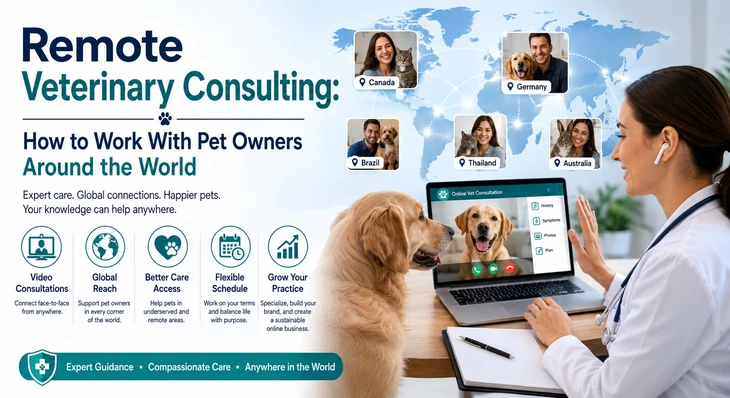
For years, veterinary care depended almost entirely on face-to-face appointments. Today, that model is evolving quickly. Pet owners are becoming more comfortable using digital platforms to speak with veterinary professionals, ask questions, and receive guidance without leaving home. This shift has created new opportunities for veterinarians who want flexibility in the way they work. Through remote veterinary consulting, professionals can now connect with pet owners in different countries, support animals in underserved areas, and build online practices that are not limited by location. Many pet parents already use online services for shopping, healthcare, education, and financial management. Naturally, pet care has followed the same path. From nutrition advice to post-treatment follow-ups, online veterinary consultation services are becoming part of everyday life for animal owners worldwide. For veterinarians, the appeal goes far beyond convenience. Virtual consulting creates room for specialization, remote income opportunities, and a healthier work-life balance. It also allows professionals to help more people who may not have easy access to experienced veterinary support. In this article, you will learn how remote veterinary consulting works, what skills are important, how to attract international clients, and how veterinarians can build successful online consulting businesses in today’s digital world.What Is Remote Veterinary Consulting?
Remote veterinary consulting is the practice of providing veterinary guidance and support via digital communication tools rather than traditional in-person appointments. Veterinarians can provide services such as:- General pet wellness advice
- Nutritional recommendations
- Behavioral consultations
- Post-surgery follow-ups
- Preventive care guidance
- Second opinions
- Chronic condition management
- Emergency triage recommendations
Why Global Pet Owners Are Choosing Online Veterinary Consultation
The demand for online veterinary consultation services continues to grow worldwide. Several factors are driving this shift.Convenience for Busy Pet Owners
People no longer want to spend hours traveling to a clinic for minor concerns. A quick virtual consultation saves time and reduces stress for both pets and owners. For example, a dog owner in a rural area may only need reassurance about a skin irritation or feeding issue. Instead of traveling long distances, they can speak with a remote veterinarian within minutes.Better Access to Specialized Care
Some regions lack veterinary specialists. Remote consulting allows pet owners to access expertise from professionals around the world. A cat owner in Southeast Asia, for instance, may connect with a feline nutrition specialist based in Europe for advanced dietary guidance.Reduced Anxiety for Pets
Many animals become stressed during clinic visits. Remote veterinary care helps veterinarians assess pets in their home environment, where they feel safer and more relaxed.Faster Follow-Up Support
Virtual consultations are ideal for ongoing care plans. Pet owners can quickly update veterinarians about recovery progress without scheduling another physical visit.Benefits of Working as a Remote Veterinary Consultant
More veterinarians are exploring remote work because it offers freedom that traditional clinics often cannot provide. While clinical practice remains essential, online veterinary consultation services open additional career paths that feel more adaptable and sustainable.Flexible Scheduling
One major advantage is control over your schedule. Some veterinarians prefer working mornings, while others organize consultations around family responsibilities or existing clinic shifts. Remote consulting also makes it easier to work with international clients. A veterinarian in India, for example, may consult with pet owners in Europe during evening hours.Freedom to Specialize
In a physical clinic, veterinarians usually manage a wide mix of cases every day. Online consulting allows professionals to focus on areas they truly enjoy. Some successful niches include:- Pet nutrition
- Senior animal wellness
- Feline behavior
- Exotic animal care
- Puppy training support
- Weight management programs
Lower Business Expenses
Launching a traditional veterinary clinic requires significant investment. Rent, equipment, staff salaries, and maintenance costs can quickly become overwhelming. A virtual veterinary practice is much lighter financially. Many professionals begin with only:- A computer
- Reliable internet
- Consultation software
- Scheduling tools
- Secure payment systems
Improved Work-Life Balance
Veterinary burnout has become a growing concern across the industry. Long shifts and emotionally demanding work can take a serious toll. Remote consulting provides a different pace. Many veterinarians appreciate being able to work from home, reducing commuting stress, and creating healthier routines while still supporting pet owners.Skills Needed for Successful Remote Veterinary Consulting
Working with global pet owners requires more than medical knowledge.Strong Communication Skills
Since you cannot physically examine animals during virtual consultations, communication becomes extremely important. Veterinarians must ask detailed questions, explain conditions clearly, and guide pet owners step by step. Simple language works best, especially when consulting with international clients whose first language may not be English.Cultural Awareness
Pet care practices vary between countries and cultures. For example:- Dietary habits for pets differ across regions
- Access to medications may vary
- Local veterinary regulations may affect treatment options
- Attitudes toward preventive care can differ
Digital Literacy
Remote veterinarians must be comfortable using:- Video conferencing tools
- Telemedicine platforms
- Online scheduling systems
- Digital medical records
- Payment gateways
- Messaging apps
Problem-Solving Ability
Virtual consultations often require creative thinking. For example, if a pet owner cannot clearly show a wound on a video call, the veterinarian may need to guide them in taking better photos or making simple observations at home.How to Start a Virtual Veterinary Practice
Building a successful virtual veterinary business takes planning and consistency.Choose Your Niche
Specialized services often perform better online than general consultations. Popular remote veterinary niches include:- Pet nutrition consulting
- Animal behavior coaching
- Senior pet wellness
- Preventive healthcare
- Weight management
- Puppy and kitten support
- Exotic animal consulting
Understand Veterinary Telemedicine Regulations
Every country has different rules regarding telemedicine for veterinarians. Some regions require an existing veterinarian-client-patient relationship before providing medical advice or prescriptions. Before working internationally, research:- Licensing requirements
- Cross-border consulting rules
- Prescription limitations
- Liability insurance requirements
- Data privacy laws
Create a Professional Website
A professional website helps establish credibility. Your website should include:- Services offered
- Consultation process
- Pricing
- Booking system
- Client testimonials
- Frequently asked questions
- Contact information
Invest in Reliable Technology
Technical problems during consultations can reduce client trust. Essential tools for remote veterinary consulting include:- High-quality webcam
- Noise-canceling microphone
- Stable internet connection
- Secure telehealth platform
- Online payment system
- Scheduling software
Best Ways to Find International Pet Owners
Even experienced veterinarians need visibility to grow online. Building trust on the internet takes consistency, education, and a strong professional presence.Focus on Search Engine Optimization
Search engine optimization helps pet owners discover your services when searching online. Using long-tail keywords naturally throughout your website and blog content can improve visibility over time. Examples include:- Online veterinarian for dogs
- Remote veterinary advice for cats
- Virtual pet nutrition consultation
- International veterinary consulting services
- Online exotic pet specialist
Share Helpful Content on Social Media
Social platforms are excellent for building authority. Pet owners respond well to practical, easy-to-understand information. Short videos, quick health tips, and common pet care advice often receive strong engagement. Topics that usually perform well include:- Foods pets should avoid
- Signs of dehydration
- Anxiety symptoms in dogs
- Basic kitten care
- Seasonal pet safety tips
Build Partnerships With Clinics
Some local veterinarians prefer referring specialized cases to remote consultants. For example, a clinic may handle physical examinations while a remote consultant provides advanced nutrition planning or behavioral coaching. These partnerships can become valuable long-term referral sources.Encourage Reviews and Recommendations
Trust matters enormously in online healthcare. Positive testimonials from real pet owners reassure potential clients that your services are reliable. Satisfied clients often recommend veterinarians in:- Facebook groups
- Local pet communities
- Reddit discussions
- Breed-specific forums
- WhatsApp groups
Common Challenges in Remote Veterinary Care
Remote veterinary consulting offers many advantages, but it also comes with limitations.Limited Physical Examination
One of the biggest challenges is the inability to physically examine animals. Veterinarians must rely heavily on:- Visual observation
- Client descriptions
- Videos and photos
- Medical history
Time Zone Management
Working with global clients can create scheduling difficulties. Using automated scheduling tools with time zone conversion helps avoid confusion. Some veterinarians dedicate specific hours to international consultations.Language Barriers
Communication challenges may arise when working with clients from different linguistic backgrounds. Simple explanations, visual aids, and written follow-up instructions can improve understanding.Internet and Technical Problems
Unstable connections can interrupt consultations. Having backup communication options, such as email or messaging apps, helps maintain professionalism.Tips for Delivering Better Online Veterinary Consultations
The quality of the client experience often determines whether pet owners return or recommend your services.Prepare Before Each Appointment
Review the pet’s history, submitted photos, and consultation notes before the session begins. This preparation makes conversations smoother and more professional.Ask Structured Questions
Since physical examination is limited, detailed questioning becomes essential. Important areas to cover include:- Appetite changes
- Energy levels
- Bathroom habits
- Recent behavioral changes
- Medication history
- Environmental changes
Keep Instructions Clear
Pet owners may feel overwhelmed during consultations. Avoid overly technical medical language. Use practical explanations and simple steps. For example, instead of saying “monitor gastrointestinal symptoms,” say “watch for vomiting, diarrhea, or reduced appetite over the next 24 hours.”Send Follow-Up Notes
Written summaries help pet owners remember recommendations. Follow-up communication also improves trust and client satisfaction.Real-World Example of Remote Veterinary Consulting
Consider a veterinarian specializing in canine nutrition. Instead of operating a physical clinic full-time, the veterinarian offers online consultations for dog owners worldwide. A client from Canada schedules a virtual appointment regarding obesity management for their Labrador Retriever. During the consultation, the veterinarian reviews diet history, exercise habits, and the dog’s body condition through video. The veterinarian creates a personalized feeding plan, recommends adjustments to portions, and schedules a follow-up consultation after four weeks. Another client from Australia seeks guidance for a senior dog with mobility issues. Through remote consultation, the veterinarian suggests nutritional changes, low-impact exercise routines, and environmental modifications to improve comfort. This model allows the veterinarian to serve clients internationally while focusing on a highly specialized area of expertise.The Future of Remote Veterinary Services
The veterinary industry is moving steadily toward digital care solutions. While in-person treatment will always remain essential, remote support is becoming a normal part of modern pet healthcare. Technology is improving quickly. Wearable pet devices can already track activity levels, sleep patterns, heart rate, and movement changes. As these tools become more advanced, veterinarians may gain access to more detailed remote monitoring data during consultations. Artificial intelligence is also beginning to support veterinary workflows. Some telemedicine platforms now help organize patient records, monitor symptoms, and streamline appointment management. At the same time, pet owners are becoming more comfortable seeking guidance online. Younger generations especially prefer digital convenience when possible. In the coming years, remote veterinary consulting may expand into:- Subscription wellness memberships
- Remote rehabilitation programs
- AI-assisted symptom tracking
- International specialist networks
- Ongoing chronic disease monitoring