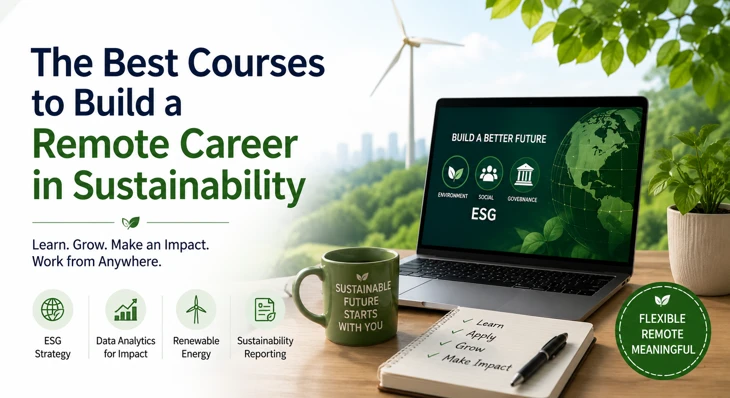
The Best Courses to Build a Remote Career in Sustainability
Sustainability is no longer something companies talk about just in annual reports or marketing campaigns. It has become part of how real business decisions are made every day. Whether it is reducing waste, tracking carbon output, or redesigning supply chains, organizations are actively working to operate more responsibly. And behind this shift is a growing demand for professionals who understand how sustainability actually works in practice.
What makes this even more interesting is how accessible the field has become. A few years ago, breaking into sustainability often meant holding a specialized degree or working in on-site environmental science roles. That is no longer the case. Today, many of the most in-demand sustainability jobs are remote, flexible, and built around digital tools.
For people looking to build a meaningful career without being tied to a single location, this space offers a real opportunity. The key is knowing what to learn—and how to learn it in a way that actually translates into work.
Why More People Are Moving Toward Remote Sustainability Careers
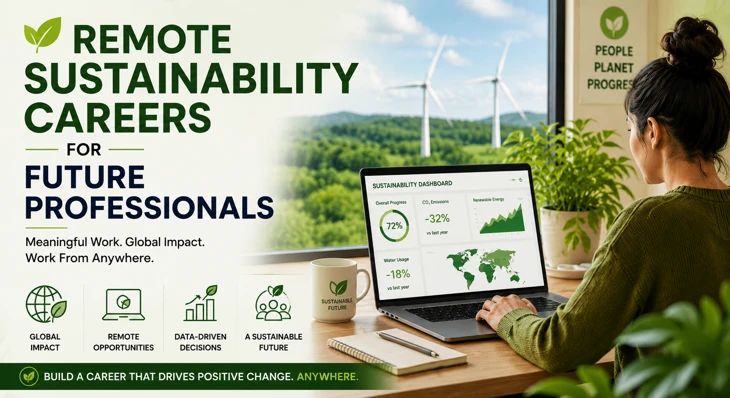
There is a quiet but steady shift happening in the job market. Companies are hiring sustainability professionals not just for compliance, but for strategy, reporting, and long-term planning. A large part of this work happens through data platforms, online collaboration tools, and global reporting systems.
That naturally opens the door for remote work.
Instead of being physically present at factories or project sites, many professionals now spend their time analyzing reports, preparing ESG documentation, or advising teams across different countries.
This is why searches like
remote sustainability jobs without experience,
work-from-home ESG analyst roles, and
online sustainability certification for career change have been increasing steadily. People are not just curious—they are actively trying to enter the field.
Getting Started with ESG and Climate Risk Learning
If you are completely new to sustainability, ESG, and climate risk programs, these are usually the most practical starting points. They do not assume deep technical knowledge, but they do introduce how organizations think about environmental and social responsibility.
Instead of focusing only on theory, these courses connect directly with real-world business practices.
You will typically learn how companies measure their environmental impact, manage climate-related risks, and structure reporting systems.
Over time, this knowledge becomes useful in roles like ESG analyst or sustainability coordinator—positions that are increasingly offered in remote setups because most of the work is documentation and analysis-based.
This path is often explored by people seeking the best online ESG certification for remote jobs or a beginner-friendly certificate in climate risk management.
Why Data Skills Matter More Than Ever in Sustainability
One of the biggest changes in the sustainability field is the rise of data. Almost everything now depends on measurable impact. Companies want to know how much energy they are using, how much waste they generate, and what their carbon footprint looks like over time.
That is where data skills come in.
Learning data analytics alongside sustainability concepts can significantly improve your career options. It allows you to move beyond basic reporting and actually interpret what the numbers mean.
You do not need to become a data scientist. Even basic skills in spreadsheets, visualization tools, and reporting systems can make a big difference.
Professionals with this combination often end up in roles such as remote ESG data analyst, sustainability reporting specialist, or environmental performance consultant. These are highly suitable for remote work because they rely on structured data analysis rather than physical presence.
This is why terms like remote sustainability data analyst course, online certification, and green data analytics for ESG careers are gaining traction.
Understanding Corporate Sustainability and ESG Strategy
Not all sustainability work is technical. In fact, a large portion of it is strategic.
Companies are under pressure from investors, governments, and consumers to demonstrate that they operate responsibly. This is where ESG strategy comes into play.
Courses in this area focus on how businesses design sustainability frameworks, align with global reporting standards, and integrate environmental goals into their long-term planning.
What makes this path interesting is that it blends business thinking with environmental awareness. You are not just analyzing data—you are helping organizations decide what to do with it.
This naturally leads to consulting-style roles such as ESG strategy associate, sustainability consultant, or CSR analyst. Many of these positions can be performed remotely, especially at global companies operating across multiple regions.
People often discover this path while searching
online for ESG strategy certification programs for beginners or
remote sustainability consulting career options.
Renewable Energy and Clean Technology Learning Paths
Renewable energy is one of the most visible parts of the sustainability movement. Solar, wind, and other clean technologies are expanding rapidly across the world. But not all work in this sector happens in the field.
A significant portion of it now involves research, planning, policy analysis, and project coordination—all of which can be done remotely.
Courses in this area usually cover how renewable systems work, how energy efficiency is measured, and how clean technology is integrated into modern infrastructure.
For someone entering the field, this knowledge can lead to roles such as a renewable energy research assistant, a clean tech analyst, or a sustainability policy researcher.
It is a strong option for people exploring
renewable energy certification online for remote careers or
clean energy training programs for beginners.
Environmental Management Systems and ISO 14001
One of the most widely recognized sustainability frameworks is ISO 14001. It is used by organizations to build structured environmental management systems that reduce impact and improve efficiency.
Learning this framework gives you a practical understanding of how companies manage environmental compliance on a day-to-day basis.
Instead of being abstract, it focuses on systems—how policies are created, how audits are conducted, and how improvements are tracked over time.
This type of knowledge is particularly useful for roles in compliance and auditing, many of which can be performed remotely. Positions like environmental compliance specialist or sustainability auditor often rely heavily on documentation and structured reporting.
Search interest in
ISO 14001 certification online for sustainability careers reflects how many professionals are now considering this path.
Circular Economy and Practical Sustainability Thinking
The circular economy is changing how companies think about products and waste. Instead of the traditional model where materials are used and discarded, the focus is now on reuse, recycling, and long-term resource efficiency.
Learning about this approach helps you understand sustainability from a systems perspective rather than a single-project view.
Courses in this area typically explore product lifecycle thinking, supply chain redesign, and sustainable product innovation.
Professionals who specialize in this often move into roles such as circular economy analyst, sustainable product consultant, or supply chain sustainability advisor.
It is a growing area, especially for people searching for online courses on circular economy certification for beginners or sustainable design training for remote jobs.
Skills That Actually Make a Difference in Remote Sustainability Work
Courses are important, but skills are what translate knowledge into real opportunities.
In sustainability roles, technical ability and communication often go hand in hand.
On the technical side, understanding ESG frameworks, working with data, and using reporting tools is essential. On the professional side, clear communication, structured thinking, and the ability to explain complex information simply matter just as much.
The professionals who succeed in remote sustainability careers are usually those who can connect data to decision-making.
Choosing a Learning Path That Fits You
There is no single entry point into sustainability. The right path depends on where you are starting from and where you want to go.
If you are new, starting with basic sustainability principles is usually the most comfortable option. If you already have a business background, an ESG strategy might feel more natural. If you enjoy working with numbers, data-focused courses will likely suit you better.
The important part is not rushing. Sustainability is a field that rewards steady learning and practical understanding more than quick shortcuts.
Where These Courses Can Take You
With the right combination of learning and consistency, sustainability can open a wide range of remote-friendly roles.
These include ESG analyst, sustainability consultant, climate data specialist, CSR coordinator, renewable energy researcher, and environmental compliance officer.
Many of these roles are no longer tied to a specific location, making them accessible to professionals across regions.
Final Thoughts
Building a remote career in sustainability is less about following a fixed roadmap and more about developing awareness, skills, and consistency over time.
The field itself is evolving quickly, and organizations are actively looking for people who can help them operate more responsibly in a changing world.
With the right courses and steady learning, you are not just preparing for a job—you are positioning yourself in a career space that will continue to grow for years to come.