📚 Table of Contents
- Understanding Payroll Management
- Why Remote Payroll Jobs Are Growing So Quickly
- Businesses Are Using Cloud-Based Payroll Software
- Companies Want Flexible Operations
- Global Hiring Has Increased
- Popular Remote Payroll Career Opportunities
- Remote Payroll Specialist
- Payroll Administrator
- Remote Payroll Manager
- Payroll Analyst
- Freelance Payroll Consultant
- Essential Skills for Remote Payroll Management Careers
- Attention to Detail
- Knowledge of Payroll Software
- Understanding Compliance and Tax Regulations
- Communication Skills
- Time Management
- Industries Hiring Remote Payroll Professionals
- Technology Companies
- Healthcare Organizations
- E-Commerce and Online Businesses
- Accounting Firms
- HR Service Providers
- Benefits of Working in Remote Payroll Management
- Better Work-Life Balance
- Strong Career Stability
- Competitive Income Potential
- Opportunities for Career Advancement
- Challenges of Remote Payroll Jobs
- Data Security Responsibilities
- Constant Regulatory Changes
- Managing Multiple Time Zones
- How to Start a Remote Payroll Career
- Learn Payroll Fundamentals
- Practice Using Payroll Tools
- Earn Payroll Certifications
- Build a Remote-Friendly Resume
- Search for Remote Payroll Management Jobs
- A Real-World Example of Career Growth
- Future Trends in Payroll Management Remote Jobs
- Automation Is Changing Payroll Operations
- Global Payroll Expertise Will Become More Valuable
- Employee Experience Matters More
- FAQs
- What qualifications are needed for remote payroll management jobs?
- Can beginners apply for remote payroll jobs?
- Which payroll software is most commonly used?
- Are remote payroll careers stable?
- How much can remote payroll professionals earn?
- Is payroll management a good long-term career choice?
- Conclusion
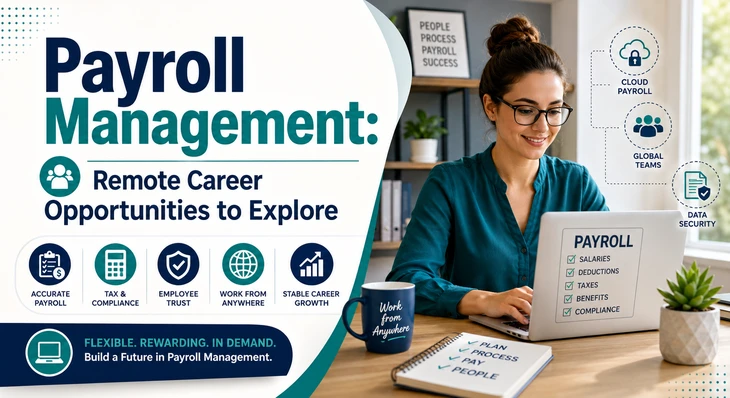
Payroll Management: Remote Career Opportunities to Explore
The way people work has changed dramatically over the last few years. What once required a physical office, fixed schedules, and stacks of paperwork can now be managed from a laptop at home. Payroll management is one of the strongest examples of this shift. Today, companies of every size are hiring remote payroll professionals to manage employee salaries, tax deductions, benefits, and compliance tasks across multiple locations worldwide. This growing demand has opened the door to flexible and stable career opportunities for people interested in finance, administration, HR, and business operations. For professionals searching for long-term career growth, remote payroll management jobs offer something many industries struggle to provide: stability, flexibility, and consistent demand. Whether you are exploring a new career path or looking to transition to remote work, payroll management can be a rewarding profession with strong future potential.Understanding Payroll Management
Payroll management involves accurately and on-time processing of employee compensation while complying with tax laws and labor regulations. It sounds straightforward on the surface, but businesses rely heavily on payroll professionals to avoid costly errors and maintain employee trust. A payroll team typically manages:- Employee salary processing
- Tax calculations and deductions
- Attendance and overtime tracking
- Bonus and incentive payments
- Benefits administration
- Payroll reporting
- Compliance documentation
- Direct deposits and reimbursements
Why Remote Payroll Jobs Are Growing So Quickly
The demand for remote payroll specialists has increased steadily as businesses continue moving toward digital operations. Several factors are driving this growth.Businesses Are Using Cloud-Based Payroll Software
Modern payroll systems no longer require professionals to sit inside a company office. Platforms such as QuickBooks Payroll, ADP, Gusto, Paychex, and Workday allow payroll teams to securely access records, process salaries, and manage tax reporting online. For companies, cloud systems reduce paperwork and simplify payroll operations. For employees, they create more opportunities to work remotely.Companies Want Flexible Operations
Businesses are becoming more comfortable with distributed teams. Hiring remote payroll professionals helps companies reduce overhead expenses while still maintaining efficient payroll operations. Instead of limiting hiring to one city or region, employers can now recruit experienced payroll talent from almost anywhere.Global Hiring Has Increased
Many organizations now hire employees across multiple states and countries. Managing payroll for a global workforce requires professionals who understand compliance rules, tax regulations, and payroll systems. As remote hiring continues to expand worldwide, payroll management remote jobs are becoming more common than ever.Popular Remote Payroll Career Opportunities
Payroll management is not limited to a single role. There are several career paths available depending on experience level, technical knowledge, and professional goals.Remote Payroll Specialist
A payroll specialist is often responsible for the day-to-day payroll process. This role usually includes:- Reviewing employee timesheets
- Processing payroll cycles
- Managing deductions
- Verifying salary information
- Responding to payroll questions
- Preparing payroll reports
Payroll Administrator
Payroll administrators handle broader payroll functions and often work closely with finance and HR departments. Their responsibilities may include:- Maintaining payroll records
- Managing payroll databases
- Assisting with audits
- Handling compliance paperwork
- Monitoring tax filings
- Supporting employee payroll requests
Remote Payroll Manager
Payroll managers oversee payroll operations and lead payroll teams. In larger organizations, payroll managers may supervise multiple payroll specialists while ensuring legal compliance and operational efficiency. Typical responsibilities include:- Managing payroll schedules
- Approving payroll reports
- Monitoring compliance updates
- Coordinating with accounting teams
- Handling payroll policies
- Leading payroll process improvements
Payroll Analyst
A payroll analyst focuses more on data, reporting, and payroll optimization. This role suits professionals who enjoy working with systems, spreadsheets, and process improvement. Payroll analysts may:- Analyze payroll data
- Identify reporting errors
- Monitor payroll trends
- Improve payroll workflows
- Assist with audits
- Support financial planning teams
Freelance Payroll Consultant
Some experienced professionals choose to work independently rather than join a single company full-time. Freelance payroll consultants often support small businesses that outsource payroll tasks. Their services may include:- Payroll setup assistance
- Tax filing support
- Payroll software training
- Compliance consulting
- Payroll audits
Essential Skills for Remote Payroll Management Careers
Remote payroll jobs require more than basic administrative knowledge. Successful payroll professionals combine technical expertise with communication and organizational skills.Attention to Detail
Payroll work leaves very little room for error. A small mistake in tax calculations or employee hours can create major problems for both employees and employers. Strong attention to detail is one of the most valuable skills in payroll management.Knowledge of Payroll Software
Most employers expect payroll professionals to understand payroll systems and digital tools. Some commonly used platforms include:- ADP
- Gusto
- QuickBooks Payroll
- SAP Payroll
- Paychex
- Workday
Understanding Compliance and Tax Regulations
Payroll professionals must stay up to date on changing labor laws and tax regulations. For example, a company with employees working across different states may face different payroll tax requirements in each location. Professionals who understand payroll compliance are highly valued because they help companies avoid penalties and reporting mistakes.Communication Skills
Remote payroll teams communicate most of the time digitally. That means payroll professionals need to explain issues clearly through email, virtual meetings, and messaging platforms. Good communication becomes especially important when employees have questions about deductions, salary adjustments, or tax forms.Time Management
Payroll deadlines are strict. Employees expect salaries to be paid on time, and businesses must submit payroll taxes by legal deadlines. Remote payroll professionals need strong organizational habits to manage schedules effectively.Industries Hiring Remote Payroll Professionals
One reason payroll management remains attractive is its versatility. Almost every industry needs payroll support.Technology Companies
Tech businesses often operate with fully remote or hybrid teams, making remote payroll management essential.Healthcare Organizations
Hospitals and healthcare networks manage large workforces with rotating schedules, overtime, and complex payment structures. Payroll professionals help maintain accurate salary processing in these environments.E-Commerce and Online Businesses
Growing e-commerce brands frequently hire remote payroll specialists to support employees working in different locations.Accounting Firms
Many accounting firms outsource payroll services or build dedicated payroll teams to support clients. This creates ongoing demand for remote payroll administrators and analysts.HR Service Providers
Human resource agencies regularly manage payroll for multiple businesses, making payroll expertise highly valuable.Benefits of Working in Remote Payroll Management
Remote payroll careers offer several advantages that appeal to professionals seeking flexibility and stability.Better Work-Life Balance
One of the biggest reasons people pursue remote payroll jobs is flexibility. Working from home eliminates commuting time and often allows professionals to create more balanced daily routines. For parents, caregivers, or professionals seeking greater personal flexibility, remote payroll work can be a practical option.Strong Career Stability
Payroll is not a temporary business need. Every organization must pay employees accurately and on time, regardless of economic conditions. Because of this, payroll management continues to offer reliable career opportunities.Competitive Income Potential
Experienced payroll managers and payroll analysts can earn strong salaries, especially in large organizations or global companies. Freelance payroll consultants may also increase earnings by serving multiple clients simultaneously.Opportunities for Career Advancement
Payroll management can lead to senior positions in HR, accounting, finance, and business operations. Professionals who gain expertise in payroll compliance, reporting, and analytics often move into leadership roles over time.Challenges of Remote Payroll Jobs
Like any profession, remote payroll management comes with its own challenges.Data Security Responsibilities
Payroll professionals handle sensitive information, including bank details, salaries, tax records, and employee identification data. Maintaining cybersecurity and protecting confidential information are major responsibilities. Remote payroll workers must use secure systems, strong passwords, and safe communication practices.Constant Regulatory Changes
Tax laws and payroll regulations change regularly. Professionals in this field need to stay informed about updates that could affect payroll calculations or compliance reporting. Continuous learning is part of the job.Managing Multiple Time Zones
Global companies may process payroll across several countries or regions. Coordinating deadlines and communication across time zones can sometimes become challenging, especially during busy payroll cycles.How to Start a Remote Payroll Career
Many people assume payroll management requires years of finance experience, but that is not always the case. Several professionals enter the field through administrative, accounting, or HR backgrounds.Learn Payroll Fundamentals
Understanding payroll basics is the first step. Online payroll courses and training programs can help beginners learn:- Payroll calculations
- Tax deductions
- Payroll reporting
- Compliance procedures
- Payroll software usage
Practice Using Payroll Tools
Hands-on experience matters. Many payroll platforms provide training resources or demo systems that allow learners to practice payroll processing.Earn Payroll Certifications
Professional certifications can improve credibility and strengthen job applications. Popular payroll certifications include:- Certified Payroll Professional (CPP)
- Fundamental Payroll Certification (FPC)
- Payroll Compliance Practitioner (PCP)
Build a Remote-Friendly Resume
Employers hiring remote payroll professionals often look for candidates who can work independently. A strong resume should highlight:- Payroll software skills
- Communication abilities
- Time management
- Compliance knowledge
- Reporting experience
- Remote collaboration tools
Search for Remote Payroll Management Jobs
Remote payroll opportunities are available on job boards, company websites, and professional networking platforms. Using targeted search phrases can improve results. Examples include:- Remote payroll specialist jobs
- Work from home payroll manager
- Virtual payroll administrator
- Payroll analyst remote positions