📚 Table of Contents
- What Is Remote Portfolio Management?
- Why Remote Portfolio Management Careers Are Growing
- Digital Transformation in Finance
- Rising Demand for Global Talent
- Flexible Work Culture
- Growth of Fintech Companies
- Skills Needed for Remote Portfolio Management Jobs
- Financial Analysis Skills
- Data and Technology Skills
- Communication Skills
- Time Management and Self-Discipline
- Educational Qualifications for Global Portfolio Management Careers
- Best Career Paths in Remote Portfolio Management
- Investment Analyst
- Portfolio Manager
- Wealth Management Advisor
- Risk Management Specialist
- Financial Consultant
- How to Start a Remote Portfolio Management Career
- Build Strong Financial Knowledge
- Gain Practical Experience
- Create a Professional Online Presence
- Learn Global Financial Markets
- Build a Remote-Friendly Resume
- Top Platforms to Find Remote Finance Jobs
- Upwork
- Indeed
- eFinancialCareers
- FlexJobs
- Challenges in Remote Portfolio Management Careers
- Time Zone Differences
- Market Volatility Pressure
- Cybersecurity Concerns
- Building Client Trust Virtually
- Real-Life Example of a Remote Portfolio Management Career
- Future Trends in Remote Investment Management
- AI and Automation
- Expansion of Digital Wealth Platforms
- Greater Focus on ESG Investing
- Borderless Hiring
- Tips to Succeed in a Global Remote Finance Career
- Keep Learning
- Develop a Niche
- Build Professional Relationships
- Focus on Results
- Frequently Asked Questions
- Is remote portfolio management a good career?
- What qualifications are needed for portfolio management jobs?
- Can beginners enter remote investment management careers?
- Which countries hire remote portfolio managers?
- What skills are most important for remote portfolio managers?
- Are remote finance jobs secure?
- Conclusion
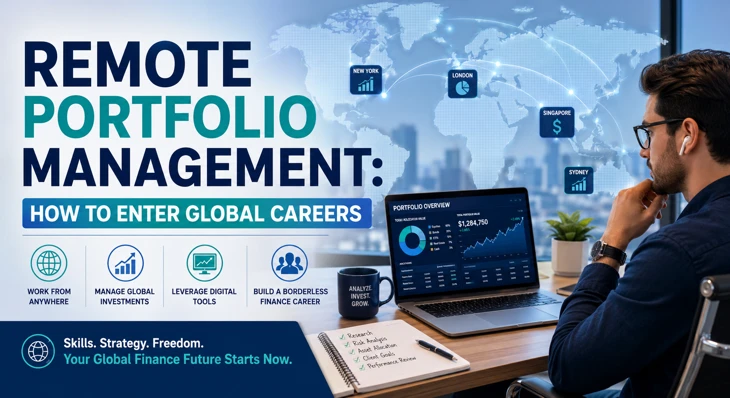
Remote Portfolio Management: How to Enter Global Careers
The world of finance has changed dramatically over the last few years. Today, skilled professionals can manage investments, analyze financial markets, and guide clients from almost anywhere in the world. Remote portfolio management is quickly emerging as one of the most attractive career paths in the global financial industry. For finance professionals, this transformation offers far more than flexible working hours. It opens the door to international clients, higher earning potential, and access to companies that were once geographically limited. Whether you are a finance graduate, investment analyst, or someone planning a career transition, understanding how remote portfolio management works can help you build a successful global career. This guide explains everything you need to know about entering the remote portfolio management industry, the skills employers expect, career opportunities available worldwide, and practical ways to stand out in a competitive market.What Is Remote Portfolio Management?
Remote portfolio management involves managing investments, financial assets, and client portfolios through digital platforms while working outside a traditional office environment. Professionals in this field use online tools, cloud-based financial software, video conferencing platforms, and market research systems to make investment decisions remotely. Portfolio managers work with different asset classes, such as:- Stocks
- Bonds
- Mutual funds
- Exchange-traded funds (ETFs)
- Cryptocurrency investments
- Real estate investment portfolios
- Retirement funds
Why Remote Portfolio Management Careers Are Growing
Multiple industry trends are driving the rapid expansion of remote investment management jobs.Digital Transformation in Finance
Financial institutions now rely heavily on digital infrastructure. Portfolio tracking, risk analysis, and market forecasting can all be handled online with advanced software. Cloud technology allows teams across different countries to collaborate in real time. As a result, companies are more comfortable hiring remote finance professionals.Rising Demand for Global Talent
Many firms are looking beyond local hiring pools. Instead of limiting recruitment to one city, companies now search globally for skilled analysts and portfolio managers. This trend benefits professionals with strong financial knowledge and communication skills, regardless of their location.Flexible Work Culture
Remote work has become a permanent part of the financial industry. Many employees prefer flexible schedules and location-independent careers. Companies have also realized that remote teams can reduce operational costs while maintaining productivity.Growth of Fintech Companies
Fintech startups continue to expand globally. These companies often operate remotely and actively hire professionals experienced in investment management, portfolio optimization, and financial planning.Skills Needed for Remote Portfolio Management Jobs
Building a successful remote investment management career requires both technical and soft skills.Financial Analysis Skills
Strong analytical ability is essential. Employers expect professionals to understand:- Financial statements
- Market trends
- Investment strategies
- Risk assessment
- Economic indicators
- Portfolio diversification
Data and Technology Skills
Today’s portfolio management industry depends heavily on data-driven financial decisions. Useful technical skills include:- Microsoft Excel advanced functions
- Financial modeling
- Bloomberg Terminal knowledge
- Portfolio management software
- Data visualization tools
- AI-powered financial analytics platforms
Communication Skills
Remote professionals spend a large part of their day communicating virtually with clients and team members. Clear communication is important for:- Explaining investment strategies
- Presenting financial reports
- Conducting virtual client meetings
- Collaborating with international teams
Time Management and Self-Discipline
Working remotely requires independence and accountability. High-performing remote portfolio managers understand how to:- Manage deadlines effectively
- Stay productive without supervision
- Organize multiple client portfolios
- Maintain work-life balance
Educational Qualifications for Global Portfolio Management Careers
Most remote portfolio management positions require formal financial education. Common qualifications include:- Bachelor’s degree in finance, economics, accounting, or business administration
- MBA in finance
- Chartered Financial Analyst (CFA) certification
- Certified Financial Planner (CFP) certification
- Financial Risk Manager (FRM) certification
Best Career Paths in Remote Portfolio Management
Remote portfolio management offers a wide range of career opportunities for both beginners and experienced finance professionals.Investment Analyst
Investment analysts research markets, evaluate securities, and support portfolio managers with data-driven insights. This role is ideal for beginners entering the remote finance industry.Portfolio Manager
Portfolio managers oversee investment portfolios and make strategic financial decisions based on client goals and market performance. They often work with high-net-worth individuals, corporations, or institutional investors.Wealth Management Advisor
Wealth advisors help clients build long-term financial strategies, including retirement planning, investment growth, and tax optimization. Many wealth management services are now delivered completely online.Risk Management Specialist
Risk specialists identify potential financial risks and create strategies to minimize losses. Remote risk management jobs are increasingly popular in the banking and fintech sectors.Financial Consultant
Independent financial consultants often work remotely with international clients. This path offers flexibility and the opportunity to build a personal brand.How to Start a Remote Portfolio Management Career
Breaking into the global finance industry may feel overwhelming initially, but the right strategy can make the journey much easier.Build Strong Financial Knowledge
Start by understanding the fundamentals of investing and portfolio management. Focus on topics such as:- Asset allocation
- Equity research
- Technical analysis
- Fundamental analysis
- Portfolio diversification
- Macroeconomics
Gain Practical Experience
Employers value practical exposure. You can gain experience through:- Internships
- Virtual finance projects
- Freelance financial analysis work
- Personal investment portfolios
- Simulated trading platforms
Create a Professional Online Presence
Having a professional LinkedIn presence is extremely important for building a remote finance career. Your profile should highlight:- Certifications
- Technical skills
- Financial projects
- Market analysis experience
- Achievements and measurable results
Learn Global Financial Markets
Remote portfolio managers often work with international clients. Understanding global economic trends, currency fluctuations, and international investment regulations can improve your employability. Professionals familiar with U.S., European, and Asian markets are especially valuable.Build a Remote-Friendly Resume
Your resume should emphasize remote work skills and financial expertise. Include:- Portfolio management experience
- Financial software knowledge
- Remote collaboration tools
- Results-driven achievements
- Certifications and licenses
Top Platforms to Find Remote Finance Jobs
Several online platforms regularly post remote portfolio management and investment analysis jobs.Upwork
Freelancers offering investment research and financial consulting services often find clients through Upwork.Indeed
Many international finance companies list remote investment management positions on Indeed.eFinancialCareers
This platform specializes in finance and banking jobs worldwide.FlexJobs
FlexJobs focuses specifically on remote and flexible work opportunities.Challenges in Remote Portfolio Management Careers
While the industry offers strong career growth, professionals should also be prepared for certain challenges.Time Zone Differences
Working with global clients may require flexible schedules. Portfolio managers often attend meetings outside standard office hours.Market Volatility Pressure
Financial markets can change rapidly. Remote professionals must stay up to date and respond quickly to market developments.Cybersecurity Concerns
Handling sensitive financial information remotely requires strong cybersecurity awareness. Professionals must use secure systems and follow compliance guidelines.Building Client Trust Virtually
Developing relationships online can take time. Clear communication, professionalism, and consistent performance help establish credibility.Real-Life Example of a Remote Portfolio Management Career
Consider the example of a finance graduate from India who begins as a junior investment analyst for a U.S.-based fintech company. Initially, the role involves researching stocks and preparing portfolio reports remotely. Over time, the professional gains experience in asset management, earns a CFA certification, and starts handling client portfolios independently. Within a few years, the individual transitions into a senior portfolio management role while working remotely. This career path is becoming increasingly common as companies prioritize skills over physical office presence.Future Trends in Remote Investment Management
The future of remote portfolio management careers appears extremely promising as digital finance continues to expand.AI and Automation
Artificial intelligence is transforming investment analysis. Portfolio managers now use AI tools for:- Predictive analytics
- Risk forecasting
- Automated reporting
- Investment screening
Expansion of Digital Wealth Platforms
Digital investment platforms are growing rapidly worldwide. These platforms require skilled remote professionals to manage client portfolios and provide financial guidance.Greater Focus on ESG Investing
Environmental, Social, and Governance (ESG) investing continues to gain popularity. Portfolio managers with ESG expertise may access new career opportunities in sustainable finance.Borderless Hiring
More companies are adopting global hiring models. This means talented finance professionals can access international career opportunities without relocating.Tips to Succeed in a Global Remote Finance Career
Success in remote portfolio management depends on continuous learning and adaptability. Here are practical tips to stay competitive:Keep Learning
Financial markets evolve constantly. Stay updated through:- Finance news platforms
- Investment webinars
- Market research reports
- Professional certifications
Develop a Niche
Specializing in a specific area can improve career growth. Examples include:- ESG investing
- Cryptocurrency portfolio management
- Retirement planning
- Risk management
- International equities