📚 Table of Contents
- Why Remote AML Careers Are Expanding So Quickly
- Understanding What AML Professionals Actually Do
- Daily Responsibilities in Remote AML Jobs
- Essential Skills Needed for Remote AML Careers
- Knowledge of AML Compliance and Regulations
- Analytical Thinking and Investigation Skills
- Communication and Documentation Skills
- Technical and Digital Skills
- How to Start an AML Career Without Experience
- Learn the Fundamentals First
- Earn AML Certifications
- Use Transferable Skills From Previous Roles
- Practice With Real AML Scenarios
- Popular Remote AML Career Paths
- AML Analyst
- KYC Analyst
- Transaction Monitoring Specialist
- AML Investigator
- Compliance Officer
- How to Find Remote AML Jobs
- Build an AML-Focused Resume
- Improve Your LinkedIn Presence
- Target Global Companies
- Challenges of Working in Remote AML Roles
- Staying Focused During Investigations
- Keeping Up With Regulatory Changes
- Managing Workload and Burnout
- How to Grow in an AML Career
- Develop Specialized Knowledge
- Improve Leadership Skills
- Stay Updated on Technology Trends
- A Practical Example of Building Remote AML Expertise
- The Future of Remote Anti-Money Laundering Careers
- FAQs
- What qualifications are required for AML careers?
- Can AML jobs be done remotely?
- Is AML a good career option?
- Which AML certification is best for beginners?
- Do remote AML jobs pay well?
- Are AML careers stressful?
- Conclusion
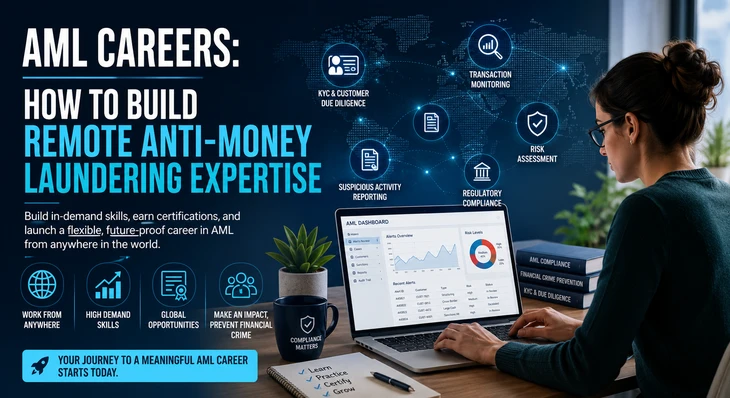
AML Careers: How to Build Remote Anti-Money Laundering Expertise
Remote work has changed the way compliance teams operate across the financial sector. A few years ago, most anti-money laundering professionals worked in physical offices within banks or other financial institutions. Today, many companies hire remote AML analysts, compliance specialists, and financial crime investigators from around the world. This shift has created exciting opportunities for people who want flexible careers without stepping away from the growing compliance industry. From fintech startups to global banks and cryptocurrency platforms, businesses are searching for professionals who understand AML compliance, transaction monitoring, KYC procedures, and financial crime prevention. The good news is that entering this field is more realistic than many people think. You do not always need years of banking experience to build remote anti-money laundering expertise. With practical learning, certifications, and the right professional skills, it is possible to start small and grow into a highly valuable compliance role. In this guide, you will learn how remote AML careers work, which skills matter most, how to gain experience, and what steps can help you build a long-term career in anti-money laundering.Why Remote AML Careers Are Expanding So Quickly
Financial crime has become more complex in the digital era. Online banking, international payments, mobile wallets, and cryptocurrency transactions have made it easier for criminals to move money across borders. Because of this, companies now invest heavily in AML compliance teams to detect suspicious financial activity before it becomes a major risk. At the same time, compliance technology has improved significantly. Many AML tasks can now be managed securely through cloud-based systems and remote monitoring platforms. This has enabled organizations to build distributed compliance teams rather than relying solely on office-based employees. Today, remote AML jobs are common in industries such as:- Banking and financial services
- Fintech companies
- Cryptocurrency exchanges
- Insurance firms
- Investment companies
- Payment processing platforms
- Compliance consulting agencies
- Regulatory technology companies
Understanding What AML Professionals Actually Do
People outside the industry often assume anti-money laundering work is only about reviewing spreadsheets or checking transactions all day. In reality, AML careers involve investigation, risk assessment, research, and regulatory compliance. The main objective is simple: identify suspicious financial activity and help organizations reduce the risk of money laundering, fraud, or terrorist financing.Daily Responsibilities in Remote AML Jobs
The exact responsibilities depend on the role and company, but most remote AML professionals handle tasks like:- Monitoring customer transactions
- Reviewing suspicious account activity
- Conducting KYC verification
- Performing customer due diligence
- Investigating unusual payment behavior
- Preparing compliance documentation
- Reviewing sanctions alerts
- Escalating suspicious cases
- Maintaining regulatory records
Essential Skills Needed for Remote AML Careers
Employers look for more than theoretical knowledge of compliance. Successful AML professionals usually combine analytical thinking with communication skills and attention to detail.Knowledge of AML Compliance and Regulations
Every AML role starts with understanding the regulatory side of financial crime prevention. Professionals should become familiar with:- AML compliance procedures
- Know Your Customer requirements
- Enhanced due diligence processes
- Suspicious activity reporting
- Sanctions screening
- Financial crime regulations
- Risk-based compliance frameworks
Analytical Thinking and Investigation Skills
Strong analytical ability is one of the most important qualities in AML work. Professionals must spot patterns that may indicate suspicious behavior. Sometimes the warning signs are obvious. Other times, the activity looks normal on the surface but becomes concerning after deeper review. Imagine a customer account that suddenly begins moving funds across multiple countries after years of inactivity. An AML investigator must analyze whether the activity appears legitimate or potentially risky. This type of work requires patience, critical thinking, and structured decision-making.Communication and Documentation Skills
Clear writing matters more in AML than many people realize. Compliance teams rely on accurate documentation because reports may eventually be reviewed by senior management, auditors, or regulatory authorities. Remote AML professionals regularly prepare:- Investigation summaries
- Compliance reports
- Risk assessments
- Escalation notes
- Internal case updates
Technical and Digital Skills
Remote AML work depends heavily on software tools and digital systems. Many organizations use:- Transaction monitoring platforms
- Case management systems
- Compliance dashboards
- Customer verification software
- Data analysis tools
- Risk management platforms
How to Start an AML Career Without Experience
One of the biggest myths about AML careers is that only finance professionals can enter the field. In reality, many people transition into compliance from customer service, operations, administration, law, or fraud support roles.Learn the Fundamentals First
Start by understanding the basics of anti-money laundering. Focus on topics such as:- Money laundering stages
- KYC verification
- Transaction monitoring
- Customer due diligence
- Financial crime prevention
- Regulatory reporting
Earn AML Certifications
Certifications can strengthen credibility when applying for remote AML jobs. Some of the most recognized options include:- CAMS certification
- ICA certifications
- AML Foundations courses
- Certified Fraud Examiner programs
- ACAMS certificates
Use Transferable Skills From Previous Roles
Many professionals already have experience that overlaps with AML responsibilities. Transferable skills may include:- Customer verification
- Fraud prevention
- Risk analysis
- Documentation review
- Data management
- Financial operations
- Investigation support
Practice With Real AML Scenarios
Theory alone is rarely enough. Employers often prefer candidates who understand how suspicious activity appears in practical situations. A good way to build confidence is by studying:- Suspicious transaction examples
- Financial crime case studies
- Regulatory enforcement actions
- Fraud investigation reports
- Compliance reporting formats
Popular Remote AML Career Paths
AML careers include several specialized roles. Understanding the differences can help professionals choose the right direction.AML Analyst
This is one of the most common entry-level positions in the industry. AML analysts review transaction alerts, investigate suspicious activity, and prepare case documentation. Many professionals begin their remote AML careers as analysts before moving into more specialized roles.KYC Analyst
KYC analysts focus mainly on customer verification and due diligence. Their work often includes:- Reviewing identity documents
- Verifying customer information
- Assessing customer risk levels
- Conducting background checks
- Reviewing business ownership structures
Transaction Monitoring Specialist
These professionals review automated monitoring alerts generated by compliance systems. The role requires strong concentration and careful attention to detail.AML Investigator
AML investigators handle more advanced financial crime cases. Their responsibilities may include:- Reviewing complex transaction patterns
- Conducting detailed investigations
- Preparing suspicious activity reports
- Working with legal departments
- Supporting fraud investigations
Compliance Officer
Compliance officers oversee larger regulatory frameworks inside organizations. They often manage audits, update internal policies, support risk management initiatives, and ensure the company complies with AML regulations.How to Find Remote AML Jobs
Finding remote AML opportunities takes more than sending resumes randomly. A focused strategy usually produces better results.Build an AML-Focused Resume
Your resume should clearly highlight:- AML compliance knowledge
- Transaction monitoring experience
- Financial crime prevention skills
- KYC verification expertise
- Analytical abilities
- Remote work experience
Improve Your LinkedIn Presence
Many recruiters search LinkedIn directly for remote compliance professionals. To improve visibility:- Add certifications to your profile
- Highlight compliance skills
- Share industry insights occasionally
- Follow AML organizations
- Connect with compliance recruiters
Target Global Companies
Remote AML hiring is no longer limited by geography. International fintech firms, digital banks, and cryptocurrency companies frequently hire professionals from different countries. Some businesses care more about expertise and certifications than physical location. This creates opportunities for skilled professionals to work with global compliance teams remotely.Challenges of Working in Remote AML Roles
Like any profession, remote AML careers come with challenges. Understanding them early can help professionals manage expectations and avoid frustration.Staying Focused During Investigations
AML work requires precision. A small mistake in transaction review or reporting can create serious compliance issues. Remote professionals need strong concentration and self-discipline, especially when working independently.Keeping Up With Regulatory Changes
Compliance regulations evolve constantly. AML professionals must continue learning throughout their careers. Successful specialists regularly:- Attend compliance training
- Read industry updates
- Follow regulatory announcements
- Study new fraud patterns
- Monitor financial crime trends
Managing Workload and Burnout
Some AML positions involve reviewing large numbers of alerts every day. Without healthy work habits, remote professionals may experience mental fatigue. Creating a structured routine, taking breaks, and managing workload effectively can make a major difference.How to Grow in an AML Career
AML offers strong long-term growth potential. Professionals who continue building expertise often move into senior compliance, consulting, or leadership positions.Develop Specialized Knowledge
Specialization can significantly improve career opportunities. High-demand areas include:- Cryptocurrency compliance
- Sanctions screening
- Fraud investigation
- Fintech compliance
- Enhanced due diligence
- Regulatory technology
- Risk management
Improve Leadership Skills
Career growth eventually requires more than technical knowledge. Professionals aiming for senior roles should also strengthen:- Team management
- Decision-making
- Strategic thinking
- Reporting skills
- Communication confidence
Stay Updated on Technology Trends
Modern AML operations rely heavily on technology. Artificial intelligence, machine learning, and blockchain analytics are changing how suspicious activity is detected. Professionals who understand these tools often gain a competitive advantage in remote AML hiring.A Practical Example of Building Remote AML Expertise
Consider someone working in customer operations for an online payment platform. At first, their responsibilities only involved account verification and customer document review. After learning about anti-money laundering compliance, they completed a beginner AML certification and started studying transaction monitoring systems. Over time, they gained experience handling suspicious account reviews and due diligence tasks. Within a couple of years, they moved into a fully remote AML investigator role with a fintech company. This kind of transition is becoming increasingly common because many AML skills can be learned gradually through training and hands-on exposure.The Future of Remote Anti-Money Laundering Careers
The future of remote AML careers looks extremely strong. Financial institutions, fintech companies, and regulators continue to increase investment in compliance operations. As online transactions grow worldwide, organizations need more professionals who can efficiently detect financial crime risks. Several trends are shaping the industry:- Expansion of remote compliance teams
- Increased cryptocurrency regulation
- Greater investment in RegTech tools
- Rising demand for transaction monitoring specialists
- Increased use of AI-powered compliance systems
- Stronger international financial crime regulations