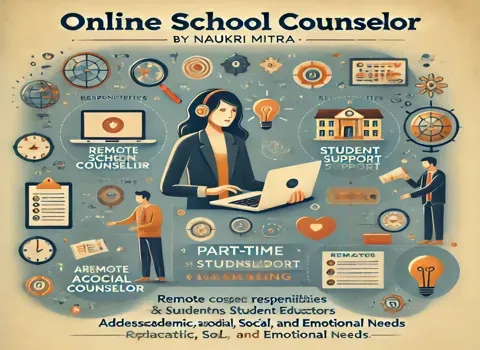
A kid failing algebra usually isn't failing at algebra. Something's happening at home, or there's anxiety nobody's put a name to. Spotting that gap through a screen — no hallway run-ins, no reading body language between classes — is basically the whole job description compressed into one sentence.
The actual job
Academics. Career direction. And then the emotional weight underneath both, which is usually what's really going on. All of it happens on video, through whatever platform the school runs. Picking a class schedule is easy work. A student who won't say why they've stopped turning things in is not. You'll spend most days somewhere between those two poles.
A rough shape of a day
It shifts constantly, but there's a pattern most weeks fall into. Morning sessions tackle whatever a student brought in — academic worry, something social, sometimes both tangled together. Midday might mean a group webinar on career planning. Afternoons often go to a workshop, study skills or otherwise. Later, you're checking in with a teacher or a parent, and by evening you're writing up notes and figuring out tomorrow before you close the laptop.
Responsibilities
- Hold virtual sessions covering academics, career questions, and emotional concerns as they come up
- Put together academic and career plans that actually get revisited, not filed away after the first draft
- Lead workshops on things like study habits, stress management, and college or career prep
- Notice warning signs early and step in — crisis support, conflict mediation, whatever the moment calls for
- Work through coping strategies with students one-on-one rather than defaulting to a printed worksheet
- Keep teachers and parents looped in so a student isn't getting different messages from different adults
- Maintain accurate, secure records in line with data protection rules
- Pull whatever performance data exists and actually use it, instead of letting it sit in a dashboard nobody checks
Requirements
A
Master's degree in school counseling, psychology, or a related field is required. So is valid state certification to practice as a school counselor. On top of that:
3 years of hands-on counseling experience with students. Remote background is a plus but far from mandatory — plenty of strong in-person counselors adapt to this format quickly.
Credentials aside, a few things separate people who thrive here from people who just get by:
- Genuine familiarity with adolescent psychology, beyond whatever a textbook covered
- Ease with video platforms and LMS tools, so the technology stops being the obstacle
- The instinct to know when something needs escalation today versus monitoring over the next few weeks
- Notes that are clear and written promptly — there's no in-person paper trail to lean on if documentation slips
- Comfort working alone for long stretches without disappearing from the rest of the team
Nice extras
- Some familiarity with platforms like Naviance for career counseling
- Exposure to AI-driven student tracking tools
- Experience running larger group sessions, beyond one-on-one work
Salary
$85,000 a year. Fully remote. You get real say in how your hours are arranged, as long as students are consistently covered.
What's included
- Remote work with genuine flexibility in your schedule
- Health, dental, and vision coverage
- Paid time off and holidays
- Funded professional development and ongoing training
Day-to-day culture
Nobody sits on a difficult case alone here. Check-ins with teachers and families happen as a matter of routine, and flagging something concerning early is treated as normal rather than as overreacting. Naukri Mitra has placed school counselors into similar remote setups before, and one thing candidates tend to notice is how much more collaborative this feels compared to typical solo virtual counseling gigs. If a student's situation feels off, the expectation is you say something right away.
Students here come from wildly different backgrounds and home situations. A single counseling style won't cover all of them, so the role rewards people who adjust rather than repeat the same approach regardless of who's in front of them.
How to apply
Send a resume, your certification details, and a few lines on how you'd open a first conversation with a student you've never met before. Counselors from the U.S., Canada, the UK, EU countries, Australia, India, and elsewhere can apply, provided you hold valid certification. Applications are reviewed as they come in.