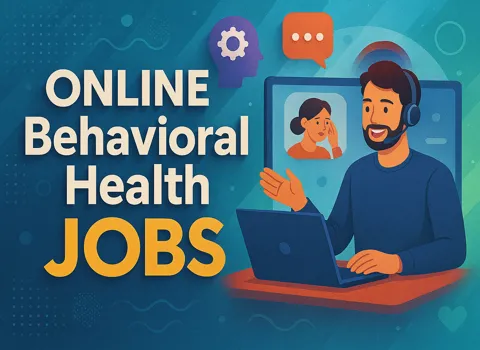
A parent finally admits, at 11pm on a video call, that they haven't really slept in weeks. A college student logs in from their dorm room instead of skipping another appointment because talking from bed feels less intimidating than a waiting room. Someone has to be on the other end of that. That's this job — an
Online Behavioral Health Specialist, fully remote, paying $90,500 a year.
Why This Work Matters
Mental health used to get pushed to the bottom of the list. Not anymore. Work, family, money stress, general uncertainty — it piles up, and people need somewhere to put it down. Virtual behavioral therapy and online counseling exist because many people simply can't make it to an office between nine and five, and this role fills that gap.
Nobody's tracking hours here. What matters is whether a patient hangs up steadier than when they logged on — and whether that holds past Tuesday.
A Day in the Life
Mornings start with a short team check-in — updates, maybe a joke, a rough plan for who's on the schedule. Then a first-time behavioral health assessment, often with someone visibly nervous about opening up to a stranger. Midday might mean walking a returning patient through cognitive behavioral techniques to break a spiral they've been stuck in for days. Afternoons lean into stress reduction — breathing work, journaling, something small and concrete they can actually use that same evening. The day closes with notes and a quick look at tomorrow's list.
What You'll Actually Be Doing
- Running structured sessions using cognitive behavioral techniques with real evidence behind them
- Building emotional well-being plans tailored to each patient — stress, depression, substance use, whatever they're carrying
- Putting together crisis management strategies for the moments that can't wait
- Holding confidential sessions where patients can actually say what's true
- Staying in touch with other providers so care doesn't fall apart between appointments
- Pushing preventive habits so patients get ahead of problems instead of just reacting to them
What Gets You in the Door
You'll need a
Master's degree in counseling, social work, psychology, or a closely related field, plus active licensure as a mental health professional. On experience: at least
2 years post-licensure. Time spent on a telehealth platform or running online therapy sessions specifically is a real advantage — remote care has a different pace, and it's easier if you've already found yours.
Skills Worth Having
- Solid grounding in evidence-based treatment, adapted for a screen instead of a couch
- Communication that's clear without being clinical — patients should feel heard, not processed
- Comfort adjusting a treatment plan mid-course when something isn't working
- Working knowledge of behavioral assessments and stress reduction methods
- Confidence sitting with hard conversations one-on-one
- Seeing the person, not the diagnosis
Not Required, But It Helps
- Time spent on digital mental health platforms or remote care software
- Some background blending holistic approaches with clinical treatment
- Crisis intervention experience specifically in a telehealth context
- Comfort coordinating with other providers across a shared patient's care
Pay and What Comes With It
$90,500 a year, with a schedule you actually build around your life instead of the other way around. There's paid time off, ongoing training — preventive care, digital tools, that kind of thing — and mentorship from clinicians who've been doing this longer. It's a fairly typical example of what
Naukri Mitra tends to surface: real clinical work with the flexibility that only remote care can offer.
The Team
Remote clinical work gets lonely fast if nobody's paying attention to that. So there are weekly huddles, peer support groups, and a shared space to talk through a rough case or just vent after a hard session. Respect and balance aren't posters on a wall—they show up in how the schedule is actually built. Emotional work costs something, and the team treats protecting yours as seriously as protecting a patient's.
Where This Can Lead
Some specialists move into mentoring newer clinicians. Others push further into advanced intervention work or help shape the next digital program the team builds. Both paths get real support, not just a nod.
Benefits, Quickly
- Remote, flexible scheduling
- Paid time off
- Ongoing training and mentorship
- Peer support built into the actual workweek, not an afterthought
Applying
If you're a licensed mental health professional who wants flexibility without losing the reason you got into this work, this is worth a look. Open to remote applicants worldwide, including the United States, India, and other eligible regions.