📚 Table of Contents
- The Rise of Remote Hiring in the Startup Ecosystem
- India Has One of the Largest Skilled Talent Pools
- Strong Technical Education System
- Cost-Effective Hiring Without Compromising Quality
- Better Resource Allocation for Early-Stage Companies
- Indian Professionals Are Comfortable Working Remotely
- Familiarity With Modern Collaboration Tools
- Strong English Communication Skills
- Indian Talent Is Highly Adaptable
- Multi-Skilled Professionals Add Extra Value
- Time Zone Advantage Supports Global Operations
- High Retention and Long-Term Collaboration Potential
- The Growth of India’s Startup Culture Has Improved Talent Quality
- Real-Life Example: How Startups Scale Faster With Indian Remote Teams
- Indian Remote Talent Supports Startup Scalability
- Growing Trust in Remote Work Infrastructure
- The Future of Global Hiring Is Increasingly Borderless
- How Startups Can Successfully Hire Indian Remote Talent
- Focus on Skills Over Geography
- Build Clear Communication Systems
- Create Long-Term Growth Opportunities
- Frequently Asked Questions
- Why do startups prefer hiring remote talent from India?
- Is hiring Indian remote employees affordable for startups?
- Which industries hire the most Indian remote professionals?
- Are Indian remote workers experienced with international companies?
- What are the benefits of hiring remote developers from India?
- Is remote hiring from India suitable for early-stage startups?
- Conclusion
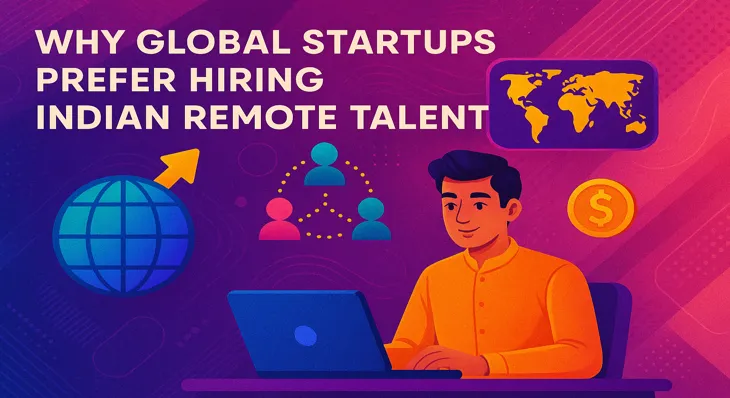
Why Global Startups Prefer Hiring Indian Remote Talent
The global startup ecosystem has changed dramatically over the last few years. Remote work is no longer seen as a temporary trend or emergency solution. It has become a practical and profitable way for startups to build strong teams without geographical limitations. Among the remote hiring destinations available today, India continues to stand out as a preferred talent hub for startups worldwide. From fast-growing SaaS companies in the United States to eCommerce brands in Europe and fintech startups in Singapore, businesses are increasingly choosing Indian remote professionals to scale operations efficiently. But why exactly are global startups hiring remote talent from India at such a rapid pace? The answer goes far beyond affordable labor. Indian professionals bring a combination of technical expertise, adaptability, communication skills, and a strong work ethic that fits perfectly into the startup environment. In this article, we will explore the major reasons global startups prefer hiring Indian remote talent and how this trend is shaping the future of international work.The Rise of Remote Hiring in the Startup Ecosystem
Startups operate differently from traditional corporations. They need agility, faster execution, and the ability to scale quickly without burning through cash reserves. Hiring remote employees helps startups:- Reduce operational expenses
- Access global talent pools
- Build flexible teams
- Operate across multiple time zones
- Scale faster without physical office expansion
- Software development
- Artificial intelligence
- Digital marketing
- Customer support
- Product design
- Data analytics
- Content writing
- Cybersecurity
- Cloud engineering
- Finance and accounting
India Has One of the Largest Skilled Talent Pools
One of the biggest reasons startups hire Indian remote talent is the sheer availability of skilled professionals. India produces millions of graduates every year in fields like engineering, business management, computer science, finance, and communications. Cities like Bengaluru, Hyderabad, Pune, Chennai, Gurugram, and Mumbai have become major technology and innovation centers. These cities are home to professionals with experience working for global brands, unicorn startups, and Fortune 500 companies. For startups, this means easier access to:- Experienced software engineers
- UI/UX designers
- DevOps specialists
- SEO experts
- Content strategists
- Mobile app developers
- Virtual assistants
- Sales professionals
Strong Technical Education System
India’s technical education ecosystem plays a major role in the growth of remote hiring. Institutions like the Indian Institutes of Technology (IITs), National Institutes of Technology (NITs), and thousands of private engineering colleges produce professionals skilled in modern technologies. Many Indian developers are highly experienced in:- Python
- JavaScript
- React
- Node.js
- Java
- AWS
- Machine learning
- Blockchain development
- SaaS product engineering
Cost-Effective Hiring Without Compromising Quality
Budget management is one of the biggest challenges for startups. Hiring local talent in countries like the United States, Canada, the United Kingdom, or Australia can be extremely expensive. For example:- A senior software engineer in Silicon Valley may cost over $140,000 annually
- The same level of expertise from India may cost significantly less while maintaining strong quality standards
- Extend runway
- Hire larger teams
- Invest more in product development
- Allocate budget toward marketing and growth
Better Resource Allocation for Early-Stage Companies
Most startups operate with limited funding during their early stages. Remote hiring from India allows founders to build capable teams while avoiding expenses related to:- Office infrastructure
- Equipment setup
- Employee relocation
- Utility bills
- Local payroll overhead
Indian Professionals Are Comfortable Working Remotely
India has one of the world’s largest freelance and remote work communities. For years, Indian professionals have collaborated with international clients through:- Freelancing platforms
- Outsourcing companies
- Distributed teams
- International agencies
- Remote-first startups
- Remote communication etiquette
- Online collaboration tools
- Virtual project management
- Time zone coordination
- Async workflows
Familiarity With Modern Collaboration Tools
Indian remote workers are highly comfortable using tools like:- Slack
- Zoom
- Trello
- Jira
- Notion
- ClickUp
- GitHub
- Google Workspace
- Microsoft Teams
Strong English Communication Skills
Communication is critical in remote work. One reason global startups confidently hire Indian remote employees is the widespread use of English in education and business environments. India has one of the world’s largest English-speaking populations. Professionals working in tech, marketing, customer service, and business operations are often comfortable communicating with international clients and teams. This improves:- Team collaboration
- Client communication
- Documentation quality
- Customer support experience
- Cross-functional coordination
Indian Talent Is Highly Adaptable
Startups move fast. Processes change frequently. Product direction evolves. Priorities shift almost weekly. Indian remote professionals are often recognized for their adaptability and willingness to learn. Many professionals in India have experience working in dynamic environments where flexibility is essential. This startup-friendly mindset makes them valuable contributors in:- Fast product launches
- Agile development cycles
- Rapid experimentation
- Cross-functional collaboration
- Scaling operations
Multi-Skilled Professionals Add Extra Value
Many startups prefer hiring employees who can handle multiple responsibilities. Indian remote professionals often bring hybrid skill sets. For example:- A developer may also understand cloud deployment
- A content writer may have SEO expertise
- A marketer may also manage analytics and automation
- A designer may understand front-end implementation
Time Zone Advantage Supports Global Operations
Another major reason startups hire Indian remote talent is time zone flexibility. India’s time zone allows companies to create nearly round-the-clock workflows. For US-based startups, Indian teams often continue work after local teams log off. This creates faster development cycles and improved turnaround times. For example:- A product issue identified in New York at the end of the day can be worked on overnight by developers in India
- Customer support teams in India can provide extended coverage for international users
- Marketing campaigns can be monitored continuously across regions
High Retention and Long-Term Collaboration Potential
Repeatedly hiring and replacing employees can be costly for startups. Many founders find that Indian remote professionals often build long-term working relationships when treated fairly and given growth opportunities. Remote employees from India frequently value:- Stable international work opportunities
- Skill development
- Flexible work environments
- Career growth
- Exposure to global projects
The Growth of India’s Startup Culture Has Improved Talent Quality
India’s own startup ecosystem has exploded in recent years. Companies like:- Flipkart
- Zomato
- Razorpay
- Freshworks
- Zerodha
- Swiggy
- Ola
- Fast execution
- Product thinking
- Startup challenges
- User-focused development
- Rapid scaling
Real-Life Example: How Startups Scale Faster With Indian Remote Teams
Imagine a SaaS startup based in California with limited funding. The founders need:- Two full-stack developers
- One UI designer
- One SEO content writer
- Customer support coverage
- Product development accelerates
- Customer tickets are resolved faster
- Marketing content improves organic traffic
- Operational costs remain manageable
Indian Remote Talent Supports Startup Scalability
Scalability is one of the most important goals for any startup. Indian remote hiring provides flexibility that traditional hiring models often cannot match. Startups can:- Begin with small remote teams
- Expand quickly during growth phases
- Hire specialists for short-term projects
- Build dedicated long-term departments
Growing Trust in Remote Work Infrastructure
A few years ago, some companies worried about productivity and accountability in remote work. Today, those concerns have reduced significantly. Improved internet infrastructure, project management systems, and communication tools have made global collaboration easier than ever. Indian professionals now work seamlessly with teams worldwide. Many remote employees also maintain professional home office setups with:- High-speed internet
- Backup power solutions
- Dedicated workspaces
- Professional communication systems
The Future of Global Hiring Is Increasingly Borderless
The future of work is becoming increasingly global. Startups are no longer building teams based solely on geography. Instead, they are hiring based on:- Skill
- Efficiency
- Communication
- Cultural fit
- Productivity
- Artificial intelligence
- SaaS
- Fintech
- Healthtech
- Edtech
- Cybersecurity
- eCommerce
- Digital services
How Startups Can Successfully Hire Indian Remote Talent
For startups planning to hire remote professionals in India, a few best practices can significantly improve results.Focus on Skills Over Geography
Instead of hiring based purely on location, startups should prioritize:- Portfolio quality
- Communication skills
- Technical expertise
- Problem-solving ability
- Work ethic
Build Clear Communication Systems
Strong communication processes are essential for remote team success. This includes:- Weekly meetings
- Clear project documentation
- Defined expectations
- Transparent workflows
- Regular feedback
Create Long-Term Growth Opportunities
Indian professionals often value companies that invest in career growth. Providing:- Learning opportunities
- Skill development
- Leadership roles
- Performance recognition