📚 Table of Contents
- Introduction: Why This Matters Now
- Why Demand for Sustainable Careers Is Exploding
- Why Sustainability Should Matter to Young Professionals
- Real-World Shifts: Careers Are Evolving with Sustainability
- A Personal Story: The Turning Point
- Where the Career Opportunities Really Are
- 1. Environmental Management Jobs
- 2. Climate Action Careers
- 3. Renewable Energy Workforce
- 4. Sustainable Business Practices
- 5. Ethical Employment Opportunities
- What Employers Are Looking For
- Why Sustainability Careers Can Feel Overwhelming at First
- The Big Skill Gap No One’s Talking About
- Making Sustainability Easy to Relate To
- The Role of Education
- How Technology Is Powering This Shift
- Preparing Yourself: Practical Steps
- The Human Side: Why This Work Actually Feels Worth It
- Final Thoughts
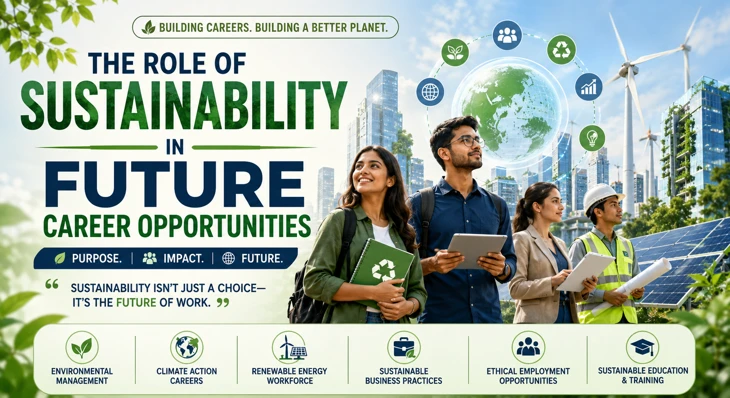
The Role of Sustainability in Future Career Opportunities
Introduction: Why This Matters Now
Let’s be real—careers don’t look like they used to. The way we think about work has undergone significant changes. These days, it’s not only about the paycheck. It’s about purpose, impact, and leaving something behind that matters. And right now, sustainability is at the heart of that shift. Everywhere you look—climate headlines, companies scrambling to change, students asking more challenging questions—you can feel it. Sustainability jobs aren’t some side niche anymore. They’re mainstream, and honestly, the wave is just starting to build. So let’s talk about what’s happening, where the opportunities are, and how you can get ready to ride this wave instead of chasing after it later.Why Demand for Sustainable Careers Is Exploding
Notice how job ads now call out things like eco-friendly careers or highlight corporate social responsibility (CSR) projects? Employers have taken note of the fact that people genuinely care about these things. Students want work that feels meaningful. Parents wish for careers that won’t vanish in five years. And governments? They’re tying whole policies to the Sustainable Development Goals (SDGs). The wild part is, this isn’t a passing trend anymore. Sustainability is woven into the core of every industry. From farming to finance, companies are trying to align with climate action and fairer growth.Why Sustainability Should Matter to Young Professionals
Picture this: you’ve just finished your degree, and you walk into an interview. The recruiter asks, “So, how do you see yourself contributing to our sustainability goals?” If you freeze, that’s a red flag. But if you can talk confidently about sustainable business practices, you’re instantly a step ahead. Students who adopt this mindset now will be the ones employers will chase tomorrow. Why? The world is investing in the future of green technology, low-carbon industries, and environmental innovation. And they need people—fresh, curious, and willing to learn—to drive all of it forward.Real-World Shifts: Careers Are Evolving with Sustainability
- Banking: A decade ago, it was just profits. Now? Banks are pitching green finance opportunities. They’re judged not only on returns but also on environmental and social impact.
- Engineering: It’s no longer about just building bridges. It’s about designing energy-efficient systems and working with the renewable energy workforce.
- Teaching: Classrooms are shifting. Teachers are weaving sustainability into lessons, prepping students for sustainable education and training opportunities.
- Business: Startups aren’t content selling stuff. They’re building models around circular economy jobs and finding ways to reduce waste.
A Personal Story: The Turning Point
My friend Priya studied finance. She thought her career would be spreadsheets, markets, and long hours. But when she joined a major firm, guess what? They asked her to lead projects in green finance opportunities. That meant funding solar parks, reviewing eco-friendly portfolios, and pitching ideas that actually tackled climate impact. She laughed and told me, “Honestly, I never imagined climate talks would be part of my finance career.” That’s the thing—sustainability sneaks into fields you’d never expect, and it opens up doors you didn’t even know were there.Where the Career Opportunities Really Are
1. Environmental Management Jobs
Companies now require individuals who can design efficient waste management systems, reduce emissions, and ensure compliance with new regulations. Governments are continually tightening the rules, leading to the rapid expansion of these roles.2. Climate Action Careers
Non-profits, research hubs, and even corporations are hiring for climate action. If shrinking carbon footprints excites you, this is where you belong.3. Renewable Energy Workforce
Look at solar, wind, even hydropower—those industries are exploding right now. And with every new wind farm or solar park, someone’s got to design it, run it, and keep it humming. That means real jobs for engineers, technicians, project managers—the whole crew. IRENA estimates that by 2030, nearly 38 million people could be working in renewable energy worldwide—a massive leap from today’s numbers.4. Sustainable Business Practices
Consultants these days? They’re not just making PowerPoints. They’re rolling up their sleeves, rethinking supply chains, trimming waste, and guiding businesses toward greener products.5. Ethical Employment Opportunities
And it’s not just the environment. Workers want companies that treat people fairly, pay them well, and support their communities. Ethical matters as much as eco.What Employers Are Looking For
Here’s what they really want to know:- Can you design eco-friendly projects?
- Do you understand how the SDGs tie into real business?
- Can you handle energy and emissions data without freaking out?
- Do you know how to strike a balance between profit and impact?
Why Sustainability Careers Can Feel Overwhelming at First
I get it. You’re already juggling exams, hostel food, and the usual future anxiety. And now people are saying, “Oh, by the way, add sustainability to your list.” No one’s expecting you to master it all overnight. The smarter move? Stay curious. Scroll through updates on the green economy workforce. Follow someone working in environmental innovation roles. Consider taking a brief online course in sustainable education and training. It’s the little steps that stack up.The Big Skill Gap No One’s Talking About
Here’s the catch: demand is skyrocketing, but skills aren’t keeping pace. Employers are seeking individuals who can effectively lead sustainability projects—not just attend meetings and nod in agreement. But students? Many don’t get that kind of hands-on training. That’s why:- Employers are desperate for real sustainability leaders.
- Students are often missing the practical know-how.
- A certificate, a volunteer project, or even a campus campaign can set you way ahead of the crowd.
Making Sustainability Easy to Relate To
Think of it like sports. You don’t just walk onto the field on match day. You train, you practice, you put in the reps. Careers are the same. Want to work in clean energy jobs? Start small—learn the basics, join a workshop, grab an internship. Or think of hostel life. You’re constantly managing resources—stretching your food, sharing laundry, squeezing in time. That’s sustainability in real life. Companies want you to scale that same mindset up.The Role of Education
Colleges are catching up. More courses focus on sustainability, CSR projects are becoming part of the curriculum, and labs are popping up for environmental management jobs. But here’s the truth: you can’t lean only on your syllabus. Take charge. Look into circular economy jobs. Try a mini project—maybe make your hostel plastic-free or start a small compost system. Employers eat that up.How Technology Is Powering This Shift
Tech is the rocket fuel here. The future of green technology is exciting—AI is tracking emissions, blockchain is ensuring supply chains remain ethical, and smart grids are facilitating the smooth flow of renewable energy.- AI is crunching emissions data.
- Blockchain is pulling back the curtain on sourcing.
- Smart grids are helping balance clean power.
Preparing Yourself: Practical Steps
Here’s your playbook:- Learn the Basics: Familiarize yourself with the SDGs and CSR. Know the lingo.
- Pick Your Lane: Whether it’s finance, teaching, or engineering—see where sustainability fits.
- Gain Experience: Join clubs, volunteer, or get involved in an environmental campaign.
- Build Skills: Take an online course on renewable energy or green business.
- Network: Follow people in climate action careers. Connect on LinkedIn. Join webinars.