📚 Table of Contents
- Introduction
- How Immigration Consulting Works in a Remote Setup
- Why Remote Immigration Consulting Is Becoming So Popular
- What’s driving the demand
- Skills That Actually Matter in Remote Immigration Consulting
- Understanding immigration systems
- Explaining things in simple language
- Staying updated
- Working comfortably with digital tools
- Different Remote Career Paths in Immigration Consulting
- Independent consultant route
- Case processing support roles
- Virtual immigration advisor roles
- Documentation and content specialists
- Corporate relocation support
- Getting Started in This Career Path
- Build foundational knowledge
- Gain practical exposure
- Check licensing requirements
- Strengthen your digital workflow skills
- Start applying or freelancing
- Tools That Make Remote Work Easier
- Benefits of Working in Remote Immigration Consulting
- Real Challenges You Should Expect
- A Simple Real-Life Scenario
- Where This Career Is Headed
- FAQs
- Is immigration consulting a fully remote career?
- Do I need certification to start?
- What entry roles are available for beginners?
- Can I freelance in this field?
- Is this a stable long-term career option?
- Conclusion
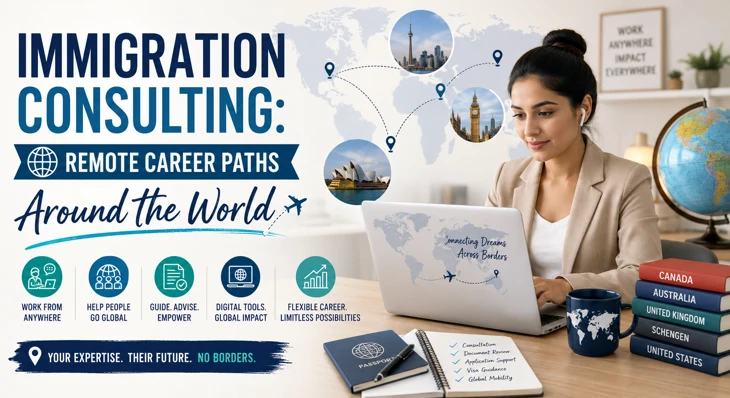
Immigration Consulting: Remote Career Paths Around the World
Introduction
Immigration consulting today doesn’t look anything like it used to a decade ago. What was once a strictly office-based profession has quietly turned into a flexible, borderless career option. Many consultants now work from home offices, co-working spaces, or even while traveling, helping people navigate visas, residency applications, and global relocation processes. If you’ve ever searched for immigration consulting remote jobs or wondered whether this field can actually support a stable remote career, the short answer is yes—and it’s growing faster than most people expect. The interesting part is how naturally this profession fits into the remote work era. Everything from consultations to document reviews now happens online, which means your location matters far less than your expertise and communication skills.How Immigration Consulting Works in a Remote Setup
At its core, immigration consulting is about guiding individuals and organizations through complex international mobility processes. That includes everything from student visas and work permits to permanent residency and citizenship applications. Earlier, consultants had to rely heavily on in-person meetings, printed documents, and physical file handling. That setup is slowly fading away. Now the entire workflow has shifted online:- Clients book consultations through digital platforms
- Discussions happen over video calls instead of office visits
- Documents are shared securely through cloud storage
- Application progress is tracked using online dashboards
Why Remote Immigration Consulting Is Becoming So Popular
There’s a simple reason this career path is expanding so quickly—it follows people’s movement patterns. More students are studying abroad, more professionals are working in international companies, and more families are relocating across countries than ever before. At the same time, people want faster responses, easier access, and flexible communication. Remote consulting naturally fits into that expectation.What’s driving the demand
- A steady rise in international education applications
- Global companies hiring across multiple regions
- Growth of remote and hybrid work cultures
- Faster digitization of visa and immigration systems
Skills That Actually Matter in Remote Immigration Consulting
This isn’t just a paperwork job. It’s a people-first profession that requires clarity, patience, and attention to detail.Understanding immigration systems
You need to be comfortable working with different countries’ visa structures. Canada, Australia, the UK, and parts of Europe all have their own rules, timelines, and eligibility criteria.Explaining things in simple language
Most clients are stressed when they approach a consultant. They’re often dealing with deadlines, the risk of rejection, or major life decisions. Your ability to simplify complex information makes a huge difference.Staying updated
Immigration policies don’t stay still for long. A rule change in one country can affect thousands of applications overnight, so ongoing learning is part of the job.Working comfortably with digital tools
Since this is a remote-first career, you’ll rely on tools like:- Video conferencing platforms for client meetings
- CRM systems to manage ongoing cases
- Cloud storage for sensitive documents
- Secure communication channels for updates
Different Remote Career Paths in Immigration Consulting
One of the biggest advantages of this field is that there isn’t just one way to build a career.Independent consultant route
Some professionals choose to work independently, handling clients directly. This path offers flexibility and the potential to build a strong personal brand over time.Case processing support roles
These roles focus more on structure and accuracy—checking documents, preparing applications, and ensuring everything is complete before submission.Virtual immigration advisor roles
Many agencies now hire remote advisors who handle client consultations, assess eligibility, and guide applicants through each stage of the process.Documentation and content specialists
Some consultants specialize in writing SOPs, preparing application drafts, and creating immigration-related documentation that supports clients and agencies.Corporate relocation support
Large companies often need help moving employees across borders. Remote consultants in this space handle work permits and relocation compliance for global teams.Getting Started in This Career Path
Most people don’t step into immigration consulting overnight—it’s usually built step by step.Build foundational knowledge
Many start with backgrounds in law, international relations, or migration studies. Others take specialized certification programs focused on immigration processes.Gain practical exposure
Real experience matters more than theory here. Internships or assistant roles in consulting firms can help you understand how actual cases are handled.Check licensing requirements
Depending on your country, you may need formal registration or certification to legally offer immigration advice.Strengthen your digital workflow skills
Since most work is remote, being organized with online tools is essential from day one.Start applying or freelancing
Once you’re ready, you can explore immigration consulting remote jobs through agencies, global job platforms, or freelance networks.Tools That Make Remote Work Easier
Behind every smooth remote consultant is a solid digital system. Most professionals rely on a combination of:- Zoom or Microsoft Teams for consultations
- Google Workspace for collaboration and documentation
- CRM platforms for tracking client progress
- Secure storage systems for handling sensitive files
Benefits of Working in Remote Immigration Consulting
This career path offers a mix of flexibility and long-term stability that appeals to many professionals. You get to work from almost anywhere, choose your clients in many cases, and build experience with people from different parts of the world. Over time, this exposure builds both confidence and expertise. There’s also income flexibility. As your skills grow, so does your earning potential—especially if you specialize in high-demand visa categories or corporate cases. And perhaps one of the most underrated benefits is the work-life balance. Without daily commuting or rigid office hours, your schedule becomes more manageable.Real Challenges You Should Expect
Of course, this career isn’t without pressure. Immigration systems change frequently, and staying up to date is not optional. Even small mistakes in documentation can significantly delay or impact an application. Time zones can also make scheduling tricky, especially if you work with clients across multiple continents. But most professionals adapt quickly. With proper systems in place, these challenges become manageable rather than overwhelming.A Simple Real-Life Scenario
Imagine a consultant based in India working with students applying to universities in Canada and Australia. Every interaction happens online—video calls, emails, and document-sharing platforms. The consultant helps students prepare applications, reviews paperwork, and guides them through visa interviews. Even without meeting face-to-face, the entire process runs smoothly because everything is structured digitally. This is exactly how modern immigration consulting works in a remote setup.Where This Career Is Headed
The future of immigration consulting is closely tied to digital transformation. More governments are moving their visa systems online. Companies are increasingly hiring international talent. And clients expect faster, more accessible support. We’re likely to see:- More fully remote consulting firms
- AI tools assisting with document checks
- Growth in freelance immigration advisory work
- More global collaboration between consultants and agencies