15 Freelance Skills You Can Learn to Earn Globally
There’s something quietly powerful happening in the way people work today. A decade ago, most careers were tied to one office, one city, and one employer. Now the situation looks completely different. People are building income streams from their laptops, working with clients they have never met in person, and earning in currencies far beyond their local market.
Freelancing is no longer a backup plan. For many, it has become the main career path. And the interesting part is that you don’t need a fancy degree or years of corporate experience to start. What you actually need is a practical skill that someone, somewhere in the world is willing to pay for.
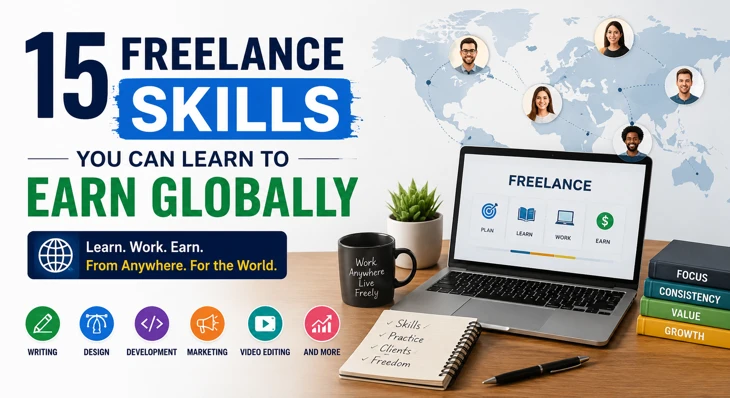
This article breaks down 15 freelance skills that can realistically help you earn globally. Not in a theoretical way, but in a practical, real-world sense—skills that businesses already pay for every single day.
Why Freelancing Has Quietly Become a Global Opportunity
If you look closely, companies today don’t really care where you live. They care about results. A startup in London might hire a designer from India, while a business in the US might rely on a writer from Asia to handle their blogs. This shift didn’t happen overnight—it grew from the need for speed, flexibility, and specialized talent.
For individuals, this change has opened a very different kind of career path:
- You’re no longer limited by geography
- You can work with multiple clients instead of one employer
- Your income is tied to skill, not location
- You can start small and scale over time
In simple terms, if you can deliver value online, you already have access to a global marketplace.
Writing That Actually Connects With Readers
Let’s start with one of the most underrated but powerful skills: writing.
Businesses need words everywhere—on websites, landing pages, emails, ads, and social media. But not just any words. They need writing that feels natural, clear, and persuasive without sounding forced.
Many freelancers begin by writing simple blog posts. Over time, they move into copywriting, where the goal is not just to inform but to influence action. The shift might sound small, but it’s where income usually increases.
If you enjoy explaining ideas or putting thoughts into structured form, this is often the easiest entry point into freelancing.
Design Work That Shapes First Impressions
Every brand today is judged visually within seconds. A logo, a social media post, or even a banner ad can decide whether someone trusts a business or scrolls past it.
That’s where design comes in.
Freelance designers work on everything from brand identity to digital creatives. And while tools have become easier to use, the real difference comes from taste and consistency. Two people can use the same tool, but only one creates something that feels right.
You don’t need to be an artist. You just need to understand what looks clean, readable, and visually balanced.
Websites: The Foundation of Online Business
Almost every serious business eventually needs a website. Social media is important, but a website is still the central place where everything comes together.
This is why web development remains one of the strongest freelance skills.
At first, it may feel technical, but it usually starts with simple building blocks—structure, layout, and functionality. As you grow, you can move into more advanced systems, custom features, and larger projects that pay significantly more.
The demand here is not slowing down anytime soon.
Making Businesses Easier to Find Online
A business without visibility online is almost invisible today.
This is where search optimization becomes important. It’s about helping websites appear when people search for something on Google.
It involves understanding what people are looking for, how content is structured, and what makes a page more useful than another.
It’s not the fastest skill to learn, but it has one of the longest lifespans in freelancing because every business wants visibility.
Most businesses are active on social media, but not all of them know what they’re doing.
That gap creates an opportunity for freelancers.
Social media management isn’t just about posting content. It’s about understanding timing, audience behavior, tone, and consistency. Sometimes it’s planning a month of content in advance; other times it’s responding quickly to trends.
It suits people who are observant and enjoy staying up to date with online culture.
Video Editing: Turning Raw Clips Into Stories
Scroll through any platform today, and you’ll notice one thing—video dominates everything.
But raw footage alone doesn’t hold attention. It needs structure, pacing, and editing that keep people watching.
That’s where freelance video editors come in. They work behind the scenes to turn simple recordings into content that feels smooth, engaging, and intentional.
From YouTube videos to short-form reels, this skill has become one of the fastest-growing areas in freelancing.
Designing How People Experience Products
UI and UX design focus on something most users never consciously notice—but always feel.
How easy is an app to use? Does a website feel confusing or smooth? Do users get stuck or move naturally from one step to another?
Freelancers in this space work on improving those experiences. It’s a mix of design thinking and user psychology, and it plays a huge role in modern product success.
Digital marketing is often misunderstood as just running ads or posting content.
In reality, it’s a combination of strategy, timing, communication, and analysis.
Freelancers in this field help businesses understand their audience, create campaigns, and measure what actually works. It’s a skill where thinking matters as much as execution.
Helping Businesses Stay Organized Remotely
Not every freelance role is highly technical.
Virtual assistance is a good example of this. It involves supporting businesses with day-to-day tasks such as email, scheduling, research, and coordination.
It may sound simple, but reliability is everything here. Many freelancers start here and later move into more specialized roles once they better understand business operations.
Building Apps and Software People Use Daily
Behind every app you use, there is a developer solving real problems.
Freelance development work ranges from simple websites to full mobile applications. It requires patience and practice, but it also opens doors to some of the highest-paying projects in the freelance world.
The more you build, the more opportunities naturally follow.
Working With Data in a Meaningful Way
Every business today collects data, but not every business knows what to do with it.
Freelancers who can organize and interpret data help companies make better decisions.
Even basic spreadsheet skills can be enough to start. Over time, this can grow into more advanced analytical work depending on interest and experience.
Writing Emails That Actually Get Read
Email is still one of the most effective communication tools in business.
But most emails go unread.
Freelancers in email marketing focus on improving that. They help businesses write better messages, set up automated sequences, and create communication that feels personal rather than robotic.
Language Skills That Connect Markets
If you speak more than one language, you already have a valuable freelance skill.
Translation work helps businesses reach audiences in different regions without losing meaning or tone.
Good translation is not just about words—it’s about context, culture, and clarity.
Earning Through Recommendations and Content
Some freelancers build income by recommending products or services through content. When done properly, it becomes a long-term income stream built on trust rather than hard selling.
It requires patience, but it can grow steadily over time.
Teaching Skills to a Global Audience
Online learning has changed how people gain new skills.
Freelancers who can teach—whether academic subjects or professional skills—now have access to students worldwide.
It works best for people who enjoy breaking down complex ideas into simple explanations.
Final Thoughts
Freelancing isn’t about chasing quick success. It’s about building something steady over time.
The skills you choose matter, but consistency matters even more.
Start with something manageable, practice regularly, and improve step by step. Over time, what begins as a small side effort can turn into a full global career.
The opportunity is already there—the real question is which skill you’re willing to start with today.