📚 Table of Contents
- The Rise of On-Demand Jobs
- From Employees to Independent Contractors
- The Pull of Remote Work Opportunities
- Job Security Challenges in the Gig Economy
- Why Side Hustles Are Everywhere
- The Beauty (and Stress) of Flexible Schedules
- Local Workforce Trends in the Gig Economy
- Economic Disruption at Every Level
- How Labor Market Shifts Hit Families
- The Fragile Nature of Employment Stability
- Community-Based Gig Work: The Silver Lining
- The Boom of Gig Self-Employment Growth
- Alternative Work Models in the Gig Economy
- The Future: What Does It All Mean?
- Final Thoughts
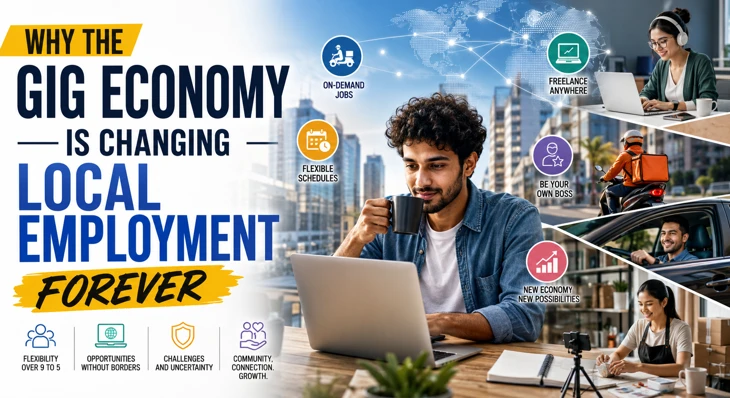
Why the Gig Economy Is Changing Local Employment Forever
The world of work is not what it used to be. If you think back even ten or fifteen years, a “normal job” meant you worked full-time, probably in an office or factory, and you expected to stay there for years. That’s not the story anymore. The rise of the gig economy has completely upended local employment. Let’s break down why—and how—it’s changing things forever.The Rise of On-Demand Jobs
Have you ever booked a cab through your phone? Or ordered food from a delivery app? Then you’ve already seen on-demand jobs in action. These are short-term tasks where someone jumps in, does the work, and moves on. The platforms make it easy—you tap a button, and someone’s there. Behind the scenes, thousands of people earn a living by fulfilling these needs. What’s interesting is that these jobs aren’t just about driving or deliveries. From tutoring kids online to fixing appliances, digital marketplaces are connecting people with almost any service you can think of. And that’s reshaping how we see work itself.From Employees to Independent Contractors
Remember when your parents said, “Get a stable job with benefits”? Well, stability isn’t the only thing young workers look for now. Many choose freedom over security. Instead of being employees, they sign up as independent contractors. That means they’re technically running their own mini-businesses. They decide when to work, how much to work, and sometimes even what they’ll charge. At first, it feels exciting. But it’s not all sunshine. Independent contractors typically don’t receive health insurance or paid leave. That trade-off—freedom versus benefits—is at the heart of today’s workforce transformation.The Pull of Remote Work Opportunities
Honestly, who doesn’t love the idea of working in pajamas, sipping coffee at home, or even while traveling? Remote opportunities have exploded thanks to technology. You could be sitting in a small town, but designing logos for clients across the globe. This shift is massive. Before, local employment meant physical jobs in your city. Now, your competition and your clients might be sitting halfway across the world. That opens doors, but it also adds pressure. After all, if someone can do the same task more cheaply abroad, what happens to your job security?Job Security Challenges in the Gig Economy
The reality is simple—job stability isn’t what it once was. The gig economy doesn’t guarantee tomorrow’s paycheck. You may earn a lot one week and very little the next. Such instability makes many people nervous. Job security is one of the biggest daily worries for gig workers. Think of a student doing delivery runs during exams. One week, they might make enough to cover rent. The following week, fewer orders roll in, and suddenly, stress levels shoot up. That unpredictability is a big reason why older generations still hesitate to trust gig work. According to a 2024 Statista report, nearly 36% of U.S. workers earn some income from gig work. That’s more than one in three people navigating this kind of uncertainty every year.Why Side Hustles Are Everywhere
Have you noticed how almost everyone seems to have a “side hustle” these days? Perhaps it’s tutoring, selling handmade crafts online, or working part-time as a driver. The truth is, side hustles are no longer just for extra pocket money. They’re survival strategies and passion projects rolled into one.- Parents use side hustles to cover family expenses.
- Students pick them up for rent and tuition.
- Professionals test dream ideas without quitting jobs.
The Beauty (and Stress) of Flexible Schedules
One of the biggest draws of gig work? Flexible schedules. You can work late nights, early mornings, or squeeze in shifts between classes. It’s work that bends around your life, instead of the other way around. But here’s the flip side—when you’re free to say yes anytime, it’s also harder to say no. Many gig workers burn out trying to grab every opportunity. It’s a bit like exam prep—you think, “One more chapter, one more test paper,” until you’re exhausted.- Great for balancing studies, parenting, or other jobs.
- Easy to adjust shifts around personal life.
- Risk of overworking and burning out.
Local Workforce Trends in the Gig Economy
Walk into any café in your city. Chances are, someone there is freelancing, managing deliveries, or working online. Local workforce trends indicate that an increasing number of people are no longer tied to a single employer. A patchwork of gigs is replacing the old nine-to-five. This shift isn’t a short-term blip—it’s a lasting change. Cities are adjusting, too. Co-working spaces are popping up, job centers are offering training related to gigs, and even small communities are exploring ways to support these workers.Economic Disruption at Every Level
To put it bluntly, the gig economy is a kind of economic disruption. It shakes up industries, challenges labor laws, and changes how businesses operate. Taxi unions, for instance, struggled to compete with app-based cab companies. Hotels are competing with homeowners renting out spare rooms online. These disruptions aren’t only about businesses; they also ripple through communities. A sudden shift in the labor market can result in fewer permanent roles and increased uncertainty for workers. And when people worry about their jobs, local economies feel the stress.- Ride-hailing apps are replacing taxis.
- Hotels challenged by short-term rentals.
- Online marketplaces disrupt retail.
How Labor Market Shifts Hit Families
When industries shift, families often feel the impact first. Imagine a dad who worked as a driver for a company for years. Suddenly, ride-hailing apps dominate, and his steady paycheck vanishes. He has to adapt quickly, learning new platforms or even changing careers. Kids notice the stress too. Some parents take on extra side hustles to keep up with their bills. That shift in family dynamics—parents working odd hours, kids seeing less of them—shapes entire communities.The Fragile Nature of Employment Stability
The reality is simple—job stability isn’t what it once was. Your grandparents might’ve worked at the same company for decades. Now, staying in one place for even five years seems rare. The gig economy accelerates this shift. Instead of stability, it offers variety and freedom—but at a cost. It’s like hostel life—one month you’re flush with cash for late-night pizza, the next you’re scrambling to borrow from friends. That rollercoaster mirrors the ups and downs of gig income.Community-Based Gig Work: The Silver Lining
Not everything about gig work is stressful. Community-based gig work is on the rise. Local apps and networks often connect neighbors directly—like someone helping with gardening, babysitting, or tutoring. These gigs keep money circulating in the community, rather than flowing to big corporations. That creates a sense of trust and connection. A parent might feel safer hiring a local teen for babysitting than calling a stranger from far away. In smaller towns, these community ties are even more substantial, and gig work strengthens them.The Boom of Gig Self-Employment Growth
If you’ve ever dreamed of “being your own boss,” now’s your time. The gig economy fuels self-employment growth in ways we’ve never seen before. From artists selling online to fitness trainers running virtual classes, people are building businesses out of personal skills. One of my friends started editing videos online during college. Initially, it was just an additional source of income. Now, it’s a full-blown career. That’s the power of self-employment—you test the waters, and sometimes, it turns into an ocean of opportunity.Alternative Work Models in the Gig Economy
We’re not just talking freelancing or delivery apps anymore. Alternative work models—such as project-based work, online micro-jobs, and hybrid roles—are proliferating. Companies are also adapting. Many now prefer hiring a specialist for one project instead of committing to a full-time salary. For workers, this means choice. You can be a teacher in the morning, a driver in the afternoon, and a content creator at night. It’s juggling, yes, but it also means you’re never entirely dependent on one stream of income.The Future: What Does It All Mean?
So, where do we go from here? The gig economy isn’t a passing phase—it’s a permanent shift. It certainly brings challenges: reduced security, increased competition, and constant adaptation. But it also brings freedom, creativity, and opportunities our parents never had. The key is balance. As gig work grows, we’ll need:- Better worker protections.
- More innovative tools for income management.
- Stronger community support.