📚 Table of Contents
- How Waste Management Slowly Shifted Into Remote Work
- Remote Roles Growing in Recycling and Waste Systems
- Waste Data Analyst Roles
- Sustainability Consultants Working Online
- Smart Waste System Coordinators
- Compliance and Environmental Reporting Specialists
- Remote Recycling Program Managers
- Technology That Makes Remote Waste Careers Possible
- Smart Sensors and IoT Systems
- AI and Predictive Tools
- Cloud Platforms
- GIS Mapping Tools
- Skills That Matter in This Field Today
- Technical Skills
- Soft Skills That Matter
- Industry Awareness
- Why This Career Path Is Becoming Attractive
- Flexible Work Style
- Global Opportunities
- Meaningful Impact
- Growing Demand
- Real Example of Remote Waste Optimization
- Challenges in Remote Waste Management Careers
- Dependence on Accurate Data
- Technology Failures
- Learning Curve
- Coordination Gaps
- What the Future Looks Like
- More Automation
- Smarter Recycling Systems
- Expansion of Remote Teams
- Integration With Smart Cities
- How to Enter This Career Path
- FAQs
- Is remote work really possible in waste management?
- What kind of background is useful for this field?
- Is this a stable career option for the future?
- Do I need advanced technical knowledge?
- Which companies hire in this space?
- Conclusion
The Future of Remote Recycling and Waste Management Careers
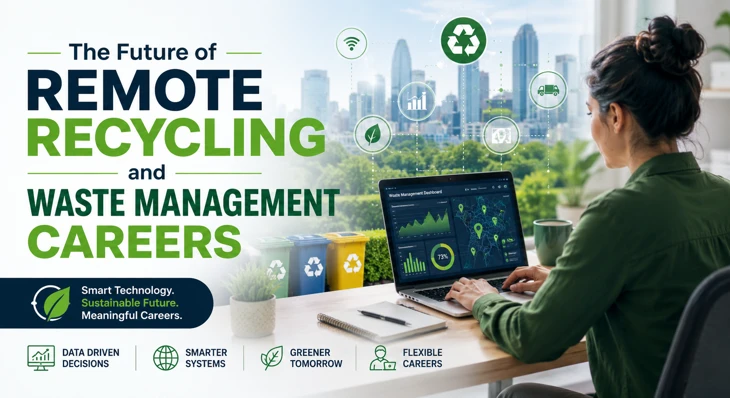
The way we think about waste is changing quietly but powerfully. What used to be a completely physical, field-based industry is now slowly becoming a digital-first, data-driven ecosystem. And interestingly, many of these roles no longer require you to be present at a landfill, recycling plant, or collection site every day. Instead, professionals are working from laptops, dashboards, and cloud systems—tracking, analyzing, and improving how waste moves through entire cities. Remote recycling and waste management careers are no longer a future idea. They are already here, growing step by step as technology reshapes environmental systems. From smart bins that send real-time updates to AI tools that predict waste patterns, the industry is opening doors for professionals who want meaningful work with flexible setups.How Waste Management Slowly Shifted Into Remote Work
Not long ago, waste management meant boots on the ground. Supervisors visited sites, teams manually managed trucks, and reports were often written after long field visits. Things are different now. With the rise of connected devices and digital platforms, information flows instantly. Sensors placed in bins can now signal when they are full. Vehicles can be tracked live. Recycling plants generate digital data that can be reviewed remotely. This shift didn’t happen overnight. It came from a combination of pressure and progress:- Cities needing cleaner and more efficient systems
- Companies looking to reduce fuel and operational costs
- Governments pushing for greener compliance
- Technology is making real-time monitoring possible
Remote Roles Growing in Recycling and Waste Systems
The industry is no longer limited to physical collection work. A new layer of digital roles is expanding underneath it.Waste Data Analyst Roles
Waste data analysts work more with screens than with trucks. They study numbers coming from recycling centers, smart bins, and logistics systems. Their work often includes:- Studying how much waste is generated in different areas
- Finding patterns in recycling performance
- Preparing reports that help improve city planning
- Identifying inefficiencies in waste collection routes
Sustainability Consultants Working Online
Sustainability consulting has also moved into virtual spaces. Many consultants now connect with companies through video calls, audits, and digital reporting tools. They typically help organizations:- Reduce unnecessary waste
- Improve recycling processes
- Build long-term environmental strategies
- Train teams on eco-friendly practices remotely
Smart Waste System Coordinators
As cities adopt smart bins and sensor-based systems, someone needs to manage all that data. That’s where remote coordinators come in. They monitor dashboards, check system alerts, and ensure everything runs smoothly. If a sensor stops responding or a route becomes inefficient, they adjust things from a central system rather than visiting the site physically.Compliance and Environmental Reporting Specialists
Regulations around waste and recycling are becoming stricter. Companies must prove they are handling waste responsibly. These specialists work remotely to:- Review environmental data
- Prepare compliance reports
- Track regulatory updates
- Support audits with accurate documentation
Remote Recycling Program Managers
These professionals oversee comprehensive waste-reduction programs across multiple locations. Instead of being tied to one city or plant, they manage everything through digital systems. They focus on:- Tracking program performance
- Coordinating teams across regions
- Setting sustainability targets
- Reviewing progress reports regularly
Technology That Makes Remote Waste Careers Possible
Without modern technology, remote roles in this field would not exist. The entire shift depends on digital infrastructure.Smart Sensors and IoT Systems
Sensors placed in waste containers send real-time updates. This helps teams understand exactly when and where waste collection is needed, removing guesswork from the process.AI and Predictive Tools
Artificial intelligence is increasingly being used to improve efficiency. It helps predict waste patterns, optimize recycling processes, and even improve sorting accuracy in facilities.Cloud Platforms
Cloud systems allow data to be shared instantly. Teams working from different locations can access the same information without delay.GIS Mapping Tools
Geographic systems help visualize waste collection routes and identify problem areas. This makes planning more precise and less time-consuming.Skills That Matter in This Field Today
To succeed in remote recycling and waste management careers, professionals need a mix of environmental understanding and digital capability.Technical Skills
- Working with data and basic analytics tools
- Understanding how smart systems collect information
- Using reporting dashboards
- Familiarity with mapping or visualization tools
Soft Skills That Matter
- Clear communication in remote environments
- Ability to analyze problems calmly
- Organizing tasks and managing time well
- Working with teams across digital platforms
Industry Awareness
Knowing how waste flows from collection to recycling is still important. Technology supports the process, but understanding the system itself gives professionals an advantage.Why This Career Path Is Becoming Attractive
There is a reason more people are exploring this field. It combines purpose with flexibility.Flexible Work Style
Many roles allow professionals to work remotely or in hybrid setups. This makes it easier to balance personal and professional life.Global Opportunities
Since waste and sustainability are global concerns, professionals can work with companies in different countries without relocating.Meaningful Impact
Unlike many remote roles, this field connects directly to environmental improvement. Every decision can influence cleaner cities and better resource use.Growing Demand
As sustainability becomes a priority, the demand for skilled professionals continues to increase steadily.Real Example of Remote Waste Optimization
In one urban project, a city installed smart bins across busy neighborhoods. Instead of collecting waste on fixed schedules, the system started sending real-time alerts when bins were nearly full. Remote analysts monitored the data and adjusted truck routes daily. Over time, the city reduced unnecessary trips, saved fuel, and improved overall recycling efficiency. The interesting part is that most of this improvement came from people working behind screens rather than on the streets.Challenges in Remote Waste Management Careers
Even though the field is growing, it is not without difficulties.Dependence on Accurate Data
If the data coming from sensors or systems is incorrect, decisions can go wrong quickly.Technology Failures
System outages or software issues can temporarily disrupt operations.Learning Curve
Professionals moving from traditional roles may need time to adjust to digital tools and analytics.Coordination Gaps
When field teams and remote teams are not aligned, communication delays can happen.What the Future Looks Like
This industry is still evolving, and the next few years will bring even more changes.More Automation
Many repetitive tasks will be handled automatically by systems.Smarter Recycling Systems
AI will continue improving how materials are sorted and processed.Expansion of Remote Teams
Companies will rely more on distributed teams instead of centralized offices.Integration With Smart Cities
Waste systems will become part of larger citywide networks, fully connected and digitally monitored.How to Enter This Career Path
Starting in this field is more accessible than many people expect.- Learn basic environmental science or sustainability concepts
- Build familiarity with data tools and reporting systems
- Explore online courses related to waste management or green technologies
- Gain entry-level experience through internships or remote projects
- Focus on building both technical and analytical thinking skills