📚 Table of Contents
- Why Remote Work Is Expanding in the Nonprofit Sector
- Benefits of Remote Careers in Nonprofit and NGO Sectors
- Meaningful and Purpose-Driven Work
- Flexible Work Environment
- Access to International Opportunities
- Broader Skill Development
- Popular Remote Nonprofit Jobs and NGO Careers
- Remote Grant Writer
- Virtual Fundraising Manager
- Remote Social Media Specialist
- Program Coordinator
- NGO Content Writer
- Research and Policy Analyst
- Essential Skills for Remote NGO Careers
- Communication Skills
- Time Management and Self-Discipline
- Familiarity With Digital Tools
- Adaptability
- Emotional Intelligence
- How to Find Remote Nonprofit Jobs
- Use Nonprofit Job Platforms
- Create a Mission-Focused Resume
- Build a Strong LinkedIn Presence
- Attend Online Events and Webinars
- Common Challenges of Remote Nonprofit Work
- Budget Limitations
- Emotional Stress
- Working Across Time Zones
- Multiple Responsibilities
- Real-Life Example of a Remote NGO Career
- Best Nonprofit Industries for Remote Careers
- Education and Online Learning
- Environmental and Climate Organizations
- Healthcare and Mental Health NGOs
- Human Rights and Advocacy Organizations
- International Development NGOs
- Tips to Build a Successful Remote Nonprofit Career
- Stay Organized Daily
- Continue Learning New Skills
- Understand the Organization’s Mission
- Build Professional Relationships
- The Future of Remote Careers in Nonprofit and NGO Sectors
- FAQs About Remote Careers in Nonprofit and NGO Sectors
- Are remote nonprofit jobs legitimate?
- Do remote NGO careers offer good salaries?
- Can beginners apply for remote nonprofit jobs?
- What qualifications are required for remote NGO jobs?
- Where can I find remote nonprofit jobs?
- Conclusion
Remote Careers in Nonprofit and NGO Sectors
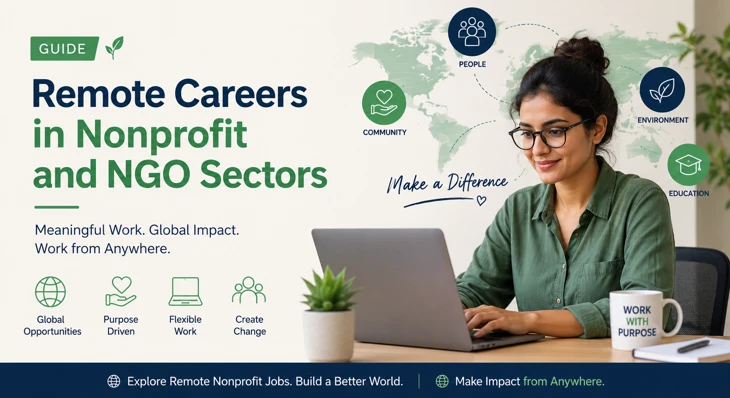
More professionals today are searching for careers that offer both flexibility and a sense of purpose. That shift has pushed many people toward remote careers in nonprofit and NGO sectors, where meaningful work can now be done from almost anywhere. A few years ago, most nonprofit organizations depended heavily on physical offices and in-person collaboration. Today, things look very different. NGOs, charities, advocacy groups, and humanitarian organizations have adopted remote work models to connect with talent worldwide. This change has opened new doors for professionals who want to contribute to social causes while enjoying the freedom of working remotely. From digital fundraising to grant writing and program coordination, remote nonprofit jobs are becoming more common across nearly every area of the sector. For job seekers who care about education, climate action, healthcare, community development, or human rights, the nonprofit world now offers career paths that combine impact with flexibility.Why Remote Work Is Expanding in the Nonprofit Sector
Nonprofits and NGOs have realized that remote teams can help them operate more efficiently. Instead of limiting hiring to a single city or country, organizations can now recruit skilled professionals from multiple regions. This global hiring model helps nonprofits reduce office expenses while bringing in diverse perspectives and specialized skills. A nonprofit based in Canada might hire a social media manager from India, a researcher from Kenya, and a grant writer from the United States. Remote collaboration tools make these international teams possible. The growth of digital communication has also changed the way nonprofit programs are delivered. Online education, virtual fundraising events, digital campaigns, and remote volunteer management are now standard practices for many organizations. As a result, remote NGO jobs are available in areas such as:- Digital communications
- Fundraising
- Grant writing
- Content creation
- Program management
- Research and policy analysis
- Volunteer coordination
- Graphic design
- Marketing and outreach
- Virtual event planning
Benefits of Remote Careers in Nonprofit and NGO Sectors
Remote nonprofit work appeals to professionals for many different reasons.Meaningful and Purpose-Driven Work
One major reason people choose nonprofit careers is the opportunity to support causes that matter to them personally. Instead of focusing only on sales or revenue targets, nonprofit organizations work toward social impact. Employees often feel more connected to their work because they can see how their efforts help communities, improve lives, or support important global issues. Someone working remotely for an environmental NGO, for example, may help launch awareness campaigns that encourage sustainable living. A fundraising specialist at a healthcare nonprofit could help secure donations for life-saving medical programs. That sense of purpose often leads to greater job satisfaction.Flexible Work Environment
Remote work gives professionals greater control over their daily schedules. Without long commutes or rigid office routines, employees can structure their workdays more effectively. Many people find they are more productive and less stressed when working from home. This flexibility is especially valuable for parents, freelancers, caregivers, and professionals living in smaller cities where nonprofit opportunities may be limited.Access to International Opportunities
One of the biggest advantages of remote NGO careers is access to global organizations. A professional in Bhopal can now work with nonprofits based in London, New York, Singapore, or Dubai without relocating. This has made international work experience far more accessible, especially for skilled professionals in developing countries.Broader Skill Development
Nonprofit organizations often encourage employees to contribute in multiple areas. A communications assistant may develop expertise in donor engagement, campaign planning, and digital storytelling over time. This kind of hands-on experience helps professionals develop versatile skill sets that strengthen long-term career growth.Popular Remote Nonprofit Jobs and NGO Careers
There are many career options available for people interested in remote nonprofit work.Remote Grant Writer
Grant writers help nonprofits secure funding from donors, foundations, and government programs. This role involves researching funding opportunities, writing proposals, and preparing detailed applications. Strong writing ability and attention to detail are essential because successful grant applications directly affect an organization’s ability to run programs. Experienced grant writers are highly valued in the nonprofit sector.Virtual Fundraising Manager
Fundraising professionals play a major role in helping nonprofits sustain their operations. Remote fundraising jobs may involve:- Managing donor relationships
- Running crowdfunding campaigns
- Organizing virtual fundraising events
- Creating email campaigns
- Tracking donation performance
Remote Social Media Specialist
Social media is one of the most powerful tools nonprofits use to raise awareness. Social media managers create content, manage campaigns, monitor engagement, and communicate with supporters across different platforms. For example, an animal rescue nonprofit may use Instagram campaigns to encourage adoptions and increase donations. This role blends creativity with digital marketing strategy.Program Coordinator
Program coordinators help manage nonprofit projects and daily operations. Remote program management responsibilities may include:- Scheduling meetings
- Monitoring project timelines
- Coordinating volunteers
- Preparing reports
- Supporting team communication
NGO Content Writer
Content writers support nonprofit communication efforts through blogs, newsletters, website copy, impact stories, and campaign materials. Many nonprofits rely on storytelling to connect emotionally with supporters. A well-written donor story or campaign article can encourage more engagement and improve fundraising results. This role is ideal for professionals who enjoy writing while contributing to meaningful causes.Research and Policy Analyst
Research professionals help nonprofits understand social challenges and evaluate public policies. These roles may involve:- Data analysis
- Survey research
- Policy reviews
- Community impact assessments
- Report preparation
Essential Skills for Remote NGO Careers
Success in remote nonprofit jobs requires a combination of technical and interpersonal skills.Communication Skills
Remote employees communicate through video calls, emails, project management platforms, and messaging tools. Clear communication helps teams stay aligned and prevents confusion, especially when working across different countries and time zones.Time Management and Self-Discipline
Working remotely requires strong personal organization. Professionals must manage deadlines, prioritize tasks, and stay productive without constant supervision. Reliable time management is one of the most valuable skills in remote nonprofit careers.Familiarity With Digital Tools
Most nonprofit organizations use collaboration platforms such as:- Slack
- Zoom
- Google Workspace
- Asana
- Trello
- Microsoft Teams
Adaptability
Nonprofits often work with limited resources and changing priorities. Employees who can adapt quickly and solve problems efficiently are highly valued.Emotional Intelligence
Many NGO professionals work closely with communities facing social or economic challenges. Empathy, patience, and cultural awareness are important qualities in nonprofit environments.How to Find Remote Nonprofit Jobs
Finding remote NGO opportunities takes patience and strategy.Use Nonprofit Job Platforms
Several websites focus specifically on nonprofit and NGO hiring. Popular platforms include:- Idealist
- ReliefWeb
- Devex
- CharityJob
- Work for Good
Create a Mission-Focused Resume
Nonprofit employers often look for candidates who genuinely care about the organization’s mission. Your resume should highlight:- Volunteer experience
- Social impact projects
- Communication skills
- Remote work experience
- Community involvement
Build a Strong LinkedIn Presence
LinkedIn has become an important networking platform for nonprofit professionals. Sharing insights related to sustainability, healthcare, education, or social impact can help attract recruiters and nonprofit leaders. Professionals who actively engage in relevant discussions often discover new opportunities through networking.Attend Online Events and Webinars
Many nonprofit organizations host virtual conferences and networking events. Attending these sessions can help you build relationships, learn about industry trends, and connect with potential employers.Common Challenges of Remote Nonprofit Work
Although remote nonprofit careers offer many benefits, they also come with challenges.Budget Limitations
Some nonprofits operate with smaller budgets compared to large corporations. While salaries can vary, many professionals still choose nonprofit work for its mission-driven environment and long-term career satisfaction.Emotional Stress
Working on issues such as poverty, disaster relief, healthcare, or human rights can sometimes feel emotionally heavy. Maintaining work-life boundaries and prioritizing mental wellness is important for long-term sustainability.Working Across Time Zones
International NGOs often have team members in multiple countries. Employees may occasionally attend meetings outside regular working hours to coordinate with global teams.Multiple Responsibilities
Smaller nonprofits may require employees to manage several tasks at once. A communications professional, for example, may handle social media, email campaigns, and content writing simultaneously. Strong organization helps prevent burnout.Real-Life Example of a Remote NGO Career
Many successful nonprofit careers begin with volunteering. Consider a writer who started contributing blog articles for a small environmental nonprofit on weekends. Initially, the work involved creating educational content about sustainability. Over time, the writer gained experience in donor communication, campaign storytelling, and social media outreach. Eventually, the nonprofit offered a full-time remote communications position. This type of career progression is common because nonprofits often value dedication, initiative, and practical contribution. For many professionals, remote nonprofit work becomes more than just employment. It becomes work that aligns closely with personal values and long-term goals.Best Nonprofit Industries for Remote Careers
Certain nonprofit sectors are especially suitable for remote work.Education and Online Learning
Educational nonprofits frequently hire remote professionals for:- Curriculum writing
- Virtual tutoring
- Learning support
- Online program coordination