📚 Table of Contents
- The Rise of Remote Work and Distributed Teams
- Why Employees Are Leaving Large Cities
- How Remote Work Benefits Small Cities
- Increased Local Spending
- Growth in Real Estate and Housing Markets
- Stronger Local Entrepreneurship
- Affordable Living Is Becoming a Competitive Advantage
- Lower Cost of Living Creates Financial Freedom
- Families Benefit From More Space and Better Balance
- Small Cities Are Investing in Digital Infrastructure
- Expansion of Broadband Internet
- Coworking Spaces Are Revitalizing Downtown Areas
- Remote Work Is Expanding Career Opportunities
- Access to Global Job Markets
- Companies Gain Access to Wider Talent Pools
- Real-Life Examples of Small City Growth
- Tech Professionals Moving to Smaller Communities
- Rural Tourism and Local Business Growth
- Challenges Small Cities Still Need to Address
- Infrastructure Pressure
- Digital Divide Issues
- Maintaining Community Identity
- Why the Future of Work Favors Smaller Cities
- A More Balanced Economic Landscape
- The Human Side of Remote Work Migration
- FAQs
- Is remote work helping small cities grow?
- Why are remote workers moving to smaller cities?
- How does remote work benefit local businesses?
- What challenges do small cities face with remote work growth?
- Can small cities compete with large urban centers?
- Will remote work continue growing in the future?
- Conclusion
How Remote Work Is Leveling the Playing Field for Small Cities
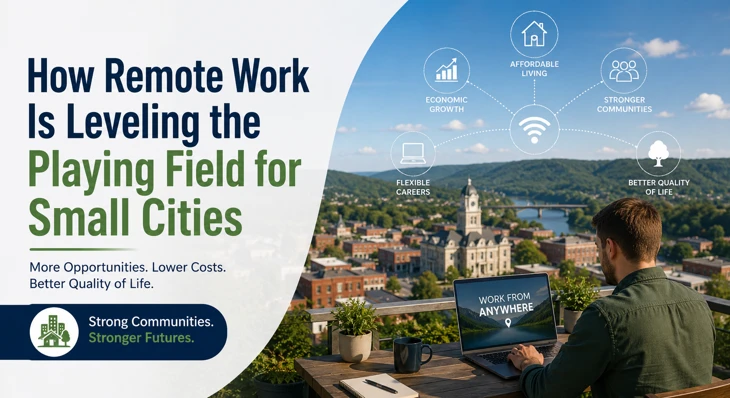
Remote work has changed more than where people open their laptops each morning. It has reshaped how professionals think about careers, lifestyle, affordability, and opportunity. For decades, major cities dominated the job market because they offered access to large employers, stronger networking opportunities, and better salaries. Small cities often struggled to compete. That gap is starting to close. Today, remote work is giving small cities a chance to grow in ways that once seemed impossible. Skilled professionals no longer need to move to crowded metropolitan areas to build successful careers. Businesses can hire talent from anywhere, and workers can choose places with lower living costs, a better quality of life, and stronger community connections. As a result, many small cities are experiencing economic growth, population increases, and renewed local development. From rising entrepreneurship to increased spending at local businesses, remote work is helping smaller communities compete on a much larger scale. This shift is not just temporary. It is transforming how people live and work across the world.The Rise of Remote Work and Distributed Teams
The remote work movement existed long before the pandemic, but it accelerated rapidly over the past few years. Advances in cloud technology, video conferencing, collaboration tools, and high-speed internet have made it easier for businesses to operate without requiring employees to sit in a central office. Companies discovered that productivity could remain strong even when teams worked from different locations. Employees realized they could maintain their careers without living near expensive corporate hubs. This led to a major workplace shift. Today, many companies actively support hybrid or fully remote work models. Businesses are expanding hiring beyond major cities and tapping into talent pools in smaller regions. This trend is creating new economic opportunities for places that previously had limited access to high-paying industries.Why Employees Are Leaving Large Cities
Living in a major city has advantages, but it also comes with challenges that many workers are no longer willing to accept. Some of the biggest reasons professionals are moving to smaller cities include:- High housing costs in metropolitan areas
- Long commute times and traffic congestion
- Rising living expenses
- Increased stress and burnout
- Desire for more space and flexibility
- Better work-life balance opportunities
How Remote Work Benefits Small Cities
Small cities are no longer limited by geography in the same way they once were. Remote work is helping them attract skilled workers, entrepreneurs, and young families who bring income and economic activity into local communities.Increased Local Spending
When remote workers move into smaller cities, they spend money locally. They rent or buy homes, shop at nearby stores, eat at local restaurants, and use local services. This spending supports small businesses and creates stronger local economies. Instead of income being concentrated in major metropolitan centers, remote work distributes purchasing power across multiple regions. A single remote employee earning a metropolitan salary can have a significant economic impact in a smaller city where living costs are lower.Growth in Real Estate and Housing Markets
Many small cities are seeing increased housing demand as remote workers relocate. People who struggled to afford homes in expensive cities are finding they can purchase larger properties or improve their quality of life in smaller communities. This demand often leads to:- New housing developments
- Increased property values
- Infrastructure improvements
- Growth in local construction industries
- Revitalization of neglected neighborhoods
Stronger Local Entrepreneurship
Remote work also encourages entrepreneurship. Professionals moving to smaller cities often bring experience, networks, and new business ideas. Some eventually launch startups, consulting firms, digital agencies, or creative businesses. This creates additional employment opportunities within the local economy. Coworking spaces, coffee shops, and community business hubs are becoming more common in smaller cities as demand grows among freelancers and remote professionals.Affordable Living Is Becoming a Competitive Advantage
One of the biggest reasons small cities are benefiting from remote work is affordability. Large cities continue to struggle with rising housing prices, transportation costs, and general living expenses. Smaller cities can offer many of the same lifestyle benefits at a fraction of the cost. For remote workers, this creates a major financial advantage. Instead of spending most of their income on rent, professionals can save money, invest, travel more, or improve their standard of living.Lower Cost of Living Creates Financial Freedom
Consider two employees earning similar salaries. One lives in a large metropolitan city with extremely high rent and daily expenses. The other lives in a smaller city where housing and transportation costs are significantly lower. Even with the same income, the second employee may enjoy:- More disposable income
- Better housing options
- Reduced financial stress
- Improved savings potential
- Greater long-term stability
Families Benefit From More Space and Better Balance
Many remote workers are parents or planning families. Smaller cities often offer larger homes, safer neighborhoods, shorter commutes, and access to parks and community activities. Parents appreciate having more flexibility and lower costs while maintaining career opportunities. Instead of spending hours commuting, remote workers can spend more time with family, hobbies, or personal development. That improved quality of life matters.Small Cities Are Investing in Digital Infrastructure
To attract remote workers and businesses, many smaller cities are improving their infrastructure. Reliable internet access has become essential for economic growth. Communities that invest in connectivity are better positioned to compete in the remote work economy.Expansion of Broadband Internet
Fast and stable internet is now just as important as roads and transportation systems. Many governments and local authorities are investing in:- Fiber internet expansion
- Public Wi-Fi initiatives
- Smart city technology
- Digital business support programs
- Remote work incentive programs
Coworking Spaces Are Revitalizing Downtown Areas
Remote workers do not always want to work from home every day. As a result, coworking spaces are becoming popular in smaller cities. These shared work environments provide networking opportunities, professional amenities, and flexible office setups. In many cases, coworking spaces are helping revitalize underused downtown buildings. Empty commercial spaces are being transformed into collaborative work hubs that support entrepreneurs, freelancers, and remote employees. This creates more activity in local business districts and supports nearby restaurants, cafes, and retail shops.Remote Work Is Expanding Career Opportunities
In the past, workers in smaller cities often faced limited career options. Many professionals had to relocate to larger urban areas to access better-paying jobs or specialized industries. Remote work has changed that reality.Access to Global Job Markets
Professionals living in small cities can now apply for positions with companies located anywhere in the world. A marketing specialist in a small town can work for a startup in California. A graphic designer in a regional city can collaborate with international clients. Geography is becoming less important for many digital careers. This access to broader job markets helps talented professionals stay in their communities rather than relocate for employment.Companies Gain Access to Wider Talent Pools
The benefits are not limited to employees. Businesses also benefit by hiring from broader geographic regions. Instead of competing for talent in expensive cities, companies can recruit skilled professionals from smaller communities where competition may be lower. This approach can reduce recruitment costs while improving workforce diversity and retention. Companies are increasingly recognizing that talent exists everywhere, not just in major business centers.Real-Life Examples of Small City Growth
Many smaller cities around the world are already seeing the positive effects of remote work. Cities once overlooked by younger professionals are now attracting new residents because of affordability, lifestyle, and flexibility.Tech Professionals Moving to Smaller Communities
Several smaller cities in the United States, Canada, Europe, and India have seen growth in remote tech workers. Professionals are choosing locations where they can enjoy lower housing costs and less crowded environments while still working for major companies. Some communities that previously struggled with declining populations are now experiencing renewed economic activity.Rural Tourism and Local Business Growth
Remote work has also benefited tourism and hospitality industries in smaller regions. People who relocate temporarily or permanently often explore local attractions, restaurants, and outdoor activities. This increased activity supports:- Hotels and rental properties
- Restaurants and cafes
- Local tourism businesses
- Event organizers
- Retail stores
Challenges Small Cities Still Need to Address
Although remote work creates exciting opportunities, small cities still face challenges. Growth must be managed carefully to ensure long-term sustainability.Infrastructure Pressure
Rapid population growth can place pressure on housing markets, transportation systems, healthcare, and public services. If infrastructure development cannot keep pace with demand, affordability may decline over time. Cities need thoughtful planning to balance growth with community needs.Digital Divide Issues
Not every small city has reliable internet access. Communities with poor connectivity may struggle to attract remote workers and businesses. Closing the digital divide remains essential for equal opportunity. Governments and private companies will need continued investment in broadband access and digital infrastructure.Maintaining Community Identity
As new residents move into smaller communities, there can sometimes be concerns about rising housing prices or cultural changes. Local leaders must balance economic development with the preservation of community identity and affordability for long-term residents. Sustainable planning plays a critical role in managing this transition successfully.Why the Future of Work Favors Smaller Cities
The future of work is becoming more flexible, decentralized, and technology-driven. While major cities will continue to play an important role in business and innovation, smaller cities are gaining advantages they did not previously have. Remote work allows people to prioritize lifestyle, affordability, and personal well-being without sacrificing career opportunities. This trend is likely to continue for several reasons:- Businesses increasingly support flexible work models
- Digital collaboration tools continue improving
- Younger workers prioritize work-life balance
- Housing costs in major cities remain high
- Companies want access to broader talent pools
A More Balanced Economic Landscape
For decades, economic growth was heavily concentrated in large urban centers. Remote work is helping distribute opportunity more evenly. Instead of forcing workers to move toward jobs, companies can now move jobs toward workers. That shift creates a more balanced economic landscape where smaller communities can compete for talent, investment, and innovation. This could lead to stronger regional economies and reduced pressure on overcrowded metropolitan areas.The Human Side of Remote Work Migration
Beyond economics and technology, remote work is also changing how people experience daily life. Many professionals are discovering that success no longer has to mean living in a fast-paced urban environment. People want:- More meaningful community connections
- Healthier lifestyles
- Flexible schedules
- Access to nature and open spaces
- Less time spent commuting
- Greater personal freedom