
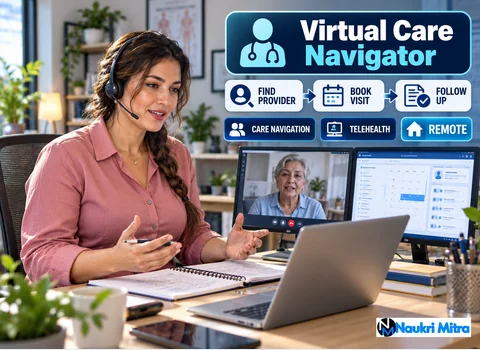
Here is a sample chat from 8:14 a.m. on the desk of one of these remote virtual care navigator jobs. None of the patient, plan or time details are real:
Patient: "I need to see someone about my rash today but I don't know if my insurance covers video visits"
Navigator: "Good morning! Happy to sort that out. Can you tell me the name of your plan, or read me the member ID from the front of your card? I'll check video visit coverage right now."
Navigator, a minute later: "Okay, your plan does list video visits, and there's an in-network clinician with an 11:40 opening today. Your card or plan documents should show your copay for this kind of visit, and billing can confirm the exact amount if you're unsure. I can text you the link once it's booked. Want me to hold that slot?"
That exchange shows most of the job. Somebody arrives worried and unsure about coverage, and leaves with an appointment, a link and a sense of where to check the cost. Notice what the navigator did not do: comment on the rash. This role is open worldwide, full-time, at USD 21 per hour.
A virtual care navigator is the friendly front desk of a telehealth service, except the desk is a headset, a chat panel and a CRM screen at home. Patients reach out by phone or chat. The navigator books their video visits, finds an in-network provider, explains coverage in plain words, sets up follow-ups and logs the whole conversation. Navigators give no medical advice: they don't diagnose, suggest treatments or tell anyone whether a symptom is serious. Clinical questions go to clinicians.
A sketch of the rhythm, not a promise of hours; schedules depend on the employer.
You sign into the phone system, chat tool and CRM, then clear overnight items, like a voicemail asking to move Thursday's visit, before the live queue picks up.
Most contacts are some version of "I need to be seen." You verify identity, check which visit types the plan supports, find an open slot and book it. Then you send the join link and explain when it goes live and what to have handy.
Patients get nervous here, so plain explanations matter. Three terms come up constantly:
You aren't the final word on cost. If an eligibility check is unclear, say so and route it to billing rather than guessing.
A good share of the day is tech support with a kind voice. "The camera is black." "They can't hear me." You'll walk people through camera and microphone permissions, switching from laptop to phone, closing apps that grab the camera, or joining by audio if the platform allows it.
When a clinician asks for a two-week follow-up, you book and confirm it. Every call and chat gets a record. A typical note might read "Pt asked re: video coverage, verified plan, booked 11:40 in-network, link sent by SMS, no clinical questions."
If a patient mentions chest pain, trouble breathing or anything the protocol flags, you don't assess it. You follow the escalation script exactly, whether that means emergency services or an immediate clinician transfer, and document it.
Verify identity before discussing anything, keep health details out of earshot at home, lock your screen when you step away, and never copy notes into personal apps.
A CRM holds contacts, tickets and notes. A telehealth platform handles scheduling and the video visits. Some employers also give limited EHR access, so ask what you would be able to see. Add a softphone and chat console, and that's the kit. The employer trains on its own setup.
You don't need a degree. Finishing high school is the baseline, and about one year in customer service, a call centre or healthcare support (a clinic front desk, say) is preferred. For anyone with customer service experience asking how to become a virtual care navigator, habits from hotel reservations or telecom support carry over, like staying patient on a hard call and typing while listening.
Core virtual care navigator skills include:
Looking for virtual care navigator jobs with no experience in healthcare? That gap isn't a dealbreaker here, since experience is preferred rather than required, which puts this among entry level remote virtual care navigator jobs. A calm phone manner counts for more.
The listing says HIPAA training is required. In general terms, HIPAA is the US privacy framework covering patient health information, and employers in this space may run their own training or ask for proof of a recent course. Ask whether training is provided or should be done beforehand.
These are virtual care navigator work from home jobs, so you need stable internet, a private room and a decent headset.
On this listing the virtual care navigator salary per hour is USD 21, full-time. That's the only figure given, so there's no guessing at annual totals or extras. When comparing other postings, check the pay period matches.
The titles overlap and some employers use them loosely. Broadly, a virtual care navigator focuses on access: getting patients booked, connected and pointed to in-network options. A patient care coordinator often works more closely with a care team over time, tracking referrals, test results and care plans for a set group of patients. Navigation can be a step toward coordination roles.
Navigators see the whole patient journey, which can lead to team lead or quality roles, care coordination, benefits verification or training new hires.
Employers hiring for virtual care navigator jobs remote worldwide include telehealth providers, virtual primary care startups, health plans with member lines and outsourced patient-access teams.
On your virtual care navigator resume, lead with channels ("phone and chat queues"), booking tools used and first-contact fixes.
No virtual care navigator certification is named beyond HIPAA training. A virtual care navigator course isn't required, though free material on insurance basics and short front-office classes at community colleges can help.
Practise virtual care navigator interview questions aloud. "A patient is upset that their visit was cancelled; what do you say?" "How would you explain a deductible to someone who's never heard the word?" "A caller describes a symptom and asks if it's serious; what happens next?" A good answer to that last one routes the question to a clinician.
Hiring timelines vary, so submit your current resume through this page, noting phone and chat work, CRM comfort and any HIPAA training already done. This page charges nothing to apply. Anyone asking you to pay for interviews, equipment or training is not acting like a real employer, so stop and report it.